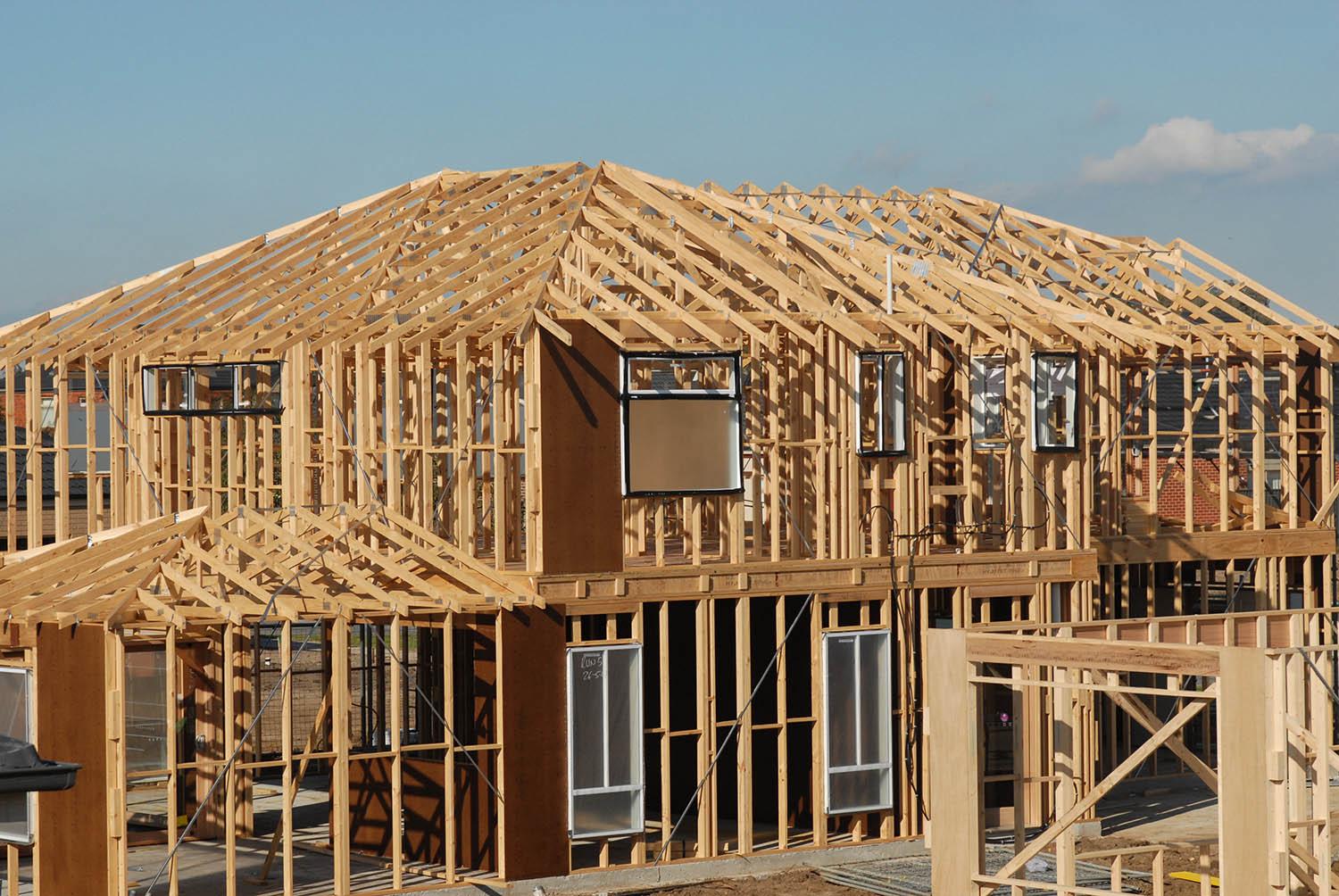
Lightweight timber construction typically comprises framed and braced structures to which one or more types of cladding are applied. Framing configurations can range from the closely spaced light timbers commonly seen in stud frame construction to large, more widely spaced timbers. A timber framed building can be placed on a concrete slab or on posts/poles or bearers resting on piers/stumps supported on pad footings.
Used in houses or multi-residential dwellings, lightweight timber construction offers the flexibility of a wide range of cost effective design options.
When the timber comes from sustainable sources, this construction method can be environmentally advantageous as it combines timber's low embodied energy with its capacity to store carbon.
Criteria Level: 1
AS 1684 Residential timber-framed construction Parts 2, 3 and 4 are parts of an Australian Standard referenced in Volume 2 of the Building Code of Australia as an acceptable construction standard for the construction of timber framed Class 1 and 10 buildings. These include detached single family houses, terraces, townhouses, villas; certain boarding houses, guest houses and hostels as well as private garages, carports and sheds.
AS 1684 Parts 2, 3 and 4 have recently been revised by some of Australia's leading building, engineering and industry representatives based on feedback from professional and trade users, including the TAFE sector, engineers, building designers, building certifiers and builders. Additionally, changes have been made to reflect the outcomes from a number of significant research and development projects completed in 2007 under funding arrangements with Forest and Wood Products Australia. The changes that have been made to ensure the building industry can continue to use the best available timber technology.
Some of the significant revisions to the Standard include:
- Changes to the role, function and need for wall noggings;
- Incorporation of generic building practices for engineered wood products;
- Simplification and more efficient tie-down systems for high wind areas, including cyclonic areas; and
- The incorporation of new structural design characteristic values for stress grades MGP 10, MGP 12 and MGP 15 via minor revisions to the relevant span tables.
The strength and integrity of any timber-framed building can be measured against its compliance with this Standard that has benchmarked timber construction since 1946.
Criteria Level: 2
The basic premise behind MRTFC or Multi-Residential Timber Framed Construction is the utilisation of fire and sound-rated timber framed wall and floor systems to provide for vertical and horizontal separation between dwellings.
In North America, timber framed construction has been historically used in a wide range of multi-level commercial and residential buildings and has been an accepted construction process for many years. MRTFC for multi-unit and multi-level residential construction was introduced into the BCA (Building Code of Australia) over 10 years ago following extensive testing; particularly with regards to fire ratings and studies of life safety. Continuing development, in the main by plasterboard and fibre cement manufacturers, produces new and improved construction practices and building systems.
Timber construction using new era materials including fire and sound rated plasterboards and termite protected timber can be used in a wide range of residential and commercial construction situations where quality construction and excellent fire and acoustic performance is required. Timber is readily available and prefabrication off site means that multi-units or commercial structures framed with timber can be completed in a shorter time and more cost-effectively than those framed with other non-timber materials.
The technology that has been developed for fire and sound rated walls and floors/ceilings provides for timber to be used in a wide range of construction types. For example, for superior acoustic performance in a detached residential house or for speedy construction in a 4-storey multi-residential development or where lightweight construction allows further stories to be added to an inner-city building.
Refer to the MRTFC page for more information on timber framed construction.
Criteria Level: 1
The design and construction of buildings, and other structures, is regulated by the Building Code of Australia (BCA) with typical details provided in AS 1684 Residential timber-framed construction.
AS 1684 is a four-part Standard covering design criteria, building practices, tie-downs, bracing and span tables for timber framing members.
- Part 1 - Design criteria
- Part 2 - Non-cyclonic areas
- Part 3 - Cyclonic areas
- Part 4 - Simplified - Non-cyclonic areas
Known within the building industry as the Timber Framing Code, AS 1684 provides important design provisions and building practices in order to determine the timber members, bracing and fixing requirements applicable to two storey residential timber-framed buildings.
It is used by all sectors of the building industry, including builders, designers, carpenters and home renovators. AS 1684 Parts 2, 3 and 4 are referenced in the Building Code of Australia (Volume 2) as acceptable construction standards for the construction of Class 1 and Class 10 timber framed buildings that includes detached housing.
AS 1684 Parts 2, 3 and 4 are also referenced in the Building Code of Australia (Volume 1) in the deemed-to-satisfy provisions for determining structural resistance of timber structures in Class 2 to Class 9 buildings which includes multi-residential buildings.
User Guides for AS 1684 provide interpretations of selected parts of the Standard and in some cases, provide supplementary design information. These are available for free download from the Resources section of this website.
Please refer to Framing - Key Considerations for more information about single and multi-residential dwellings.