Redwood’s rich colouring and durability make it a good choice for use indoors and out.
Californian Redwood, Coast Redwood, Sequoia
Sequoia sempervirens
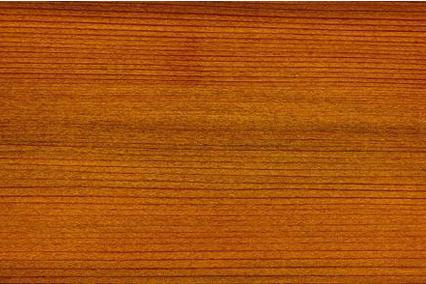
The Sequoia or California redwood is one of the world's most recognisable trees. The strength and rich colours of its softwood timber make it much sought after for decorative purposes, such as paneling, and for outdoor purposes such as decking, fences and garden furniture.
The heartwood is pale to dark reddish brown, and the sapwood narrow and creamy. Texture is fine and usually even, because there is little difference between the early and late wood. The grain is straight and the wood is not resinous.
Redwood works easily with both hand and machine tools, with little dulling effect on tools. It planes well, provided the cutters are sharp and it splinters easily when working on the end grain. It holds nails well, and paints and finishes satisfactorily. It also stains well, but glues best with alkaline adhesives. The heart wood is more resistant to decay and insects than the sap wood.
The distinctive and very attractive colouring of redwood makes it highly sought after for decorative purposes, such as paneling and cladding, while its resistance to weather and insects makes it a natural choice for external joinery, outdoor furniture, windows and greenhouses. Similarly, its durability makes it useful for vats and tanks.
Today in the USA, a total of 364,000 ha of second growth forest are under active management for timber production.
Significant quantities of California redwood were imported last century. Once readily available in Australia, it is now difficult to source as new timber. Australian red cedar is a possible substitute.
Shrinkage
| Very Low | Low | Medium | High | Very High | |
|---|---|---|---|---|---|

|
|
|
|||
|
Tangential :
|
1.90% | ||||
|
Radial :
|
1.10% | ||||
|
Unit Movement Tangential:
|
0.12% | ||||
|
Unit Movement Radial:
|
0.21% |
Strength Group
| Very High | High | Reasonably High | Medium High | Medium | Reasonably Low | Low | Very Low | |
|---|---|---|---|---|---|---|---|---|
| Unseasoned: | S1 | S2 | S3 | S4 | S5 | S6 | S7 | S8 |
|
|
||||||||
| Seasoned: | SD1 | SD2 | SD3 | SD4 | SD5 | SD6 | SD7 | SD8 |
|
|
Stress Grade
|
Structural No. 1 |
Structural No. 2 |
Structural No. 3 |
Structural No. 4 |
Structural No. 5 |
|
|---|---|---|---|---|---|
| Unseasoned: | F8 | F7 | F5 | F4 | |
| Seasoned: | F11 | F8 | F7 | F5 | F4 |
Density per Standard
| Seasoned: | 400kg/m3 |
|---|---|
| Unseasoned: | 710kg/m3 |
Joint Group
| Very High | High | Reasonably High | Medium | Low | Very Low | |
|---|---|---|---|---|---|---|
| Unseasoned: | J1 | J2 | J3 | J4 | J5 | J6 |
| Seasoned: | JD1 | JD2 | JD3 | JD4 | JD5 | JD6 |
|
|
Colour
| White, yellow, pale straw to light brown | Pink to pink brown | Light to dark red | Brown, chocolate, mottled or streaky | |
|---|---|---|---|---|
|
|
||||
Mechanical Properties
|
Modulus of Rupture - Unseasoned:
|
52 |
|---|---|
|
Modulus of Rupture - Seasoned:
|
69 |
|
Modulus of Elasticity - Unseasoned:
|
8.1 |
|
Modulus of Elasticity - Seasoned:
|
9.2 |
|
Maximum Crushing Strength - Unseasoned:
|
29 |
|
Maximum Crushing Strength - Seasoned:
|
42 |
|
Impact - Unseasoned:
|
|
|
Impact - Seasoned:
|
|
|
Toughness - Unseasoned:
|
Medium - 15 - 24 Nm |
|
Toughness - Seasoned:
|
Low - up to 15 Nm |
|
Hardness - Unseasoned:
|
1.8 |
|
Hardness - Seasoned:
|
2.1 |
Durability
| Low | Moderate | Reasonably High | High | |
|---|---|---|---|---|
| (0 - 5 yrs) | (5 - 15 yrs) | (15 - 25 yrs) | (more than 25 yrs) | |
|
In-Ground:
|
|
|||
| (0 - 7 yrs) | (7 - 15 yrs) | (15 - 40 yrs) | (More than 40 yrs) | |
|
Above ground:
|
|
|||
| (0 - 20 yrs, usually < 5) | (21 - 40 yrs) | (41 - 64 yrs) | (More than 60 yrs) | |
|
Marine Borer Resistance:
|
|
|
Lyctid Borer Susceptibility:
|
Not Susceptible |
|---|---|
| Lyctid Borer Susceptibility - Other: | |
|
Termite Resistance:
|
Resistant |
Fire Properties
| 0 | 1 | 2 | 3 | 4 | 5 | 6 | 7 | 8 | 9 | 10 | |
|
EFH Spread-of-Flame Index:
|
|
||||||||||
|
EFH Smoke-Developed Index:
|
|
|
Bushfire Resistance:
|
Not Tested |
|---|
Redwood heartwood is pale to dark reddish brown and the sapwood narrow and creamy. Texture is fine and usually even because there is little difference between the early wood and the late. The grain is straight and the wood is not resinous.
The distinctive colouring of redwood makes it highly sought after for decorative purposes, such as for paneling and cladding, while its resistance to weather and insects makes it a natural choice for external joinery, outdoor furniture, windows and greenhouses. Similarly, its durability makes it useful for vats and tanks.