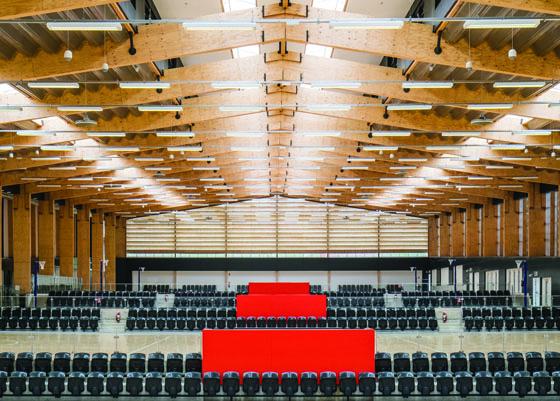
An innovative staircase takes Abigroup higher
Oregon Maple
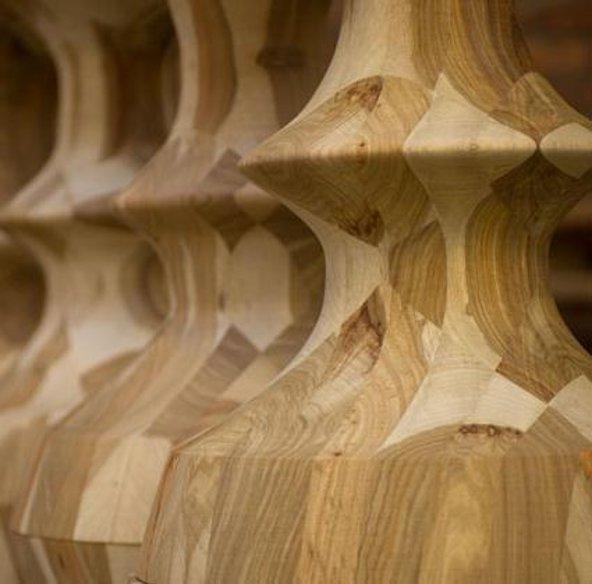
Oregon Maple is popular in veneer production for furniture and cabinetry. Its highly figured wood is sought after for musical instruments such as guitar bodies, stringed instruments and piano frames, as well as salad bowls. The Indigenous Lakwungen people of Vancouver Island knew it as the ‘Paddle Tree’ and created paddles and spindle wheels from its wood.
Glulam, short for glued laminated timber, is an engineered wood product manufactured by gluing together pieces of timber, known as laminates. This process produces larger size and longer length members, which can be curved or straight.

Glulam, short for glued laminated timber, is an engineered wood product. Large glulam members are produced from smaller pieces of stress graded and seasoned timber, known as laminates.
Glulam originated in Germany around 1900 but didn't make its way to Australia until the 1950s. It is now used for both structural and decorative applications.
Manufacturing
The manufacturing process produces large and long length glulam members, which also results in increased strength when compared to that of the individual member. This also means that much larger pieces of timber can be produced than would otherwise be possible with traditional solid sawn timber. Glulam is consistently stronger than solid timber, in part due to the reduction in size and occurrence of natural defects.
Timber laminates used in the production of glulam are typically finger-jointed into continuous lengths and available in a range of both softwood and hardwood species. The thickness of the laminates will depend on the application and species used. Prior to gluing, the laminations are accurately dressed to exact and uniform thickness. The laminates will also be clamped together under constant pressure until the glue has cured. Once glued, members are planed, cut to exact size and may be coated with a water repellent sealant.
Many manufacturers are able to produce a variety of shapes and sizes at the designer's request. The length and shape of glulam sections is limited only by manufacturing, transport and handling capabilities.
Australian manufacturers generally produce deep sections with the laminates horizontal. In Europe, glulam has been used with face and edge lamination to produce deep sections with vertical laminations; this technique may also be used by some Australian producers.
It is possible to manufacture a glulam beam with higher strength laminates in areas of high stress - such as in the top or bottom laminates of beams - and lower strength laminates in the areas of low stress. Steel and fibre reinforcement can also be incorporated in areas of high tensile stress and may be positioned either parallel or perpendicular to the laminate direction.
Suitability for structural applications
Glulam offers many benefits when it comes to structural applications:
As with other timber products, the durability of glulam will depend on the application. For external applications it will need to resist weathering, decay, insect attact and offer UV protection.
Glulam structures protected by a fully enclosed envelope should have an indefinite durability.
If the moisture content of glulam is likely to be raised to 20 per cent or more, then the timber needs to be treated with preservatives and only exterior-class adhesives should be used.
Service classes
The two main factors affecting glulam in exposed situations are species and adhesives used.
Service classes relate to the environment (temperature and humidity) in which the member will be used in service. Different types of glues are used in the manufacture of beams with different service classes. More durable glues are used for higher service classes.
All beams will require appropriate protection by paints or stains to give the required appearance and protection:
Providing the correct species/adhesive combinations are specified, and suitable protective design and maintenance measures are implemented, glulam members will have an adequate service life in Service Class 3 (exterior exposed) applications.
The species of hardwood timber used in laminated beams destined for Service Class 3 application should be Durability Class 1 or 2. AS 1720.1 lists the durability rating of most commercial timber species used in Australia.
Most softwood species can be treated with non-leachable preservative salts, which will impart decay resistance. The level of preservative treatment specified for softwood laminated beams used in Service Class 3 applications should be H3. Similarly LOSP envelope treatment can be used satisfactorily. Check with manufacturer for recommended use.
Adhesives used to bond laminates together for Service Class 3 applications should be of the Polyphenolic/Resorcinol type.
Manufacturers generally produce their own range of sizes, so designers should check availability. However, many manufacturers are able to produce a variety of shapes and sizes as requested. The length and shape of glulam sections is limited only by manufacturing, transport and handling capabilities.
Typical sizes can include:
Beam Depths: 120 mm to 600 mm
Beam Widths: 40, 60, 70, 80, 90, 110 and 130 mm
Max. Lengths: from 12 m to 20 m
Members of the Glue Laminated Timber Association of Australia have adopted a range of standard section sizes that are applicable to each GL Grade as follows:
Table - Uniform GL Section Sizes
|
GL Grades |
GL 18 |
GL 17 |
GL 13 |
GL 12 |
GL 10 & 8 |
|
Nominal beam widths in mm |
40 65 85 115 135 |
38 65 85 115 135 |
80
130 |
40 65 85 115 135 |
38 60 801 110 |
|
Nominal beam depths in mm |
90 120 155 185 215 240 250 270 280 300 315 330 350 380 410 445 475 505 535 570 600 630 660 |
130 165 195
230 260
295
330 360 395
425 460 495 525 560 590 625 655 |
152 190
229 267
305
343
381
419 457 495 533 572
610 648 686 |
130 165 195
230 260
295
330 360 395
425 460 495 525 560 590 625 655 |
|
Most 'straight' beams will be cambered, ie pre-curved to allow for deflection due to deadload. 'Off-the-shelf' beams are usually manufactured with a camber equivalent to a 600 m radius. Straight beams, without camber can be manufactured to order.
GL Grades
Glulam is manufactured in accordance with AS 1328.1 Glued laminated structural timber - Performance requirements and minimum production requirements and standard grades are set out in AS/NZ 1720 Timber Structures Code.
The glulam grades have been developed with a suite of structural properties which are different from the ‘F' ratings used on solid timber and the use of ‘F' ratings to grade glulam is therefore inappropriate.
See also ‘Appearance Grades'
Appearance grades relate to the aesthetic appearance of the visible surfaces of the glued laminated members. This has no bearing on structural performance.
Glulam members can be finished to the following appearance classes:
The manufacture and grading of structural glulam is covered in the product standard AS/NZS1328.1 Glued Laminated Structural Timber - Performance requirements and minimum production requirements.
AS 1328.1 specifies performance requirements for glulam members and quality control requirements for manufacturers.
The Glued Laminated Timber Association of Australia (GLTAA), which represents most glulam manufacturers in Australia, conducts an independently audited Quality Assurance program for its members. This program includes regular independent testing of product. Products of participating GLTAA manufacturers are identified with the GLTAA quality mark logo.
See also www.gltaa.com/quality
*Disclaimer : The species mentioned here are just a guide and for specific information refer to Suppliers Section
Large sections of glulam, such as beams, have high fire resistance and can maintain load-bearing requirements and structural form for long periods. Fire ratings can be determined using AS 1720.4 Timber structures Part 4 - Fire resistance of structural members or from test data. Unlike steel and reinforced concrete, glulam will not twist or spall in fire.
The fire resistance requirements can be calculated using the procedure given in AS 1720.4. Depending on the fire performance requirement, metal connectors may need special fire protection.
Phenol/Resorcinol Formaldehyde gluelines are as resistant to fire as the timber and will remain unaffected in the uncharred portion of a laminated beam following a fire.
Different types of glues are used in the manufacture of beams with different service classes. More durable glues are used for higher service classes. Resorcinol glue should be used for treated/external members.
Adhesives used to bond laminates together for Service Class 3 applications should be of the Polyphenolic/Resorcinol type.
Glulam used for interior applications that are located in permanently dry, indoor environments may use casein adhesives.
Most softwood species can be treated with non-leachable preservative salts, which will impart decay resistance. The level of preservative treatment specified for softwood laminated beams used in Service Class 3 applications should be H3. Similarly LOSP envelope treatment can be used satisfactorily. Check with individual manufacturers for recommended treatments and use.
The thin laminates that make up each glulam piece also allows for a better penetration of preservative and more even drying which helps eliminate checking.
Beams can be treated during manufacture. It is always better, where possible, to pre-treat beams before finishing ensuring full protection is achieved. For example, a H3 treatment, suitable for exposure to the elements would be impregnated into the beam during manufacture. Suitable post treatment of glulam (e.g. H3 treatment) can be also achieved but care needs to be taken to re-apply treatment when drilling, notching or cutting takes place.
Glulam can be used in almost any type of building from simple dwellings to major public buildings and bridges. Its strength, stability, chemical and fire resistance, and its almost limitless range of sizes and shapes makes glulam one of the most versatile building products available today. Just as importantly, glulam also brings an impressive aesthetic quality to any project.
Glulam beams may be able to carry equivalent loads to that of steel or concrete beams, but provide a lighter, more economical material. A laminated beam will often have a higher than normal modulus of elasticity to modulus of rupture ratio.
AS1720.1 Timber Structures-Design Methods section 7 Glued-Laminated Timber Construction is the primary reference for the structural design of glulam elements. Glued laminated timber that complies with its product standard AS/NZS1328.1 will carry a stamp that indicates its compliance and can be designed using the provisions and stress grade data in Section 7 of AS1720.1.
Section Properties
With its solid, rectangular cross sections, the section properties for any given glulam section is easily calculated.
Glulam can be manufactured to simple curves, multiple curves and parabolic curves. Manufacturing curved glulam involves setting up a jig to press the timber into and this may add cost to the manufacturing process.
The radius chosen also needs to be taken into consideration, as very tight radii (under 9.5 m) will require the use of thinner laminate which again may impact the cost of production when compared to producing straight glulam members.
Table - Characteristic strengths and elastic moduli for horizontally laminated glulam grades:
|
Stress Grade |
Characteristic Strengths |
Elastic Moduli |
|||||
|
(Mpa) |
(Mpa) |
||||||
|
Bending |
Tension parallel to grain |
Shear in beam |
Compression parallel to grain |
Short duration average modulus of elasticity parallel to grain |
Short duration average modulus of rigidity for beams |
||
|
|
(f'b) |
(f't) |
(f's) |
(f'c) |
(E) |
(G) |
|
|
GL 18 (Hw) |
50 |
25 |
5 |
50 |
18500 |
1230 |
|
|
GL 17 (Hw) |
42 |
21 |
3.7 |
35 |
16700 |
1110 |
|
|
GL 13 (Sw) |
33 |
16 |
3.7 |
33 |
13300 |
900 |
|
|
GL 12 (Hw/Sw) |
25 |
12 |
3.7 |
29 |
11500 |
770 |
|
|
GL 10 (Sw) |
22 |
11 |
3.7 |
26 |
10000 |
670 |
|
|
GL 8 (Sw) |
19 |
10 |
3.7 |
24 |
8000 |
530 |
|
Glulam should not be dropped, jarred or dragged. Care must be taken to prevent damage to the finished surfaces in handling, as this may cause damage to the surfaces and edges and possibly structural damage.
Lifting or securing glulam should be done with webbing slings only. Chains and wire slings should not be used. Glulam should be lifted on its edge wherever possible and spreader bars of suitable length need to be used on long members to eliminate the possibility of overstressing the member. Special lifting arrangements may be necessary for curved and tapered beams.
Members should be supported with blocking that is spaced to supply uniform and adequate support. If covered storage is not available, the members should be blocked well off the ground at a well-drained location. Other glulam, such as reinforced glulam, curved glulam, fabricated items and other ‘special application' glulam must be handled and stored in accordance with the manufacturer's specific requirements for that product.
On-site storage
Glulam should be maintained in a dry condition on-site and protected from direct exposure to the weather. It is important to keep moisture out of the finished glulam timber. If covered storage is not available, the members should be covered with suitable non-transparent plastic or tarpaulins. The cover should be placed to preclude moisture whilst maintaining good air circulation in and around the members. Glulam members that are supplied individually wrapped should be placed on supports with the wrapping material edge or seal face down.
Glulam when installed should be protected from direct exposure to the weather, especially moisture unless specifically treated. A timber sealant coating or appropriate covering may be required.
Should the glulam be cut, checked, bolted or otherwise worked on, renewal of the protective sealer to the exposed or unsealed timber is required. Any covering should be placed with the edge on the underside if possible and be slit on the underside to allow moisture to escape.
Holes
Where horizontal holes need to be drilled for services, the following guidelines apply:
If vertical holes are necessary to provide electrical or plumbing services within the span, its suitability will depend on the size and location of the hole. Again, seek advice from a structural engineer or the beam manufacturer.
Notches
Notches seriously reduce the strength of a beam, particularly if located in the tension zone. Unless allowance has been made in the design, no notches should be made. Shear reinforcement may be necessary if notching is required.
Notches on the upper side at the bearing area may be made to a maximum of 40% of the depth of a member.
Large holes and notches should be avoided as they will disrupt the stress flow in the structure.
The lamination process and use of treated timber minimises the natural propensity to check, twist, warp or shrink. This means glulam remains dimensionally stable over time, however there are still some maintenance considerations.
Timber laminated members in exposed applications will give excellent service life if the protective design and coating measures are maintained to limit the effect of weathering. A maintenance schedule should be documented and implemented for all structures. Coatings should be renewed in accordance with manufacturers' instructions and joint and capping details kept in good repair.
Glulam is easy to work with normal woodworking tools, as well as machining and fabrication. Structural framing is significantly lighter than its steel equivalent and this is advantageous to builders.
Glulam can be nailed, screwed and drilled and should be easy to work for most tradespeople.
It is becoming increasingly common for small, fast growing timber species to be used to make long length glulam beams.
There is less environmental impact and less cost to produce a glulam beam when compared to producing steel or concrete.
Connections of glulam members are usually made with bolts or plain steel nails and steel plates.
For smaller members, proprietary light metal connectors are most commonly used but must be selected taking into account the imposed loads. Appropriate data is available from connector manufacturers such as Pryda, MiTek and Simpson Strong-Tie.
For heavy glulam construction, specifically designed and fabricated metal connectors are generally necessary and must be installed strictly in accordance with the design information e.g. number and size of nails, screws, bolts, edge distances, tolerances etc.
Structural plywood gussets may also be used to join glulam, such as in knee, butt and apex joints in portal frame construction. Gussets are normally nail fixed with many nails in a predetermined pattern. Only the specified nails should be used.
Typical joints and connectors include the following:
• Face Mount Hangers
• Column Base Connections
• Beam to Column Connections
• Plywood Gusset Connections
• Concealed Connections.
Protective finishes will prolong the service life of structures incorporating laminated timber members by excluding UV light, moisture and imparting dimensional stability to the timber members.
The following products are available:
In selecting a finish for laminated timber members in Service Class 3 conditions, consideration must be given to the need to effectively and permanently remove the effects of UV light and moisture ingress to the member. Special attention should be given to sealing exposed end grain at the end of members and joints.
Note: When exposed to UV and rain all wood will weather and grey. It is important to be aware of glulam treatments for commercial applications. Varnishes should be avoided on external use applications, in part due to the unrealistic ongoing maintenance that would be required. Dark stains can cause excessive heat retention and may dry out the material or cause splitting.
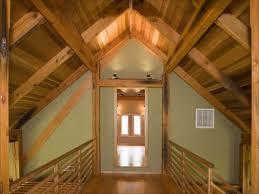
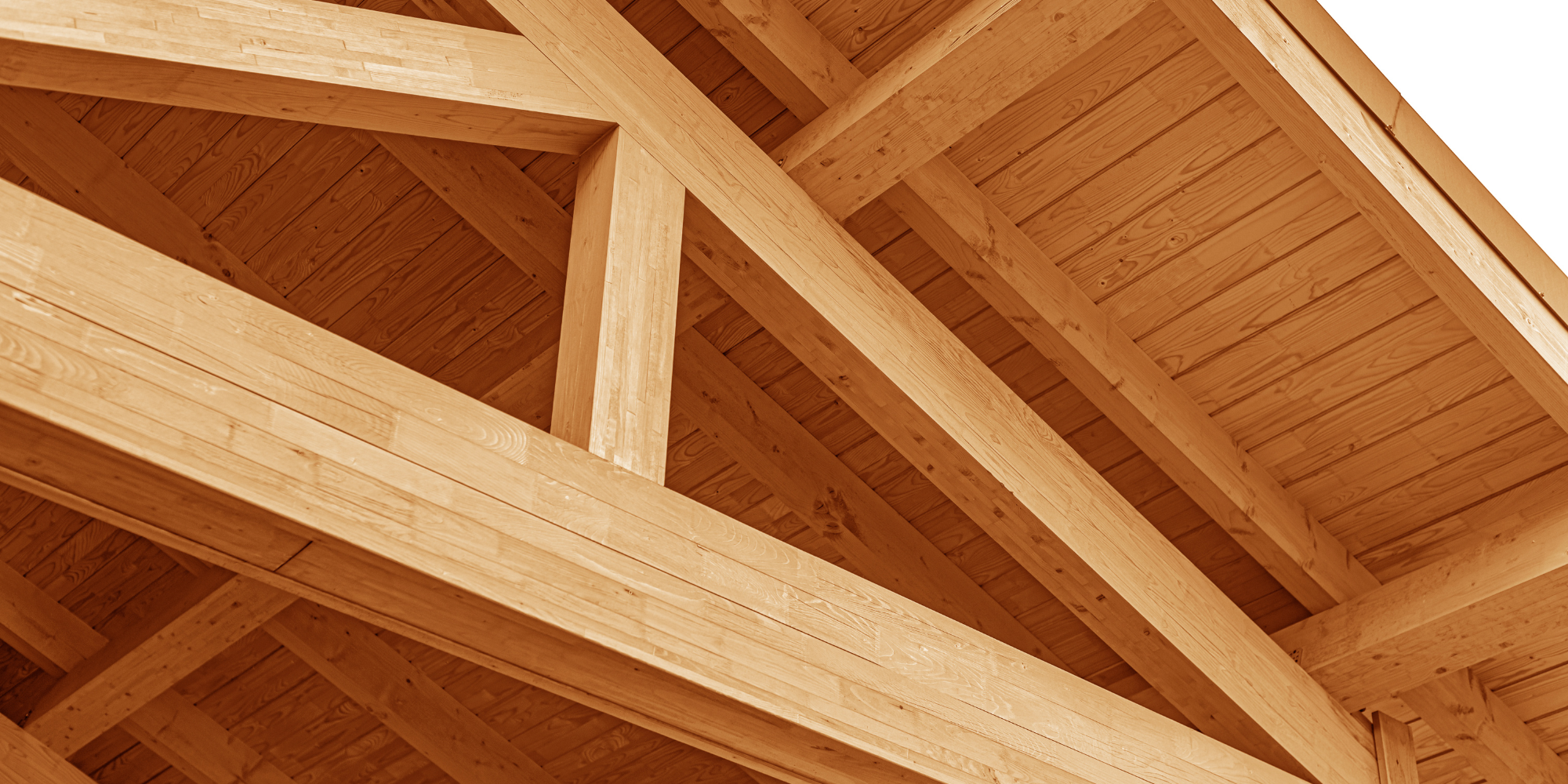
Architectural timber roof trusses create strong visual impact. Often used as part of ‘cathedral ceiling’ systems, timber can be specified light or heavy to suit the chosen theme and style. On finish, they can be left natural or may be oiled, stained, painted or highly decorated. Choice is limited only by individual style and design preferences.
This guide provides general information on member sizes, connections and suitable materials for construction of handrails and balustrades in external applications. Commonly built from treated softwood and durable hardwoods, they can be finished with a wide variety of paints or stains, creating balustrades that with the right care and attention, will comfortably withstand the elements for decades to come.
Whether for structural or finished flooring applications, timber offers durability, versatility and adaptability. The warmth, strength and natural beauty of timber flooring has proved enduringly popular in a wide variety of interior settings.
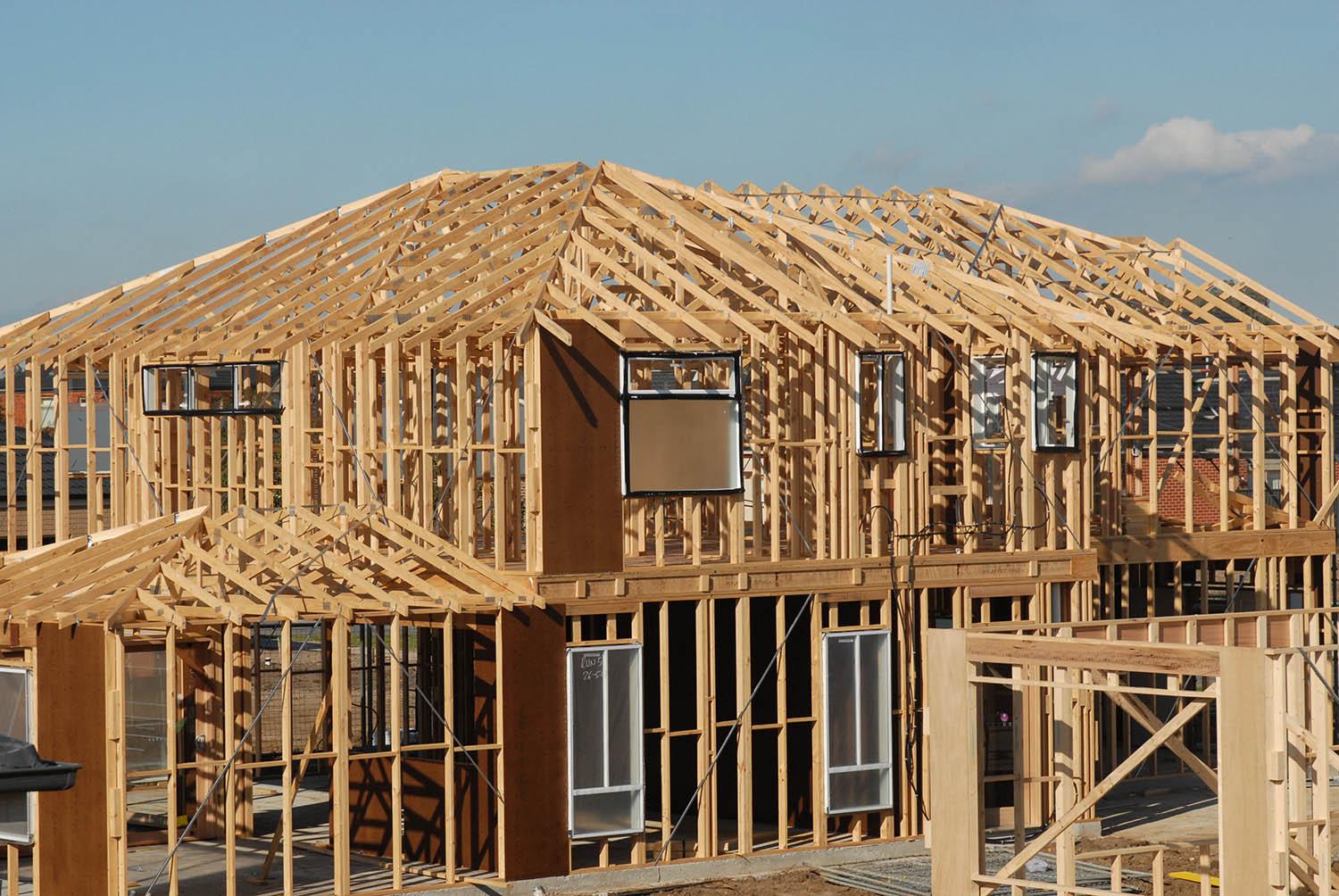
Since people began building simple shelters, wooden framing has played an important role in shaping structures of many kinds. One of the most popular types of wooden framing is known as lightweight timber construction.
Timber joinery products offer a classic, unique and stylish touch to any interior design.
Mouldings are extremely versatile and durable, enhancing the aesthetics of any interior and functioning as the icing on the cake for designs with a focus on beauty and splendour.
For buildings that require large spans and column free interiors, timber portal frames provide one of the most aesthetically pleasing solutions. Utilising modern engineering technology, portal frame design transforms timber into a highly effective, efficient and economical structural product. This application guide provides a comprehensive overview of the process of using timber in the specification, fabrication and erection of portal frame structures.
Jarrah, Spotted Gum, Blackbutt and Victorian Ash play an essential role in the National Portrait Gallery’s expression of Australian identity.
Applications :
Architectural Roof Trusses,
External Cladding,
Flooring,
Framing,
Interior Stairs,
Internal Paneling,
Windows,
Result(s) page 1 of 1
Innovative engineered construction solutions using advanced European manufacturing technology and high quality raw materials. Specialists in exterior solid timber cladding and structural components.
AKD Softwoods supplies quality Radiata Pine products throughout Australia . Our product range encompasses MGP graded framing , LOSP and CCA treated products as well a range of treated and primed finger jointed and laminated pine.
Hyne Timber is the leading supplier of timber and timber products in Australia. We are an unwavering commitment to sustainably grown plantation timber production and supply in Australia
Austim is Perth's largest importer and stockist of exotic timbers. We are a market leading supplier of quality timber based products, sourced from many global regions
Tilling Timber is one of Australia’s largest timber wholesaler/importers and carries its own unique range of Engineered Wood Products known as SmartFrame Products.
Big River Group manufacture a wide range of timber products through several distributions channels nationally
Dindas Australia is a national wholesale distributor and importer of timber and hardware products, with offices and major distribution facilities in South Australia, Victoria, New South Wales and Queensland.
Result(s) page 1 of 1
All Comments (0)