The silent partner for thermal performance: Renewable timber framing ‘the obvious choice’ for Green Homes Australia
When Green Homes Australia (GHA) designs a home, the structural system isn’t debated. Timber framing is the obvious choice to meet performance goals and thermal ratings.
That position wasn’t shaped by trends or marketing. When the company launched in 2006 few were considering energy efficiency or long-term environmental impact. Designing for lifecycle outcomes was even rarer still.
For GHA Founder Mick Fabar, following trends was never his focus. He wanted to address what he saw as fundamental shortcomings in the way Australian homes were being built, developing a model prioritising sustainability, affordability and liveability.
Nearly two decades later, the approach that set GHA apart is increasingly what the market expects. As affordability, durability and energy performance move from “nice-to-have” features to baseline requirements, the business model GHA established early is now aligning with mainstream demand. And at the centre of that model is a structural decision Mick has stood by from day one: renewable timber framing.
An unlikely advocate
For many years, Mick struggled to see the value in actively promoting timber framing as part of a broader campaign to promote his business and win more work. Not because it wasn’t important - but because to him, timber framing is clearly the only way to go.
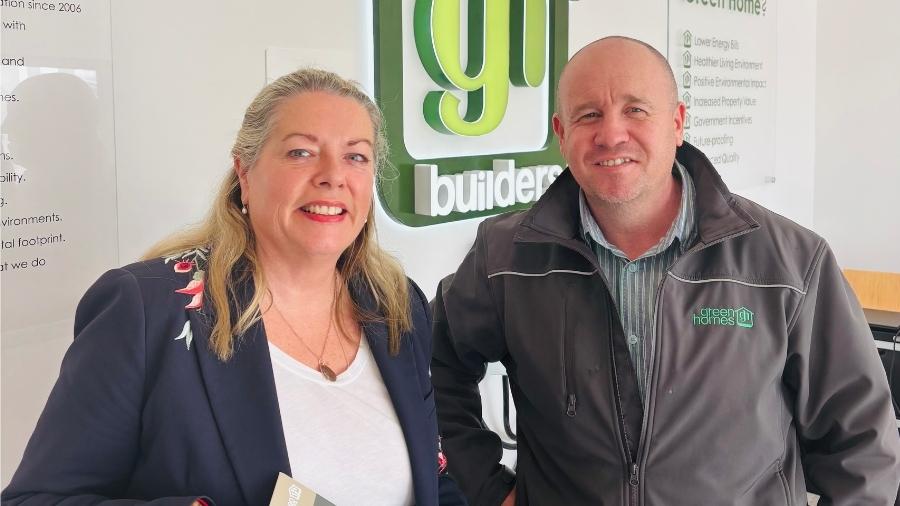
Insightful and direct in his exchanges with Renewable Timber Framing Campaign Manager, Christine Briggs, early interactions made his feelings clear: why sacrifice time selling the benefits of timber framing when that’s all he’s going to ever offer in his homes?
“If you want predictable thermal performance, timber framing is the logical choice,” he says. “We wouldn’t build any other way.”
That mindset reflects how embedded timber is within GHA’s system. It’s not treated as a point of differentiation for the client journey, but as a proven, performance-driven structural solution.
A strong foundation for performance-led design
Green Homes Australia operates across Australia, New Zealand and the United States, with climate-specific design packages tailored to performance outcomes.
Each home is designed for its site, with considered choices for construction and material choices (including prefabricated or traditional stick-built timber framing solutions), harnessing passive solar principles and energy modelling to determine how the building will perform.
“What we do well is make sure the right design is done first,” Fabar says. “Then the second part of energy efficiency is choosing the right products.”
The result? Homes that are not only energy-neutral but poised for future adaptability.
The GHA approach means rather than positioning timber framing as a sustainability upgrade or optional feature, it’s rightly treated as the obvious structural foundation that enables consistent thermal performance across Australia’s eight climate zones. Without it, the energy ratings GHA designs for would be impossible to achieve.
Notably, all of Green Homes Australia’s designs are pre-approved under the Green Loan Program, a government-backed initiative that provides reduced interest rates to consumers building energy-efficient homes.
“We’re one of the only builders in the country to have our full suite of designs fully approved by the Green Loan Program,” he adds.
An evolving market landscape
Recent FWPA consumer research shows that affordability and durability are among the most important considerations for new home buyers, particularly in the current cost-of-living focus. Environmental performance also rates strongly, especially among value-driven consumers who want evidence rather than ‘feel good’ statements.
This shift is reflected in GHA’s client base. Their buyers are not niche sustainability advocates or high-end luxury clients; they are informed, value-focused households looking for homes that perform as intended over time. For this cohort, GHA’s fact-based modelling and design process provides confidence that sustainability claims are backed by measurable outcomes.
Scaling performance creates opportunities for growth
To meet growing demand, Green Homes Australia transitioned from a franchise model to a licence-based system, supporting regionally based builders who want to deliver high-performance homes within a proven framework – with opportunities for more to join their ranks. Many of these licensees are small to mid-scale operators, building 10–40 homes per year and seeking to grow without compromising quality or control.
Built for what comes next
Green Homes Australia may not feature in the HIA Top 10 detached home builders list (because of their licensee model) but its influence lies elsewhere: in a model built on early design discipline, evidence-based decisions and a structural system that delivers reliable outcomes.
“Green Homes Australia wouldn’t have any other structural solution than timber in our homes. It’s an important part of our strategy to ensure our homes secure the required thermal ratings. It’s one of the most important ingredients in the Green Homes’ solution, and our homes are better for it.”
Visit the Green Homes Australia website for more information on their licensee opportunities, and access free resources for marketing timber framing to your clients from the Renewable Timber Framing campaign.
The Timber Framing Campaign is made possible by the support of industry partners - thank you to the following organisations: