Publications
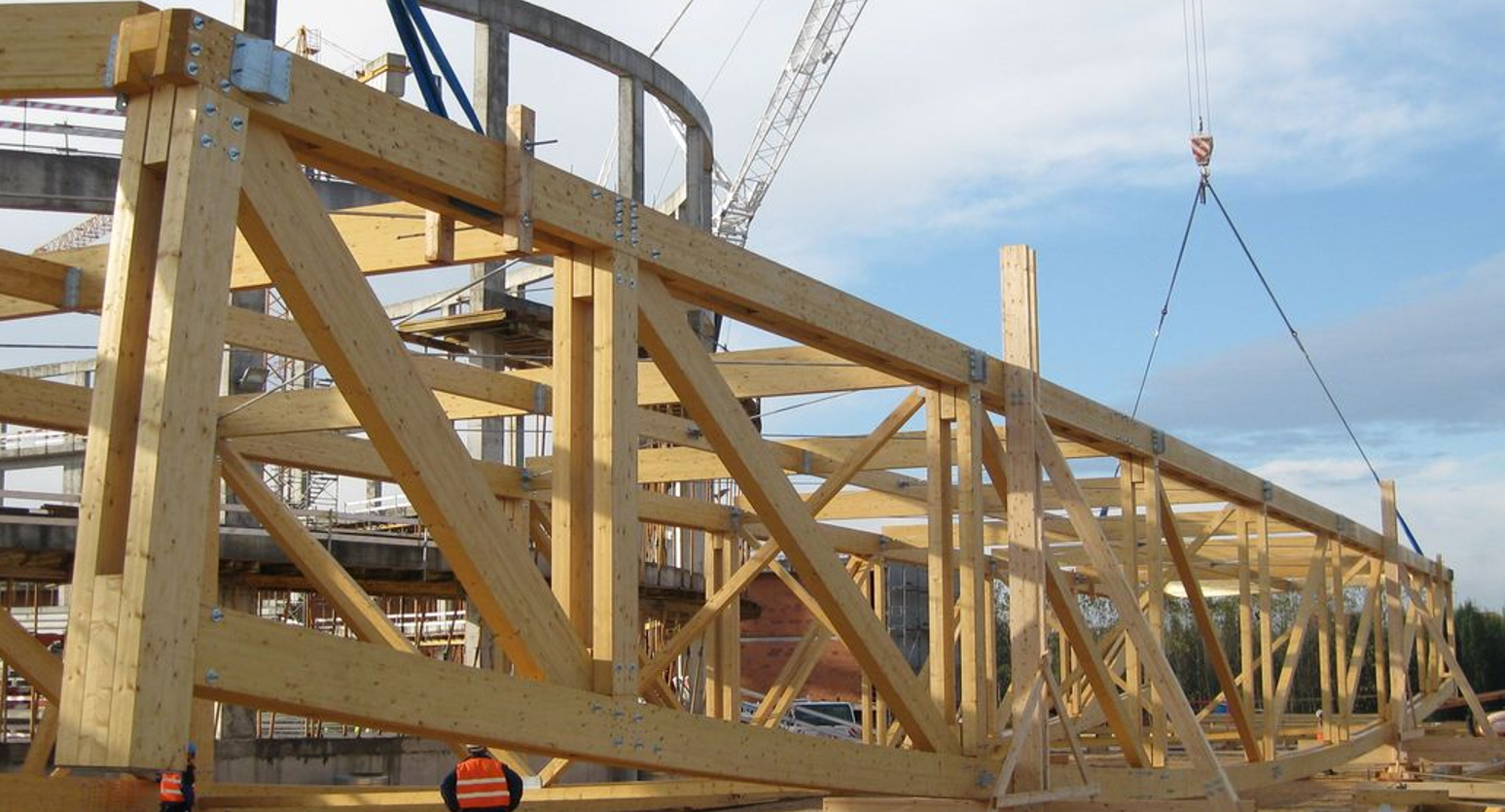
TBC


Purpose and Scope of This Article
This article provides a focused overview of the structural design and performance considerations for glued laminated timber (GLT) in Australian building applications. It is intended to support designers and engineers who are already familiar with GLT as a product, and who are seeking guidance on how its strength, stiffness, and serviceability behaviour are treated in structural design.
The article sits alongside the broader GLT guide and should be read in conjunction with it. While the general guide introduces GLT manufacture, typical applications, durability, fire performance, and fabrication considerations, this article concentrates specifically on engineering design behaviour, including the interpretation of design properties, use of span tables, and application of limit state design principles.
Design guidance in this article is framed around AS 1720.1 Timber structures – Design methods, as referenced by NCC. It outlines how GLT members are assessed under ultimate and serviceability limit states, and highlights where GLT exhibits behaviour that differs from solid sawn timber or laminated veneer lumber (LVL).
The scope of this article includes:
Topics such as fire resistance, durability, moisture management, and detailed connection detailing are addressed in other parts of the GLT guide suite and are therefore not repeated here.
TBC
Glued laminated timber (GLT) is designed using characteristic material properties that reflect its engineered, laminated nature, rather than the properties of individual sawn boards. These properties form the basis of structural design under AS 1720.1 and are typically provided through a combination of standardised grades and supplier technical data.
The primary strength properties used in GLT design include:
In GLT, laminations are arranged so that higher-grade material is typically placed in the outer zones of the section, where stresses are greatest. This results in more efficient use of timber resources and improved structural reliability compared to solid sawn members of equivalent size.
Stiffness in GLT members is characterised by the modulus of elasticity (MOE), which governs deflection and vibration behaviour. Due to the lamination process and grading of individual laminates, GLT exhibits:
Design values for MOE are typically provided as characteristic or mean values and should be applied in accordance with AS 1720.1 requirements for serviceability limit state checks.
The laminated construction of GLT provides several structural benefits:
However, designers should be aware that GLT remains an orthotropic material, with strength and stiffness predominantly aligned with the grain direction. Design assumptions regarding load paths, bearing, and restraint must therefore remain consistent with timber behaviour.
Compared to solid sawn timber, GLT exhibits lower variability in strength and stiffness, which underpins its suitability for engineered applications. This improved reliability is reflected in:
Nevertheless, the performance of GLT members is dependent on correct specification of grade, service class, load duration, and environmental conditions, all of which must be clearly defined in the structural design documentation.
The structural capacity of glued laminated timber (GLT) members is strongly influenced by the available section sizes and the way in which those sections are deployed within the structural system. Compared to solid sawn timber, GLT allows larger, deeper, and more consistent sections to be manufactured, enabling efficient load-bearing members and longer clear spans.
GLT is commonly supplied in a range of standard widths and depths, with member length governed primarily by manufacturing and transport constraints. Typical characteristics include:

Figure 1: Typical Unit Planks that make up GLT elements (Note: Increments may vary depending on timber species and sawmill supply chains)

Figure 2: Element Size Limits (Note: Increments may vary depending on timber species and sawmill supply chains)
While standard sizes are widely available, many suppliers also offer bespoke section sizes for project-specific applications, subject to lead times and minimum order quantities.
Load-bearing capacity in GLT members increases with section depth and width, but not uniformly across all actions:
The ability to increase depth efficiently makes GLT particularly well suited to beams, lintels, and transfer elements where bending governs design.
For compression members and members subject to combined actions, slenderness effects must be considered. GLT columns and compression members require checks for:
These considerations are addressed using the design methods prescribed in AS 1720.1 and may govern section selection for tall or lightly restrained members.
While GLT enables larger sections than solid timber, practical limits still apply:
Designers should therefore consider section size selection in conjunction with connection design, construction methodology, and architectural requirements, rather than assessing member capacity in isolation.
Overall, the availability of a wide range of GLT section sizes allows designers to balance structural efficiency, constructability, and aesthetics, provided that design assumptions and load-bearing requirements are clearly defined from the outset.
Structural design of glued laminated timber (GLT) members in Australia is carried out using the limit state design framework set out in AS 1720.1, as referenced by NCC 2022. Within this framework, GLT is treated as an engineered timber product with defined characteristic properties, modification factors, and design actions.
GLT members are assessed against:
Design actions are derived in accordance with AS/NZS 1170, while material capacities and design methods are taken from AS 1720.1.

Figure 3: Visual representation of the aims of Limit State Design
At ULS, GLT members must be checked for all relevant strength limit states, including:
Modification factors related to load duration, moisture, temperature, and service class are applied in accordance with AS 1720.1. These factors are particularly important for GLT members exposed to varying environmental conditions.
Serviceability performance often governs the design of GLT members, particularly in long-span applications. SLS checks include:
Creep effects must be accounted for in accordance with AS 1720.1, with long-term deflection often forming a significant portion of total movement.
While the design process for GLT aligns closely with that of other timber products, some considerations are specific to glued laminated members:
Designers should ensure that the GLT product specified is certified and graded to the design values assumed, and that any deviations from standard grades or properties are explicitly addressed in the design documentation.
By applying the limit state design provisions of AS 1720.1 rigorously, GLT members can be designed to achieve reliable strength and serviceability performance across a wide range of structural applications.
The structural performance of glued laminated timber (GLT) members is governed by their behaviour in bending, tension, and compression, both as individual actions and in combination. The laminated construction of GLT leads to more predictable stress distribution and strength performance than solid sawn timber, particularly for members subjected to bending.
Bending is the most common governing action for GLT beams and lintels. In bending:
GLT is typically manufactured with higher-grade laminations placed in the outer zones, where bending stresses are greatest. This configuration improves bending efficiency and reduces the likelihood of local defects governing capacity.
Bending strength checks are carried out in accordance with AS 1720.1, with modification factors applied for load duration, service class, and environmental conditions.

Figure 4: Diagram of the Structural Effects of a GLT Element in Bending
Tension parallel to grain is critical for:
Although GLT improves reliability compared to solid timber, tension capacity remains sensitive to defects, adhesive performance, and stress concentrations. Designers should:
In many cases, tension parallel to grain governs the design of highly stressed GLT members.
Compression parallel to grain governs the design of:
For compression members, member stability is often as important as material strength. Slenderness effects, effective length, and end restraint conditions must be assessed in accordance with AS 1720.1. In short, stocky members, material strength may govern, while in slender members, buckling effects typically control.
GLT members frequently experience combined bending and axial actions, particularly in portal frames, arches, and heavily loaded beams. AS 1720.1 provides interaction equations to assess combined effects.
Designers should ensure that:
Understanding how bending, tension, and compression interact is critical to achieving efficient and robust GLT designs without relying on excessive conservatism.
Serviceability performance is often the governing design criterion for glued laminated timber (GLT) members, particularly in long-span or architecturally exposed applications. Deflection control is therefore a critical aspect of GLT design and must be addressed alongside strength checks.
Total deflection in GLT members comprises:
AS 1720.1 requires both components to be considered in serviceability limit state (SLS) checks. For GLT, long-term deflection can represent a significant proportion of total movement, especially in roof and floor systems subjected to permanent loads.
While GLT exhibits more consistent creep behaviour than solid sawn timber, it remains sensitive to:
Creep factors prescribed in AS 1720.1 should be applied conservatively, particularly where members are exposed to elevated humidity or fluctuating environmental conditions.
Deflection limits for GLT members are typically governed by:
Common deflection limits are often expressed as a proportion of span, but designers should confirm project-specific requirements rather than relying solely on generic values.
In long-span applications, deflection control can dictate section selection more strongly than strength. Designers should consider:
Early consideration of deflection behaviour helps avoid costly redesigns and ensures that GLT members perform satisfactorily throughout their service life.
Overall, effective deflection and serviceability control is essential to realising the structural and architectural benefits of GLT, particularly where members are visible and form a key part of the building expression.
Glued laminated timber (GLT) members are specified using both structural grades, which govern load-bearing capacity, and visual or appearance grades, which govern aesthetic quality. These two grading systems serve different purposes and should not be treated as interchangeable in design or documentation.
Structural grades define the characteristic strength and stiffness properties used in engineering design. For GLT, these grades are based on:
Structural grades form the basis of design values used in AS 1720.1 checks and must be clearly specified by the designer to ensure that the assumed design capacities are achieved.
Visual or appearance grades relate to the surface finish and visible characteristics of the GLT member, such as:
Appearance grades are particularly relevant where GLT is exposed as a finished architectural element. However, they do not, on their own, define structural performance.
While appearance grades may impose additional selection or finishing requirements, they should not be assumed to provide enhanced structural capacity. A visually high-quality member may still have the same structural grade as a less visually refined product.
Designers should:
Clear separation of structural and visual requirements in project documentation helps avoid:
By explicitly defining both structural and appearance grades, designers can ensure that GLT members achieve the required performance while meeting architectural expectations.
Span tables are commonly used to support preliminary sizing and specification of glued laminated timber (GLT) members. When used appropriately, they provide a practical shortcut for common design scenarios. However, their assumptions and limitations must be clearly understood to avoid misuse.
GLT span tables are typically intended for:
They are not a substitute for project-specific engineering design where loads, spans, or boundary conditions fall outside typical assumptions.
Span tables are developed based on a defined set of assumptions, which generally include:
Designers must confirm that the project conditions align with these assumptions before relying on tabulated spans.
In many GLT span tables, serviceability criteria govern the tabulated spans, rather than ultimate strength. This reflects the importance of deflection control in timber structures, particularly for longer spans.
As a result:
Span tables have inherent limitations, including:
Where these limitations are present, full structural design in accordance with AS 1720.1 is required.
Span tables should be viewed as a screening and guidance tool, rather than a definitive design solution. For non-standard conditions, long spans, heavily loaded members, or architecturally exposed structures, engineered design provides:
Used appropriately, GLT span tables can streamline design decisions, provided their assumptions are respected and their limits are not exceeded.
The structural performance of glued laminated timber (GLT) members cannot be considered in isolation from their connections. In many cases, connection design governs the overall system capacity, stiffness, and serviceability behaviour, particularly where forces are transferred through discrete fasteners or bearing interfaces.
Connections are responsible for:
In GLT structures, connection behaviour can significantly affect both ultimate strength and deflection performance, even where the member itself has adequate capacity.
The stiffness of connections influences:
Assumptions of simple support or full fixity used in member design must be consistent with the actual connection detailing. Overly stiff or overly flexible connections can lead to performance that differs materially from design assumptions.
Connection regions often introduce:
These local effects can govern design and must be checked in accordance with AS 1720.1. Careful detailing is particularly important in highly stressed GLT members, where connection zones may become the critical design location.
Effective GLT design requires coordination between:
Designers should ensure that:
By considering member and connection behaviour together, designers can avoid unintended capacity reductions and achieve more reliable and efficient GLT structural systems.
Glued laminated timber (GLT) sits within a broader family of structural timber products, each with distinct design characteristics. Understanding how GLT compares with solid sawn timber and laminated veneer lumber (LVL) assists designers in selecting the most appropriate product for a given application and in applying design assumptions correctly.
Compared to solid sawn timber, GLT offers:
Solid sawn timber remains well suited to smaller spans and lightly loaded applications, but is more constrained by available sizes and greater material variability. For larger structural members, GLT generally provides more reliable and predictable performance.
When compared with LVL, GLT exhibits different structural characteristics:
From a design perspective, LVL may be more efficient for shallow floor beams or highly stressed members, while GLT is often favoured for long spans, transfer beams, columns, and expressive structural forms.
Key considerations when selecting between GLT, solid timber, and LVL include:
No single product is universally superior. Effective timber design relies on selecting the product whose structural behaviour, availability, and constructability best align with the project requirements.
By understanding the relative strengths and limitations of GLT in comparison to other timber products, designers can make informed decisions and avoid misapplication of design assumptions across different material systems.
Designing with glued laminated timber (GLT) requires careful attention to both structural performance and practical implementation. While GLT offers significant advantages in strength consistency, section size availability, and architectural expression, its performance is dependent on appropriate application of design principles and clear specification.
Key considerations for designers include:
Clear documentation of assumptions, load cases, and performance criteria is essential to avoid misinterpretation during procurement and construction.
When designed and detailed in accordance with AS 1720.1 and aligned with NCC 2022 requirements, GLT provides a robust and versatile structural solution across a wide range of building types.