Overview
Natural durability describes the inherent resistance of timber species’ heartwood to decay and insect attack.It’s a key factor in determining whether timber can be used untreated in exposed or semi-exposed applications.
Durability ratings apply only to the heartwood of a species. Sapwood is regarded as non-durable, regardless of species, and must be preservative treated if it is to be used in exposed conditions.
Durability ratings guide specifiers in selecting timber that will perform reliably across cladding, decking, framing, joinery, and in-ground applications.
Durability Classes in AS 5604
AS 5604 defines four durability classes, each with a service life expectation under two conditions: above-ground and in-ground use.
Durability Class | How durable? | Above-Ground Life Expectancy | In-Ground Life Expectancy | Example Species |
Class 1 | Very durable | > 40 years | > 25 years | Spotted Gum, Ironbark, Tallowwood |
Class 2 | Durable | 15-40 years | 15-25 years | Blackbutt, Jarrah, Silvertop Ash |
Class 3 | Moderately durable | 7-15 years | 5-15 years | Vic Ash, Tasmanian Oak |
Class 4 | Non-durable | 0-7 years | < 5 years | Radiata Pine, Slash Pine. Sapwood requires preservative treatment to meet hazard class requirements. |
These figures assume good detailing and maintenance. Poor ventilation, trapped moisture, or concealed joints can accelerate decay in even the most durable species.
Above-Ground vs In-Ground Use
- Above-ground framing more than 150 mm clear of the ground should be Class 1 or 2, or H3 treated.
- Close-to-ground decks (<400 mm clearance) require Class 1 hardwood or preservative treatment to H4.
- In-ground applications (posts, stumps, retaining walls) require Class 1 hardwoods or H5 preservative treatment.
Limitations of Natural Durability
- Durability classes are based on test averages and may not reflect performance in extreme microclimates.
- Only the heartwood is durable. Sapwood, even in Class 1 species, must be treated.
- Natural durability does not protect against weathering (surface checking, greying). Finishes and detailing are still required.
Heartwood vs Sapwood
Durability ratings apply only to heartwood. The sapwood of all species is considered non-durable and must be treated if exposed.
Feature | Heartwood | Sapwood |
Durability | Naturally durable (Class 1-4) | Not durable without treatment |
Treatability | Resistant to chemical penetration | Easily impregnated with preservative |
Colour | Usually darker and more resinous | Often lighter and more uniform |
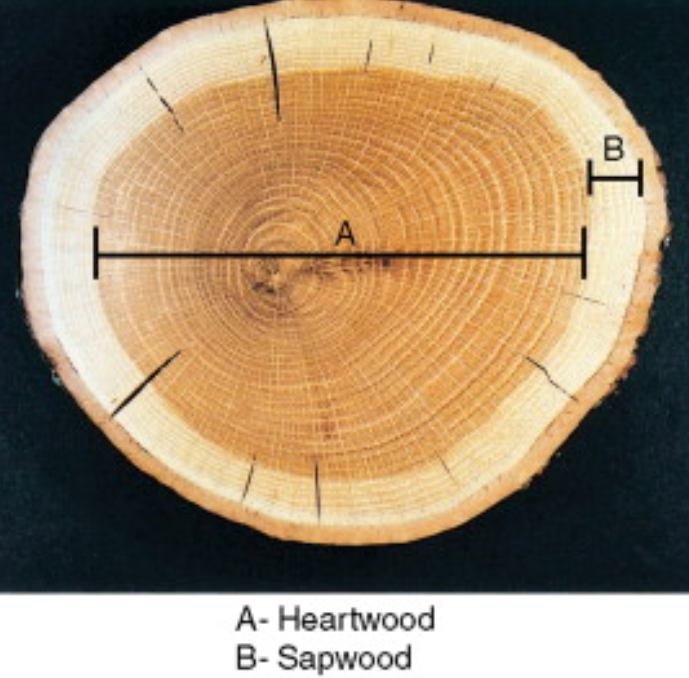
Figure 1: Heartwood (centre) contains natural extractives that resist decay. Sapwood (outer band) requires treatment.
Design Implications:
- Class 1 species may still fail if made up of mostly sapwood.
- Always check treatment penetration when using treated timber in exposed applications.
- End-grain sealing is essential to stop moisture wicking through sapwood, especially in decking and joinery.
Matching Durability to Application
Durability must match the exposure, maintenance access, and risk of failure for each timber component. Not every application demands a Class 1 species.
Application | Minimum Recommendation |
External Cladding | Class 2 heartwood or H3-treated softwood |
Decking Boards | Class 1-2 hardwood or treated softwood (H3) |
Window Joinery | Class 2-3 hardwood or LOSP-treated pine |
In-Ground Posts | Class 1 or H4-H5 treated pine |
Interior Lining/Furniture | Any class if protected from moisture |
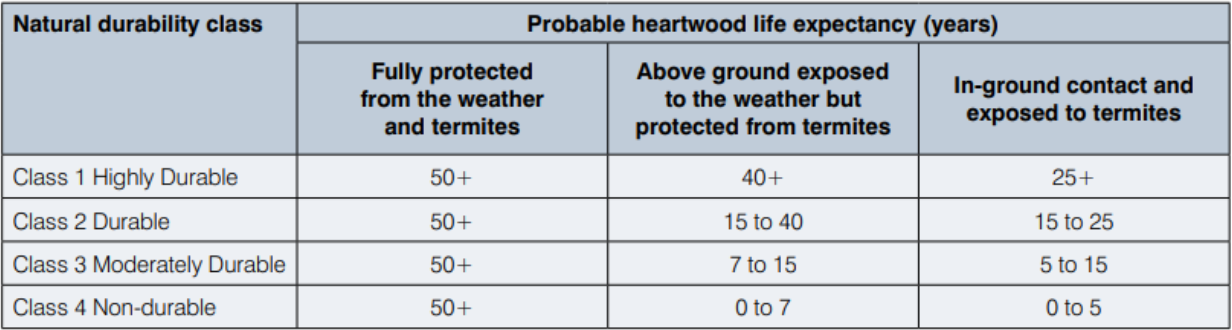
Figure 2: Guide for selecting appropriate timber durability for common applications
Source: Based on Table in TDG 05
Common Durable Australian Species
Species | Durability Class | Region | Notes |
Spotted Gum | 1 | NSW, QLD | Very dense, excellent durability |
Ironbark (Red/Grey) | 1 | NSW, QLD | Extremely durable, hard to work |
Tallowwood | 1 | NSW, QLD | Self-lubricating; finish-friendly |
Blackbutt | 2 | NSW, QLD | Readily available, BAL compliant |
Jarrah | 2 | WA | Termite resistant |
Silvertop Ash | 2 | VIC, NSW | Moderate hardness, Class 2 only |
Vic Ash / Tas Oak | 3 | VIC, TAS | Must be sealed; interior use |
Radiata Pine | 4 | National plantations | Requires H-class treatment |
For a searchable guide, visit the WoodSolutions Species Database.
Key Caveats
- Durability ≠ Termite Resistance
Use AS 1604 hazard classes (H1-H6) to address termite risk specifically. - AS 5604 ≠ EN 350 ≠ AWPA
Do not compare “Class 1” ratings across standards from different countries. - Durability is context-dependent
Even Class 1 timber can fail without proper detailing (e.g. poor drainage or no ventilation).
Summary
- Natural durability refers to heartwood only. Sapwood must be treated.
- AS 5604 defines Classes 1-4, with life expectancies based on exposure.
- Use Class 2+ for exposed applications, or treatment for lower classes.
- Match durability to application, not higher by default.
- Species choice should consider availability, cost, finishing, and sustainability.
- Always check local detailing and exposure conditions. They often matter more than the species rating.