Introduction
Not all timber is naturally durable. Many lower-durability species can be made suitable for demanding environments through preservative treatment. This allows cost-effective timbers such as Radiata Pine to be used safely in above-ground, in-ground, and even marine applications.
2. The Six Hazard Classes (H1-H6)
AS 1604 classifies biological risk into six hazard classes, each tied to environmental exposure and biological threat. These hazard classes drive the minimum treatment requirement for compliant use.
Hazard Class | Exposure | Biological Threat | Typical Applications |
H1 | Inside, protected from weather and insects. | Borers only | Furniture, wall linings |
H2/H2F | Inside, protected from weather but subject to termite risk. | Borers + termites | Framing in termite areas |
H3 | Outside, above ground, exposed to periodic wetting and leaching, and allowed to dry after each wetting episode. | Fungal decay, insects | Decking, cladding, fascia |
H4 | Outside, in ground or continuously damp, non-critical applications such as landscaping and fence posts. | Severe decay, termites | house stumps, piles, poles, and retaining walls. |
H5 | Outside, in ground or fresh water, critical structural applications such as retaining walls, piles, and stumps. | Extreme decay, termites | Retaining walls, piles |
H6 | Marine | Marine borers, extreme decay | Jetty piles, sea walls |
Note: The distinction between H4 and H5 is important. H4 is not suitable for critical structural elements. H4 is not intended for structural reliability. For any structural element in ground contact, H5 or a Class 1 durable hardwood is required. If in doubt, or if microclimatic conditions increase decay risk, H5 or a naturally durable Class 1 hardwood should be specified.
NCC requires that timber used in high-risk or structural applications must meet these performance requirements - either via natural durability, or treatment to a certified H-class.
Risk-Based Use of Hazard Classes
The correct Hazard Class depends on both exposure and site conditions:
- Well-ventilated, above ground – H3 treated softwoods are suitable.
- Close-to-ground (<400 mm clearance) – increase to H4 or use Class 1 hardwood.
- In-ground structural – H5 or Class 1 hardwood only.
- Marine – H6 treatment or durable tropical hardwoods.
Types of Preservative Treatments
Different chemicals are used depending on hazard class, species compatibility, and intended application.
Preservative | Abbrev. | Use Case | Notes |
Copper Chrome Arsenate | CCA | Structural timber, decking | Strong, broad-spectrum; some environmental limits. Not allowed for handrails, decking, or playground equipment where frequent skin contact occurs. |
Light Organic Solvent Preservative | LOSP | Joinery, appearance-grade cladding. | Low-moisture; sensitive to coatings. Must be primed and finished all-round soon after installation.
Does not prevent surface mould growth; finish systems reduce this risk.
Not suitable for H3, H4 or H5 applications. |
Alkaline Copper Quaternary | ACQ | External structures | Arsenic-free, water-based |
Copper Azole | CuAz | Decking, structural timber | Low environmental impact |
Boron/Borates | B | Internal framing, furniture | Not for external use - leachable |
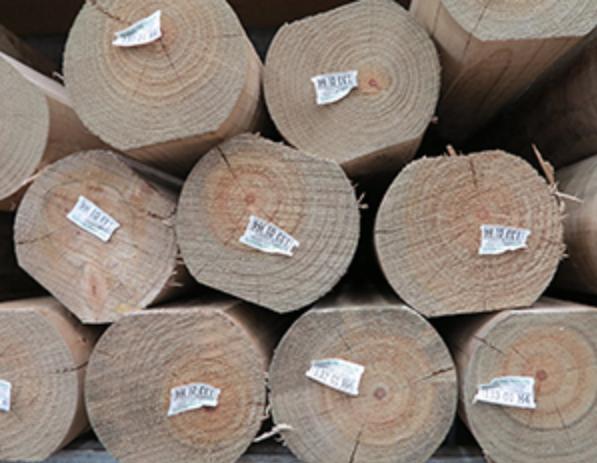
Figure 2: Copper Chrome Asenate (CCA)
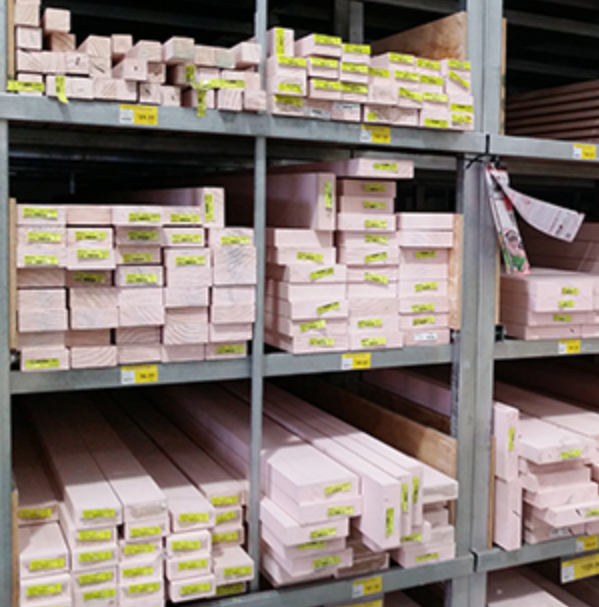
Figure 2: Light Organic Solvent Preservative (LOSP)
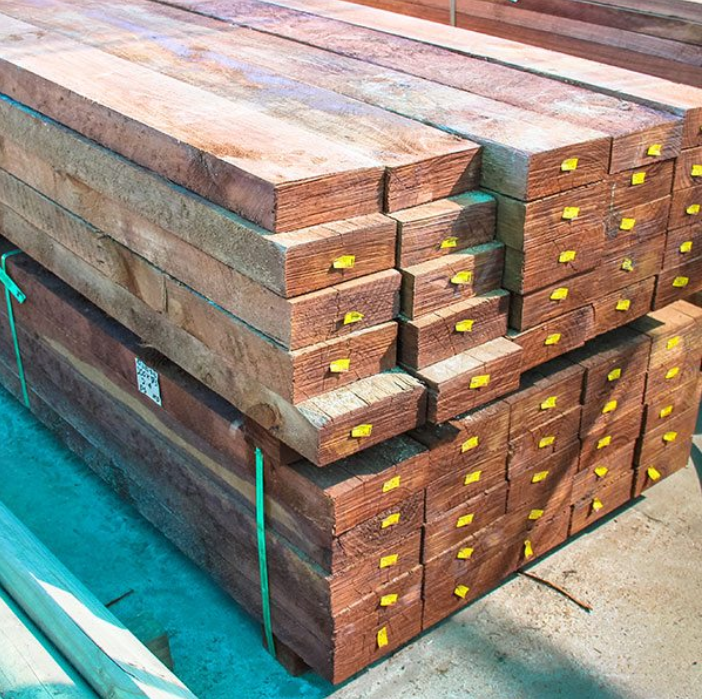
Figure 3: Alkaline Copper Quaternary (ACQ)
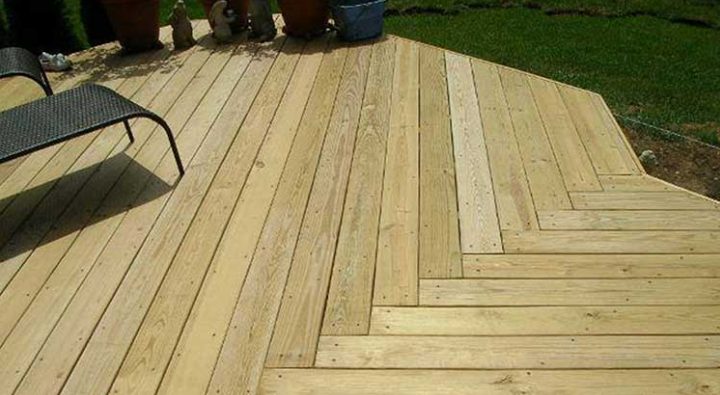
Figure 4: Copper Azole (CuAz)
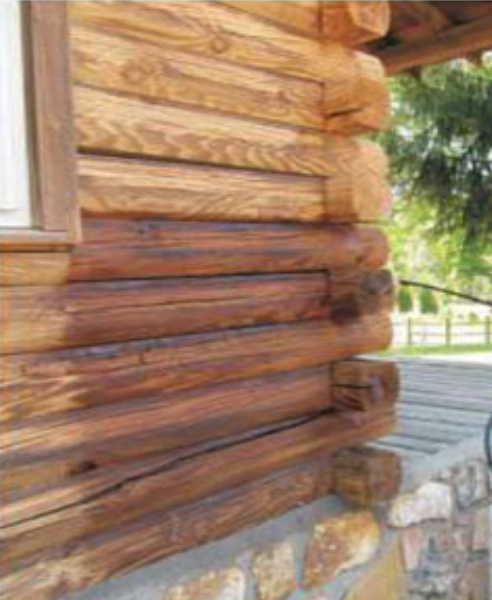
Figure 5: Boron/Borates
Detailing and Coating of Treated Timber
- Sealing and priming – all treated timber should be sealed or primed all-round to protect against weathering and surface mould.
- Cut ends – reseal immediately after cutting with preservative or primer.
- Top-edge protection – install flashing strips or damp-proof membranes over exposed beams and joists.
- Finishes – apply appropriate stains or coatings to reduce weathering and extend service life.
Sapwood vs Heartwood - Treatability
Preservative treatment is only effective in sapwood, which is porous and can absorb chemicals. In contrast, heartwood - especially in dense hardwoods - is naturally resistant to penetration.
Timber Part | Treatability | Implication |
Sapwood | Readily treatable | Can be fully treated to meet H-class requirement |
Heartwood | Resistant | Cannot reliably achieve treatment penetration |
For species like Blackbutt or Spotted Gum, pressure treatment does not reach H3/H4 levels in heartwood. Rely on natural durability instead, or switch to more treatable timbers.
Figure 6: Decay of sapwood under a film finish.
Application Methods and Effectiveness
Different methods are used to apply preservative chemicals to timber. The effectiveness of each method depends on penetration depth and chemical retention, both defined by AS 1604.
Treatment Method | Depth | Typical Use |
Pressure Impregnation | Deep, uniform | Structural and exposed elements |
Double-Vacuum (LOSP) | Moderate | Joinery, pre-finished cladding |
Dipping / Brushing | Surface only | Temporary protection, site cuts |
On-Site Re-Treatment
All cut ends, drill holes, and rebates in treated timber must be re-coated on site using suitable preservatives to maintain integrity.
Verifying Treatment Compliance
Treated timber must be traceable to a certified treatment process under the NCC. This includes:
- End tags or face stamps showing:
- Species
- Preservative type
- Hazard class (e.g. H3)
- Standard reference (e.g. AS/NZS 1604.1)
- Treatment plant certification
- Certificate of treatment for structural or in-ground applications
Before installation:
- Confirm labelling and documentation
- Verify that treatment depth and retention meet specification (especially for H4 or H5)
- Check cut ends have been sealed
Detailing & Compatibility
Preservative treatments may affect the performance of fasteners, coatings, and adhesives. Correct specification ensures long-term durability.
Component | Compatibility Notes |
Fixings | Use hot-dip galvanised or 304/316 stainless steel in CCA/ACQ |
Coatings | LOSP may inhibit adhesion of some water-based finishes |
Adhesives | Check compatibility with treatment type (esp. LOSP in joints) |
Summary
- Preservative treatment allows lower-durability timber to be used in high-risk applications
- AS 1604 defines six hazard classes based on exposure and biological risk
- Only sapwood is treatable - ensure penetration and retention for compliance
- All treated timber must be labelled and verifiable under AS 1604
- Re-seal site cuts, and ensure compatibility with fixings and coatings
- Refer to NCC and local CTIQ guidance for treatment and installation protocols