

1 Bridge Rd
Glebe NSW
Australia
2026
Overview
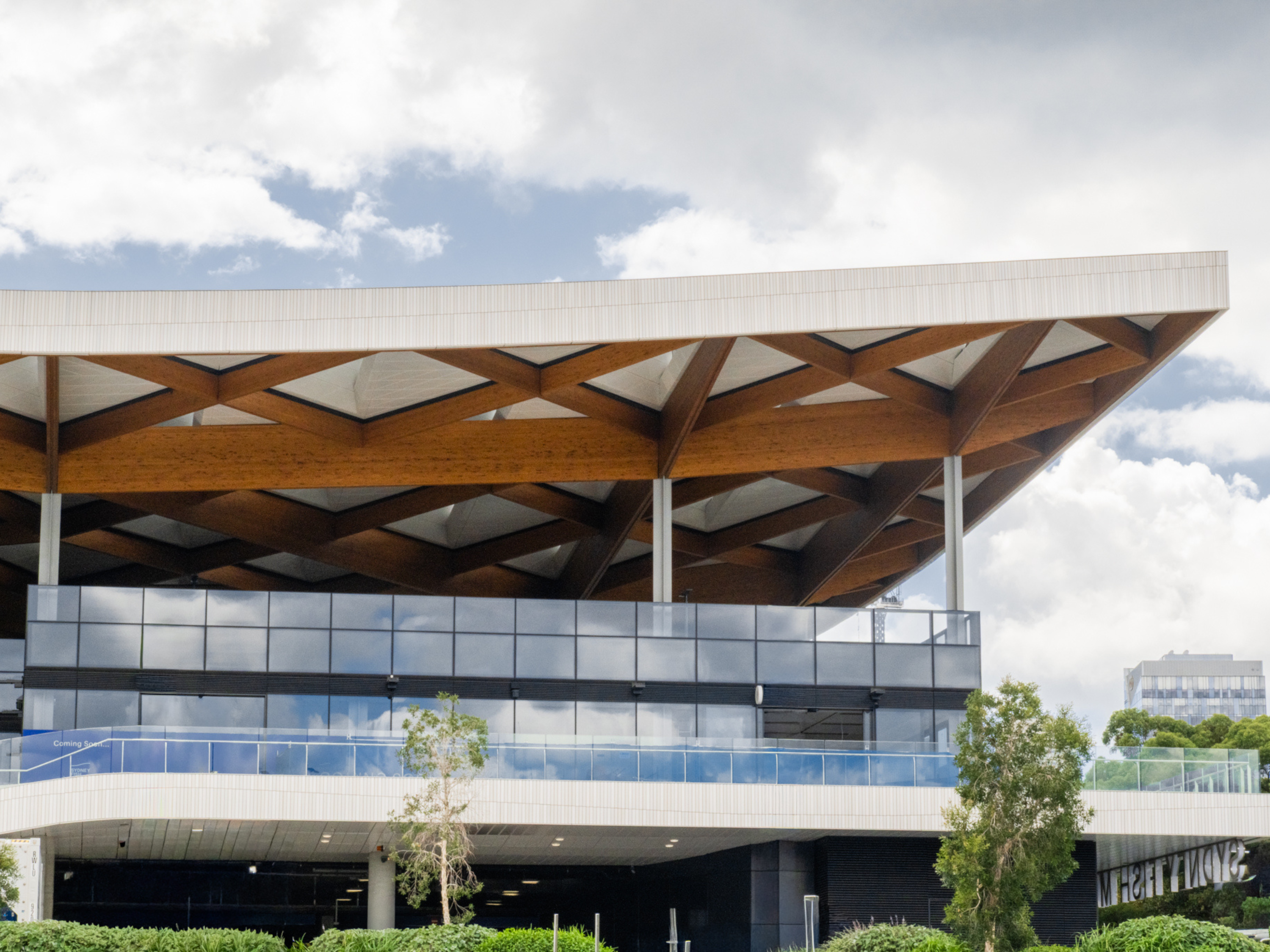
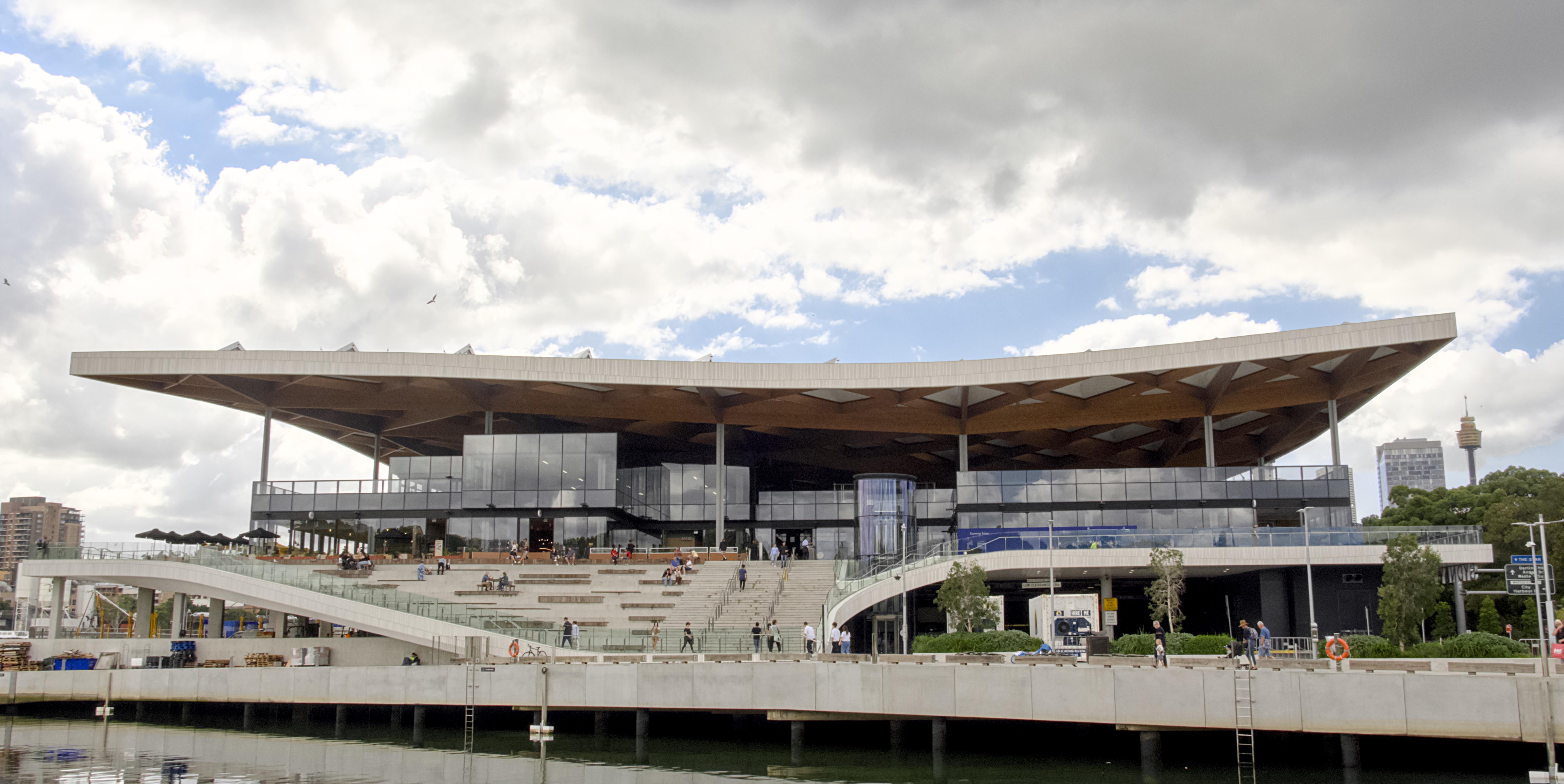
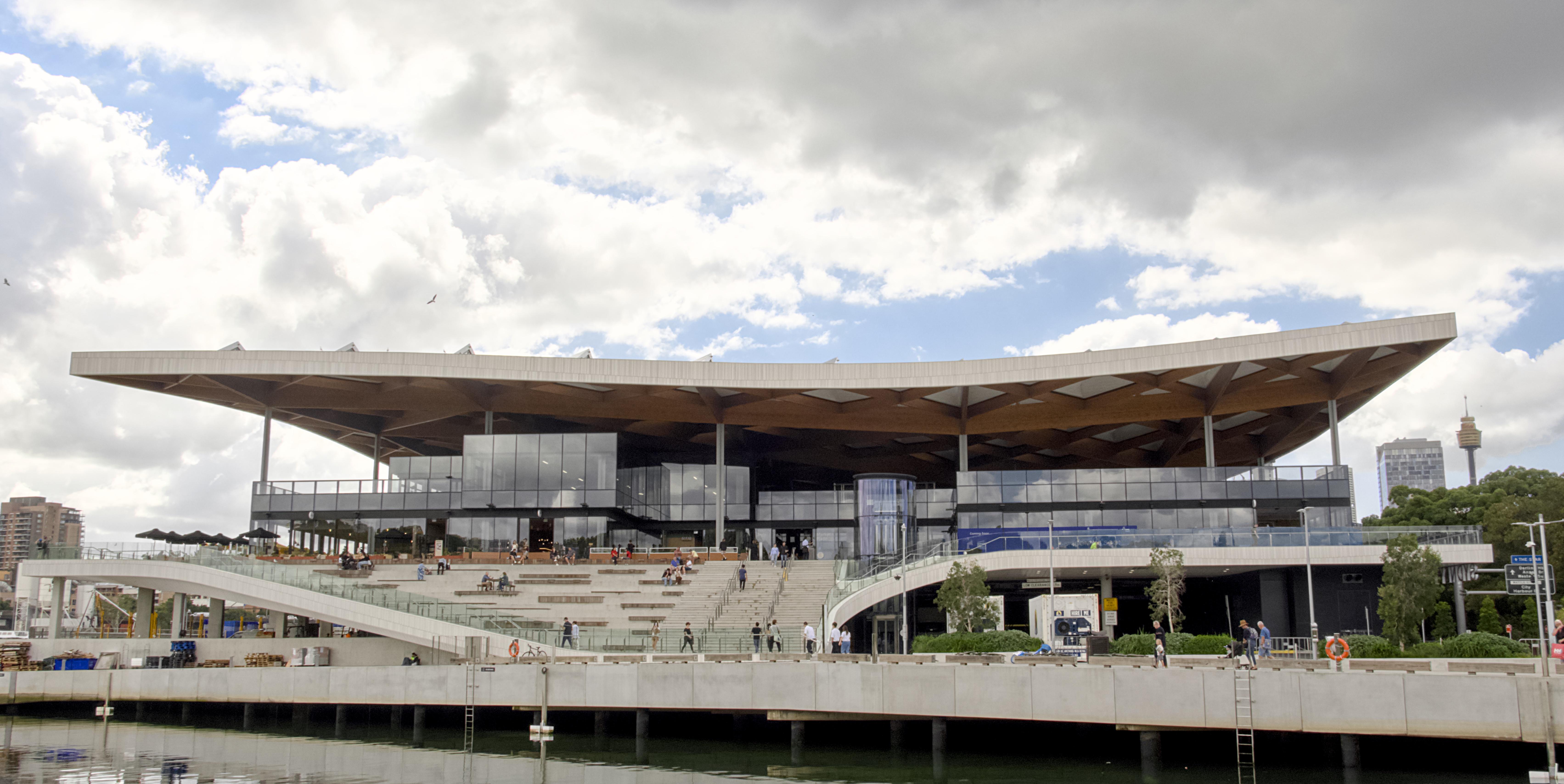
Sydney Fish Market is the third largest fish market in the world, covered by the largest timber roof in the southern hemisphere. The roof itself is 20,000m2, and almost 230m in length. Designed as both working infrastructure and a public destination, the building accommodates wholesale seafood trading, retail fishmongers, restaurants, cafés, event spaces and public promenades within a single facility.
The roof structure uses glue-laminated timber (glulam), selected not only for embodied carbon reduction but also for its coastal durability and aesthetic appeal. The roof’s geometry collects rainwater for reuse, supports integrated solar panels, filters daylight and promotes passive cooling through natural airflow beneath the canopy.
Project team
Structure
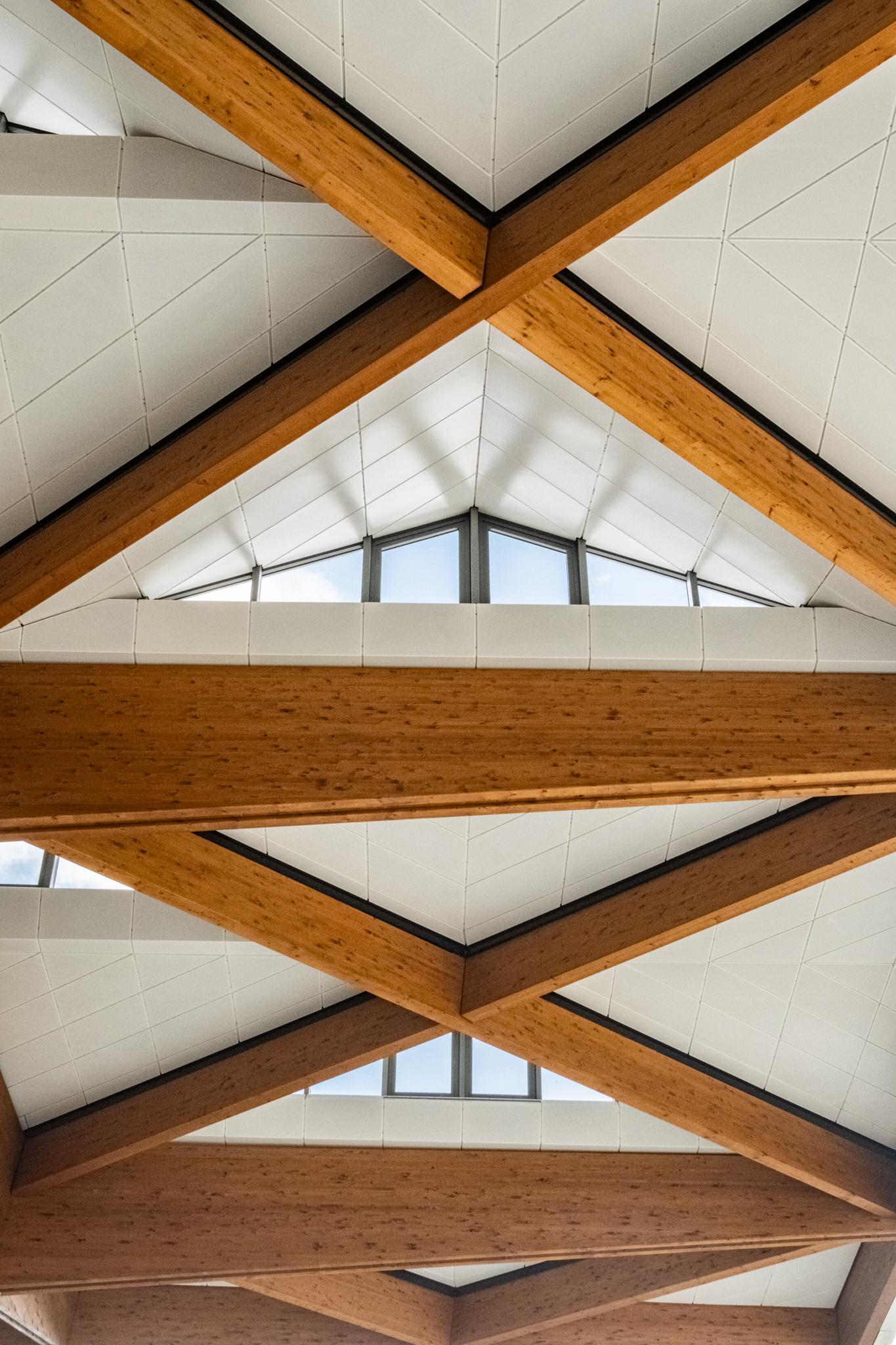
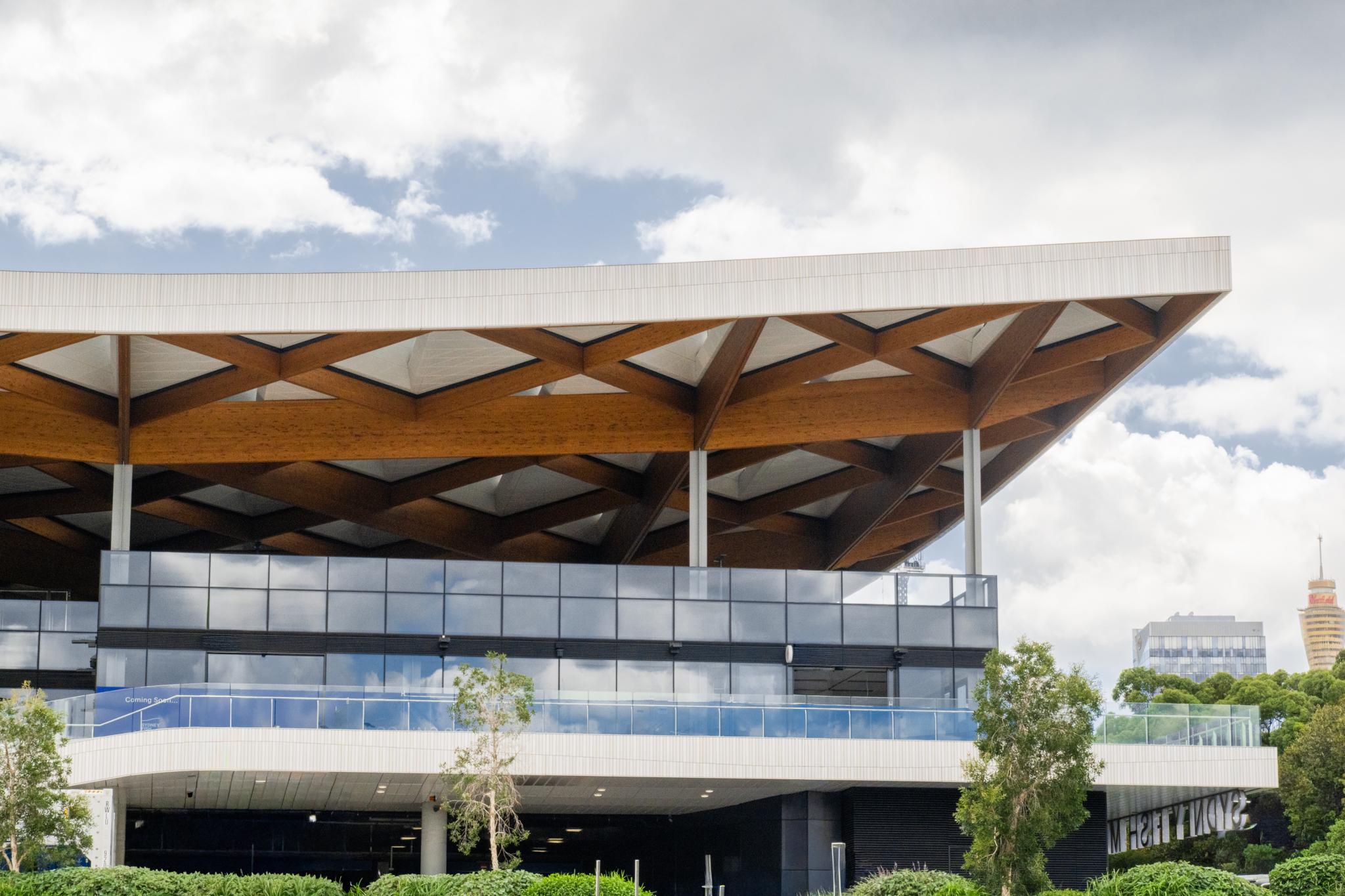
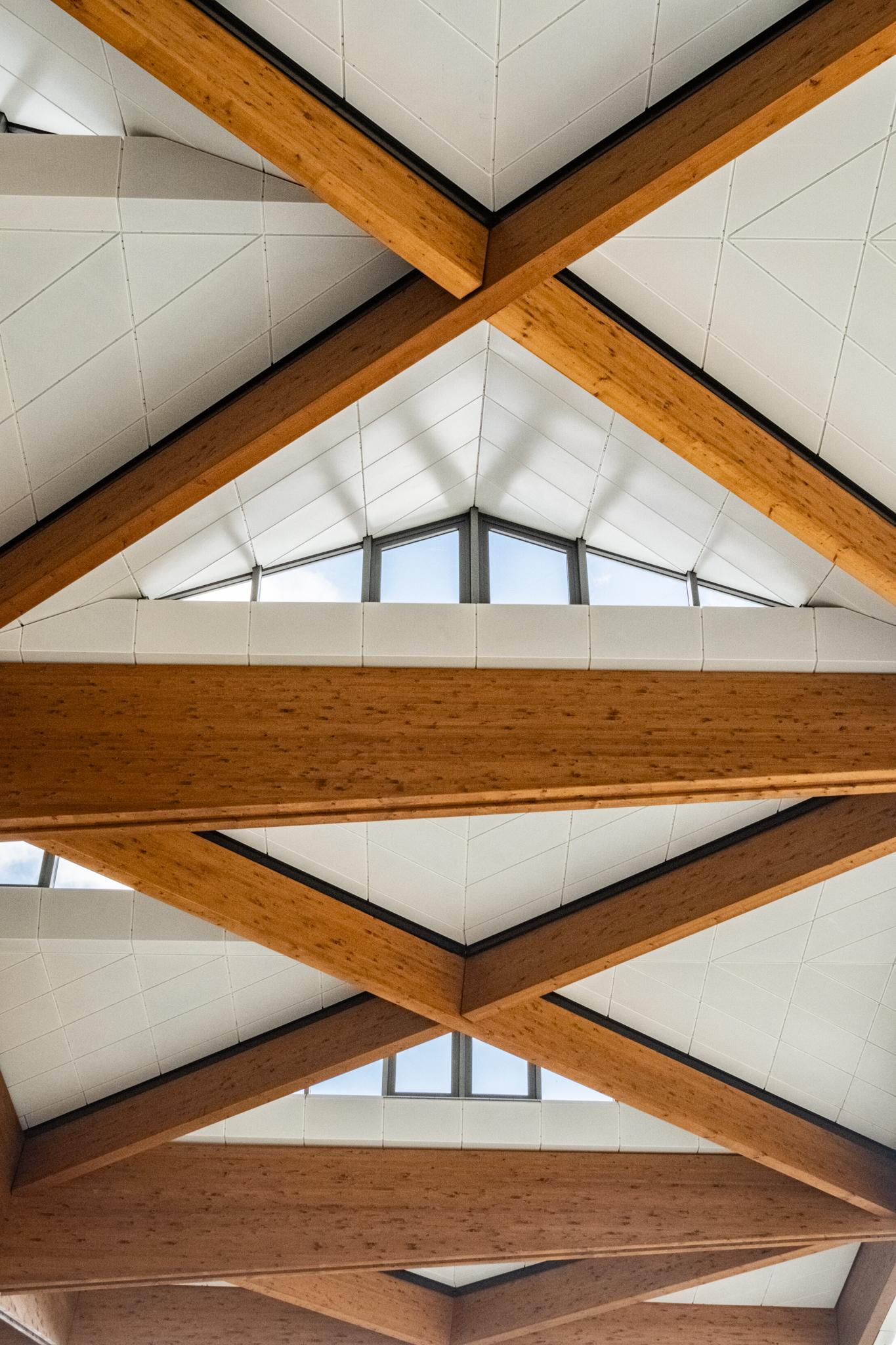
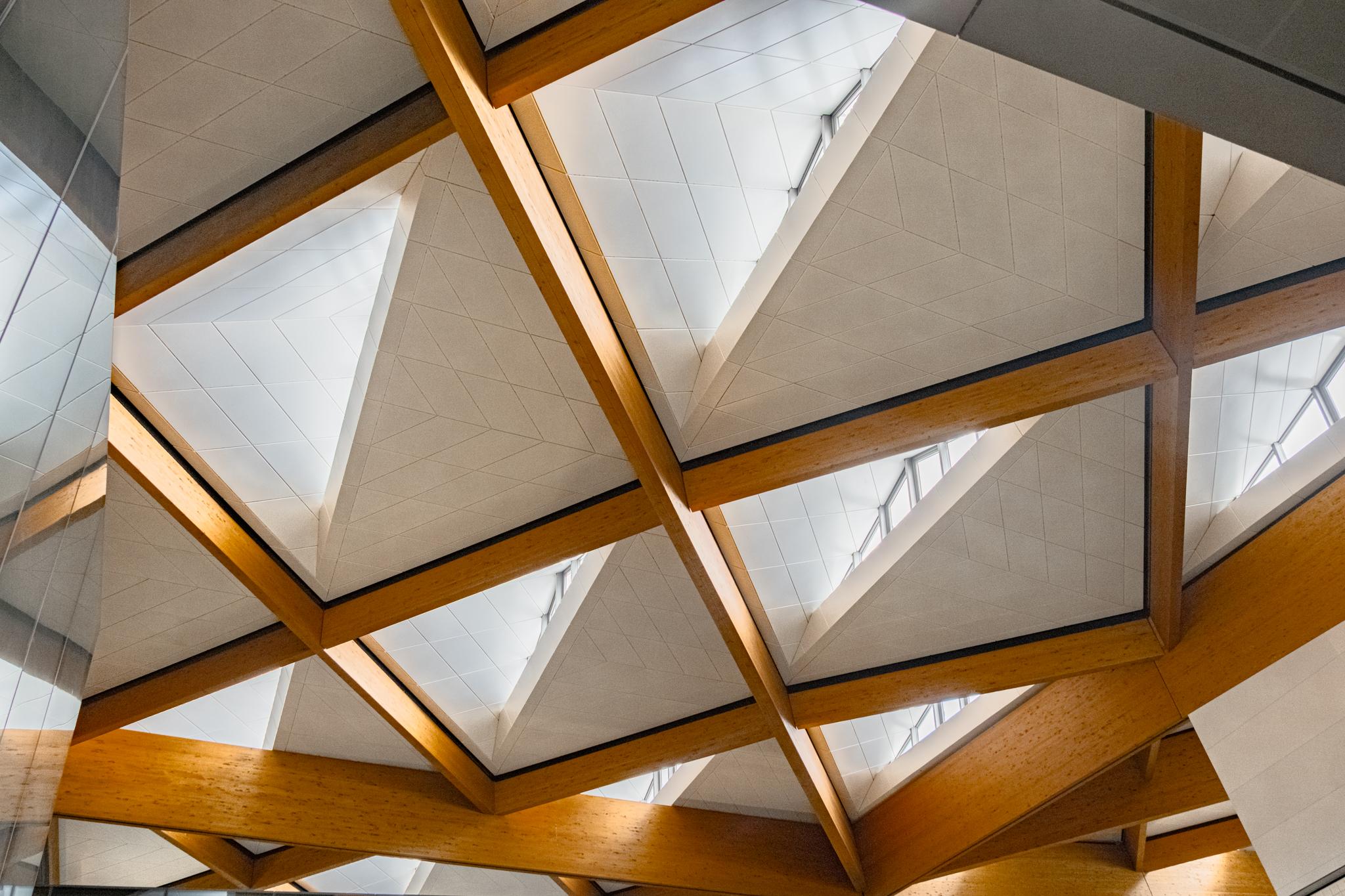
The main roof system is comprised of primary, secondary and tertiary glulam beams arranged in a flowing diagrid that spans across the full public market hall and circulation areas. Approximately 594 glulam members were fabricated for the canopy, with some beams extending up to 32 metres in length.
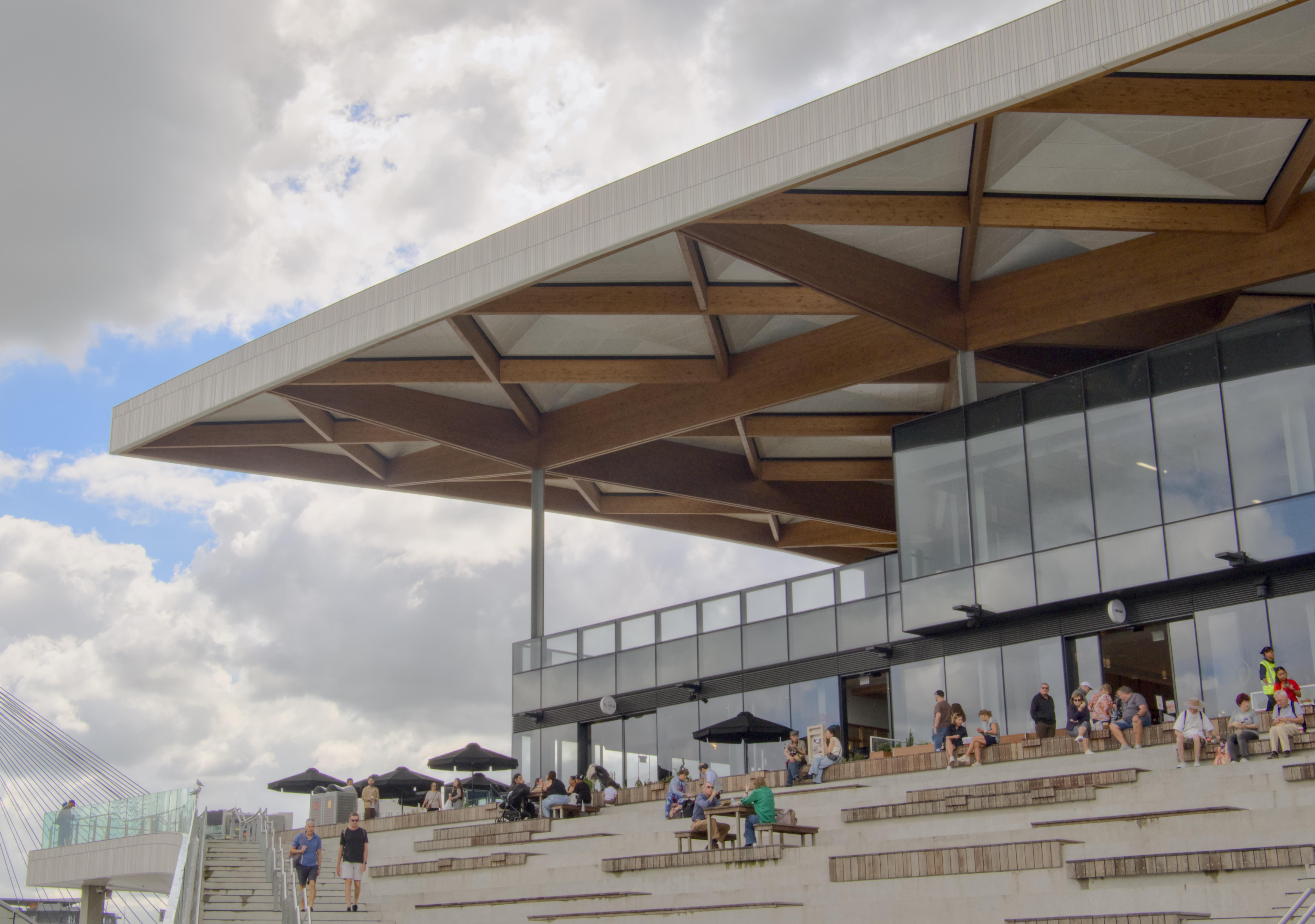
The timber roof works as a hybrid structure, combining glulam beams with steel columns to transfer loads efficiently while maintaining slender visual proportions. Careful detailing not only protected the timber connections from the harsh environment but also ensure buildability on site when connecting up to 8 different beams onto a single column.
Exterior
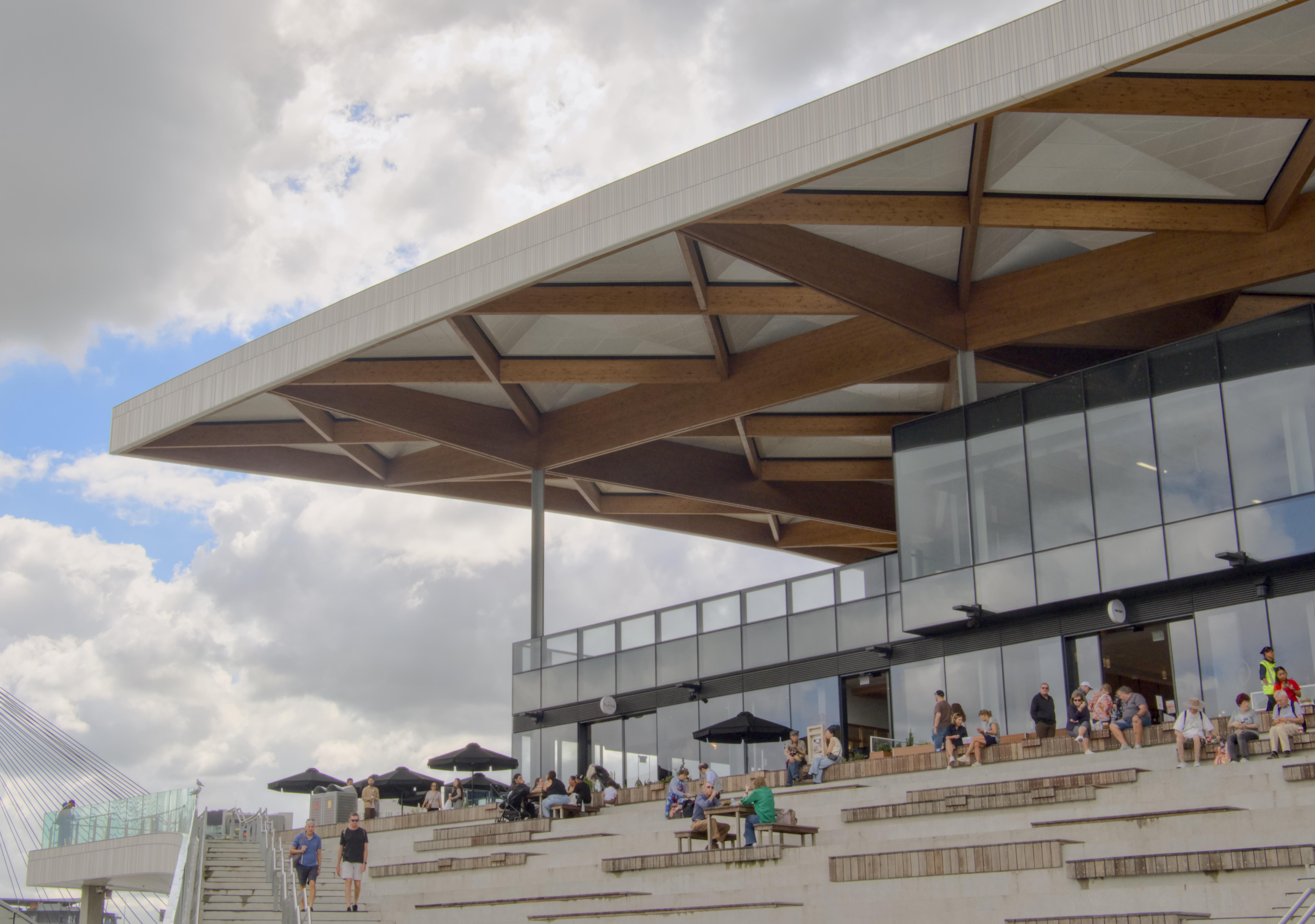
Externally, timber gives the building its strongest architectural identity through the vast floating canopy that defines the market’s waterfront presence. The roof extends well beyond the enclosed building envelope, using timber not only structurally but also as environmental shelter for public terraces, queuing areas and outdoor circulation.
Interior
Timber plays a major role in influencing the atmosphere of what could otherwise feel like a soulless industrial public building. The underside of the exposed glulam roof remains visible throughout the main market hall, giving the interior a warm character. Rather than concealing the structure, the timber ceiling becomes the dominant interior finish, creating a natural motif that softens the scale of the large commercial spaces.