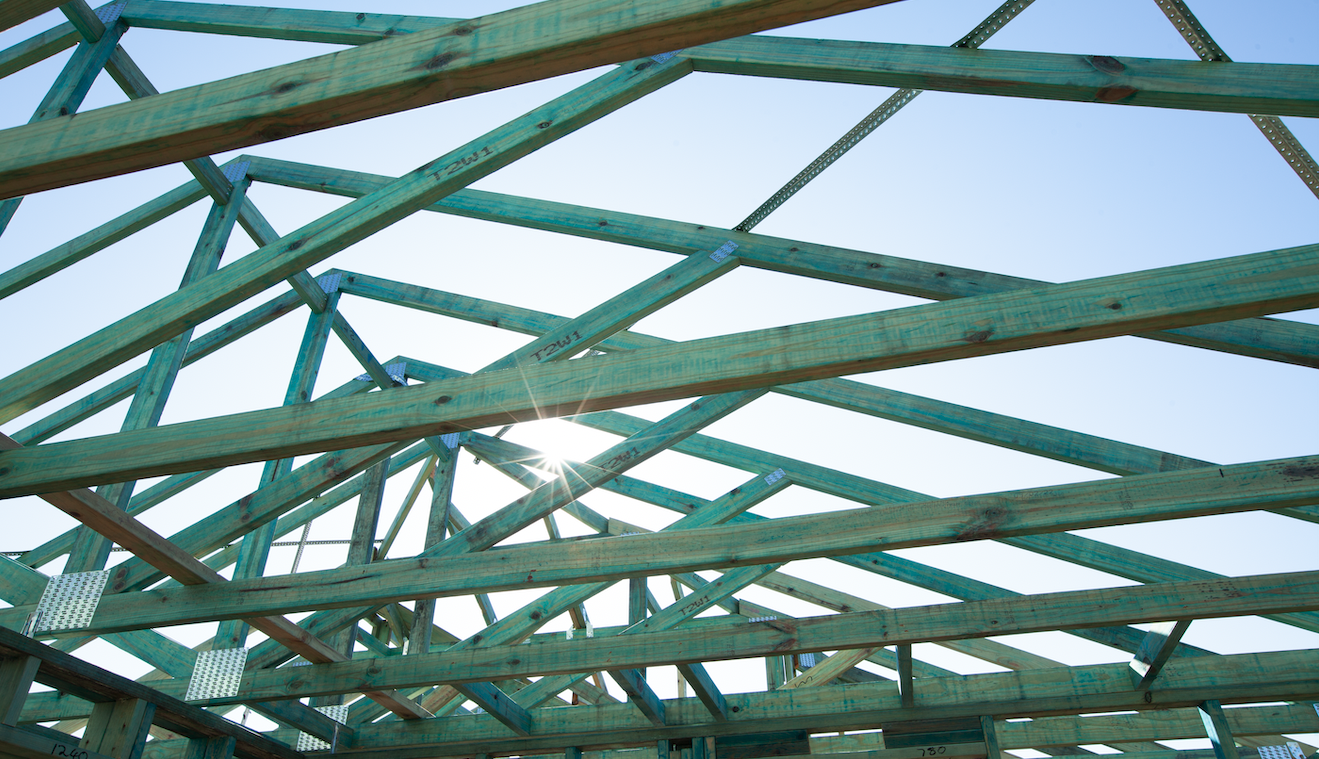
High-performing structural timber doesn’t happen by chance. Behind every stick of MGP10, MGP12 or MGP15 are sophisticated structural grading and quality control systems so you can be sure the product you build with is strong, reliable and compliant with Australian Standards.
What is structural grading?
Structural grading is the process of sorting timber into groups with known, predictable properties. Because timber varies naturally in strength, stiffness and density, grading ensures each piece used in construction will perform as expected under load, assessed primarily through the lens of two key properties:
- Strength - includes bending strength (the most common grading parameter) but also tension, compression, shear and bearing strength. Grading ensures the lowest-performing pieces in a grade still meet the minimum required performance, using a "fifth percentile" method - meaning 95% of the population exceeds the stated strength. For that reason, most timber is much stronger than its graded strength.
- Stiffness (Modulus of Elasticity, MOE) - measures how much a piece of timber bends or deflects when loaded. Unlike strength, stiffness is graded using the average value across the population.
To assign structural grades, sawmills use methods defined by Australian Standards that correlate strength with another grading parameter, such as:
- Visual stress grading - Experienced graders assess characteristics such as knots, grain, warping and wane, following strict standardised criteria.
- Proof grading - A controlled load is applied to a piece - the level it can withstand dictates the grade it's assigned.
- Machine stress grading - This is the most common approach, with many Australian mills using automated machine stress grading (MSG) for high accuracy and consistency. This method is governed by AS 1748, the primary standard for machine-graded timber.
How does Quality Control work in a sawmill?
To ensure the reliability of these gradings and the performance of the final product, quality control (QC) involves the ongoing testing and verification of timber throughout processing. Mills conduct regular destructive and non-destructive testing, analysing machine-to-test alignment, adjusting calibrations and checking log-source variations to ensure results remain accurate. Tests explore modulus of elasticity (MOE), modulus of rupture (MOR), tension strength, compression strength, density, moisture content and dimensional stability.
These checks are conducted alongside calibration of grading equipment, detailed traceability systems and verification against the relevant Australian Standards to ensure products meet the National Building Code.
Most Australian structural timber is also audited by independent bodies that specialise in verification of structural products, such as the Engineered Wood Products Association of Australasia. In addition to assessing the mill’s Quality Management System, these certification bodies review testing records, calibration logs, procedures and compliance with AS 1748 and associated standards, alongside facilitating independent product performance testing. For builders, designers and certifiers, this third-party assurance provides an additional layer of trust.
The quality in every timber frame
Having certainty in the quality of the materials you’re working with is critical no matter where you are in the construction ecosystem. Designers rely on consistent performance data for structural calculations. Truss and frame manufacturers need dependable MOE values for truss design software. Builders need confidence that supplied timber meets code requirements. Certifiers need verifiable evidence of compliance. Homeowners benefit from the safety and longevity of a well-built structure made from a sustainable, renewable material.
The timber you use for your framing is underpinned by a system designed to deliver safe and strong structural products. And, importantly, it’s backed by the assurance you’re using a naturally renewable product sourced from sustainably grown and certified plantations for homegrown quality you can build on.
To learn more about timber framing, including how to grow your business by harnessing timber’s sustainability story in your homebuyer journey materials, visit the WoodSolutions’ Renewable Timber Framing Campaign.
The Timber Framing Campaign is made possible by the support of industry partners - thank you to the following organisations: