Specification and Fabrication


Publications

Introduction

Timber buildings achieve their performance not only through material selection, but through the way materials are specified, fabricated, and assembled. Specification defines the expectations for structural capacity, durability, and appearance. Fabrication ensures these expectations are met-both in the factory and on site.

This page provides a practical guide to specifying and handling timber in a way that supports long-term performance. It explains how to match timber products to project requirements, apply quality standards during manufacturing, and manage site conditions to preserve structural and visual integrity.

It is intended for:

  • Designers and specifiers establishing timber grades, finishes, and treatment requirements
  • Fabricators and installers managing tolerances, fasteners, and moisture control
  • Engineers confirming strength, movement allowances, and joint detailing
  • Asset managers and certifiers overseeing documentation and lifecycle performance

While this page focuses on practical implementation, performance outcomes such as durability, fire resistance, and moisture control are addressed in detail on linked subpages.

Specification is the process of defining how timber will perform in service. It goes beyond naming a species or product-it includes grade, finish, treatment, fixings, tolerances, and documentation. The following principles support durable, compliant, and buildable outcomes.

Timber Product Types and Properties

Timber products vary in form, strength, dimensional stability, appearance, and exposure suitability. Common categories include:

  • Solid timber: Used for framing, decking, cladding, and joinery.
  • Engineered wood products (EWPs): Includes LVL, Glulam, and CLT for longer spans, stability, or prefabrication.
  • Sheet products: Plywood and OSB are commonly used for bracing, flooring, or linings.

For definitions and system applications, see Timber Building Systems

Timber selection should match the expected:

  • Structural performance (e.g. spans, loads, fixity)
  • Exposure conditions (e.g. internal dry, external above ground)
  • Visual grade or finish level
  • Compatibility with fire, acoustic, and moisture requirements

Grading and Quality Control

Timber must be correctly graded for both structural and appearance purposes. Grading provides assurance of performance under load and governs allowable defects in visible applications.

Structural Grading

  • F-grades (e.g. F7, F17): Stress grades common in hardwoods and softwoods
  • MGP (e.g. MGP10-15): Machine-graded pine for framing applications
  • GL-grades (e.g. GL8-GL18): Used for Glulam members

Grading should be specified with the relevant Australian Standard and noted on project documentation.

Appearance Grading

In expressed applications (e.g. linings, joinery, ceilings), appearance grade should be defined to control:

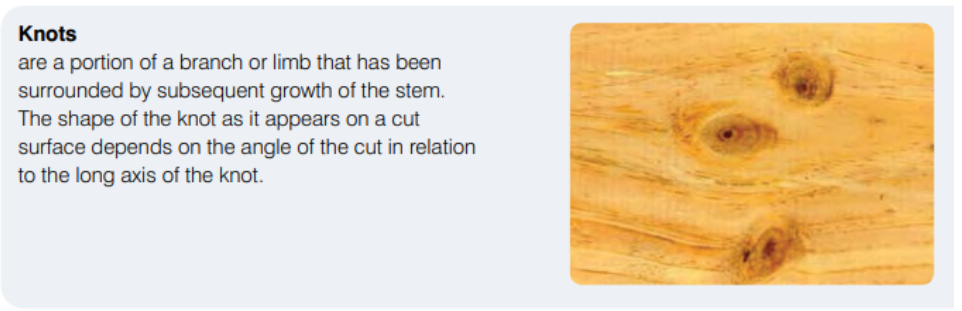
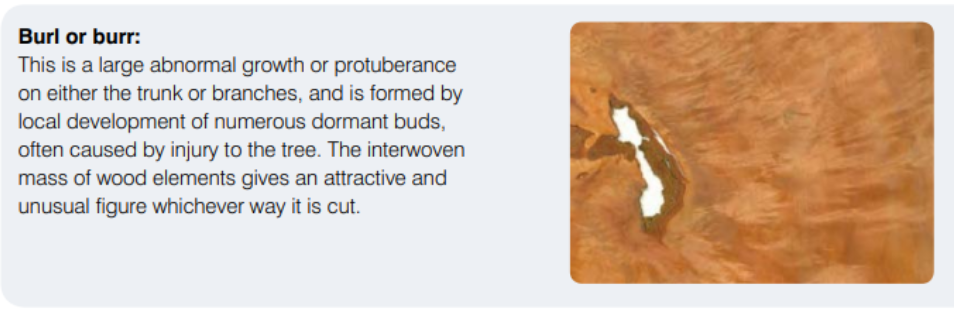
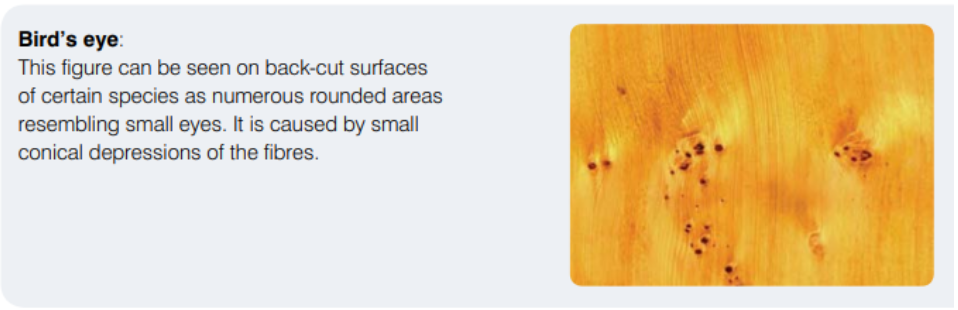
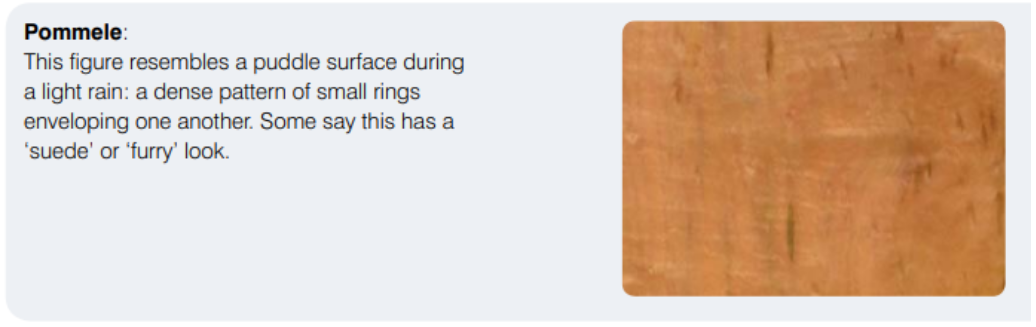
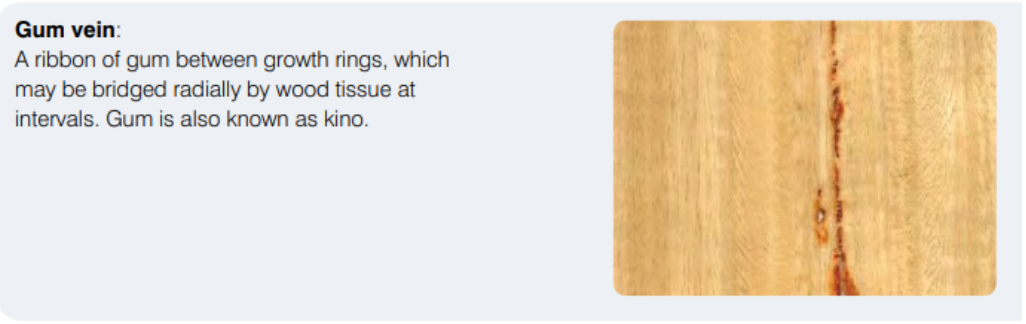
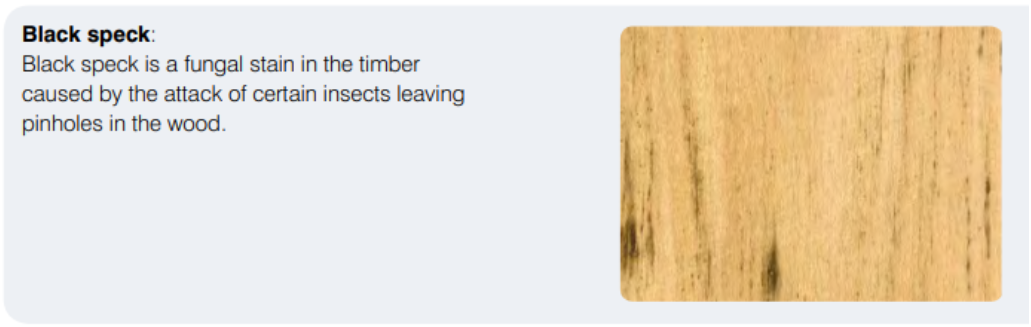
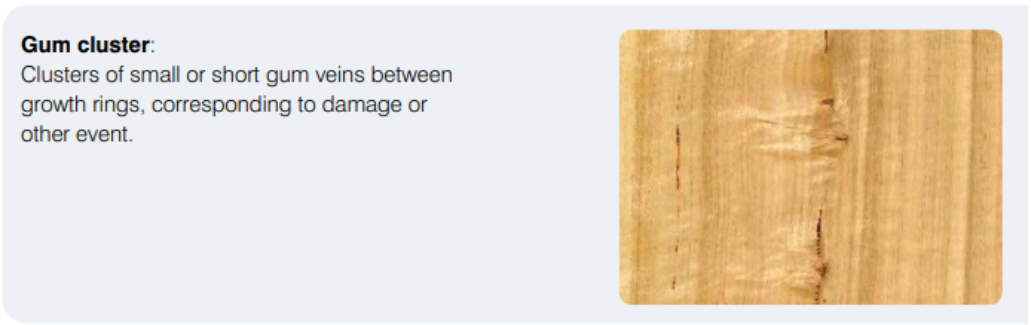
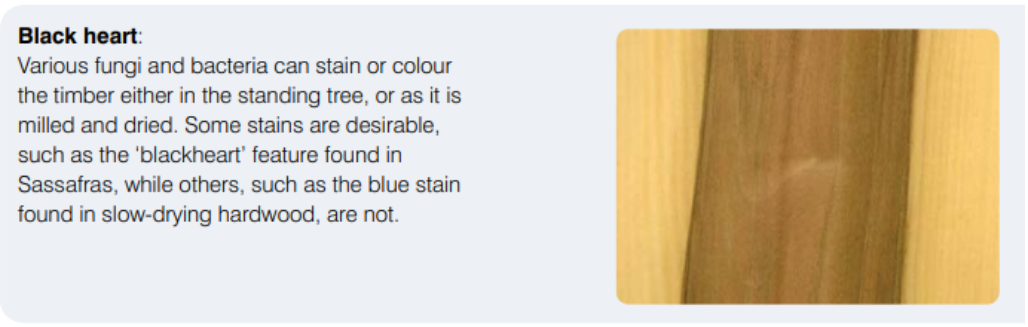
  • Surface characterisation (knots, gum veins, checks)
  • Colour consistency
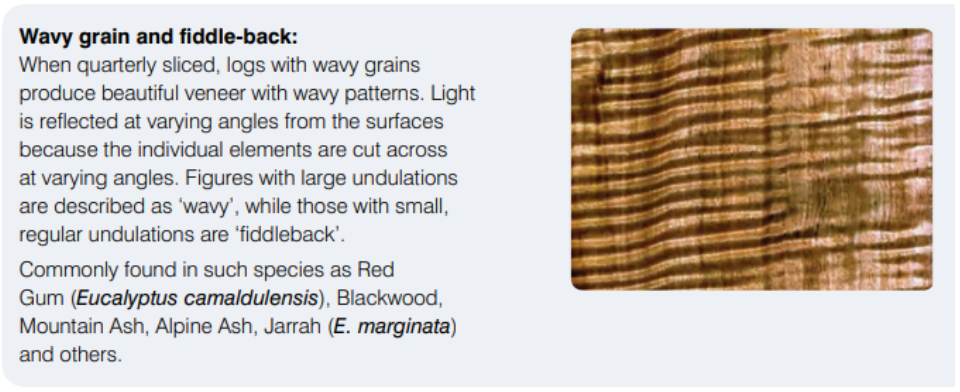
  • Grain and texture

Figure 1: Common characterisation in timber - WS TDG 14

Durability and Preservative Treatment

Timber must be matched to its hazard exposure class. This may involve:

  • Using naturally durable species (Durability Class 1-4, AS 5604)
  • Specifying preservative treatment levels (H1-H6, AS 1604)
  • Documenting treatment type and compliance method

Example:

  • External above-ground joinery: Class 2 hardwood or H3-treated softwood
  • Decking in-ground contact: Class 1 hardwood or H4/H5-treated pine

Products should be clearly labelled and traceable to treatment certification.

For full durability guidance, see the Durability guide.

Surface Finishing - Initial Considerations

Coating systems affect both appearance and service life. Surface preparation and species selection play a critical role in finish adhesion and durability.

Key specification factors include:

  • Timber species and grain (influences absorption and finish compatibility)
  • Exposure (e.g. UV intensity, wind, rain, salt)
  • Desired outcome (e.g. transparent vs opaque finish, weathered greying vs colour retention)
  • Maintenance tolerance (e.g. 2-year vs 5-year recoating cycles)

Where factory-applied coatings are used, handling and installation must not compromise the coating system.

See: [Protective Coatings and Sealants]

Fastener and Joint Compatibility

Fasteners must be compatible with:

  • Timber type and treatment (CCA, ACQ, or LOSP can corrode galvanised fixings)
  • Moisture levels and expected movement (screw or slotted fixings preferred in high-movement assemblies)
  • Fire performance and aesthetics (concealed vs exposed joints, screw spacing affecting acoustic paths)

Specification should clearly state:

  • Material (e.g. stainless steel 316, HDG, silicon bronze)
  • Installation method (pilot holes, spacing)
  • Joint detailing (movement gaps, tolerance allowances)

See: [Timber Fasteners and Joint Detailing]
See: [Acoustic Systems - Joint and Fixing Patterns]


Even well-specified timber products can underperform if fabrication, handling, or on-site modification is not executed well. This section outlines the key fabrication principles needed to maintain material integrity, alignment with documentation, and performance expectations during and after construction.

Manufacturing and Fabrication of Engineered Products

Engineered wood products (EWPs) such as Glulam, LVL, CLT and plywood are manufactured under controlled conditions. Their performance depends on factory precision and the preservation of quality during transport, storage, and installation.

Key Considerations

  • Bond type must match exposure class:
    • Type A (fully waterproof, e.g. for Glulam in external structures)
    • Type B or C (for interior-only use)
  • Tolerances must be respected for length, squareness, camber, and bow
  • Finish level (A, B, or C grade) affects acceptability of surface variation
  • Grain direction in sheet products (e.g. plywood) influences stiffness and appearance in visible applications

Do not cut across adhesive bond lines, protective coatings, or laminated sections without supplier guidance.
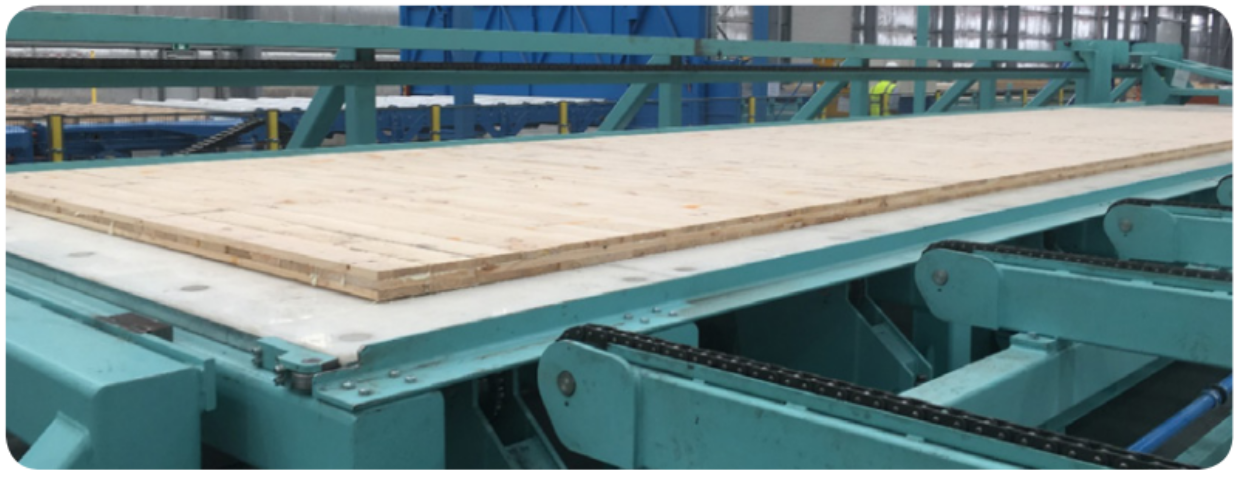
Figure 2: 3 layer CLT panel after pressing (WS TDG 16 p5 XLam Australia)

See: [Handling of CLT, LVL, and Glulam Products]
See: [Structural and Visual Tolerances Guide]

On-Site Handling, Storage, and Protection

Timber elements-particularly engineered and coated components-are highly susceptible to damage during site handling.

Storage Guidelines

  • Store timber off the ground on flat, drained bearers
  • Use breathable covers (e.g. woven wraps) to protect from UV and rain
  • Avoid using impermeable plastic that can trap condensation
  • Stack by type and length to reduce searching and restacking damage

Handling Notes

  • Use spreader bars or lifting rigs for large Glulam and CLT elements
  • Avoid point loads and excessive cantilevering
  • Lift panels flat and ensure lifting eyes or plates are factory-approved

Moisture protection during handling is critical. Wetting before enclosure increases risk of mould, delamination, and fastener corrosion.
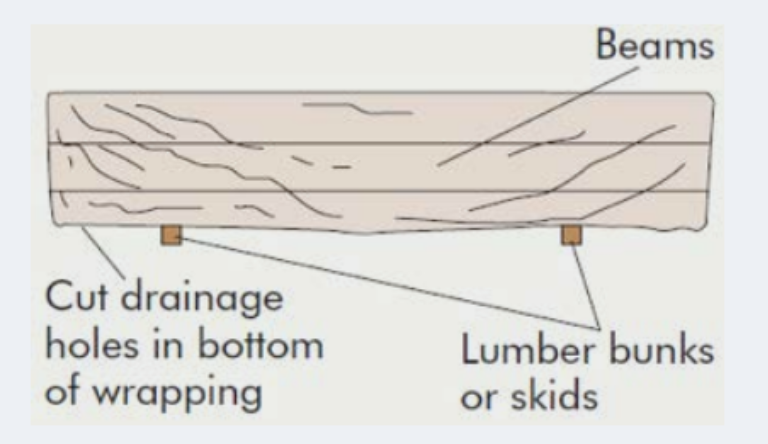
Figure 3: Stacking timber clear off the ground by skids (WS TDG 36 p8)
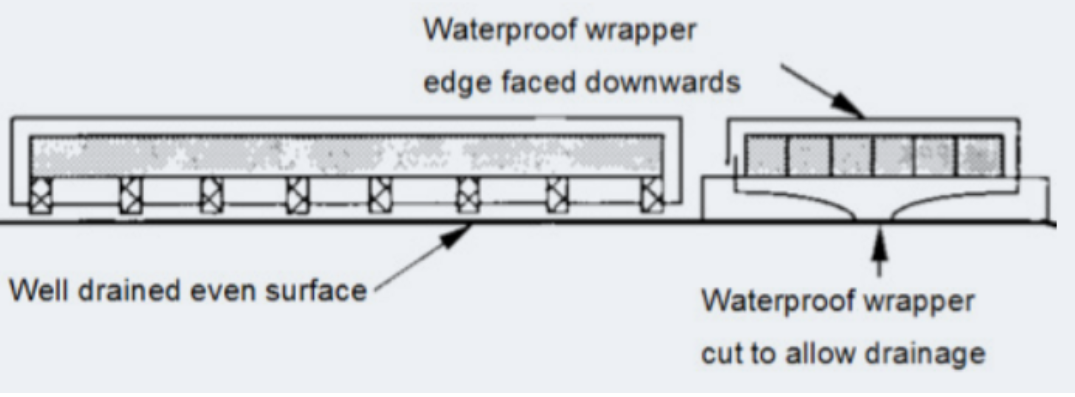
Figure 4: Site storage of Glulam (WS TDG 36 p8)
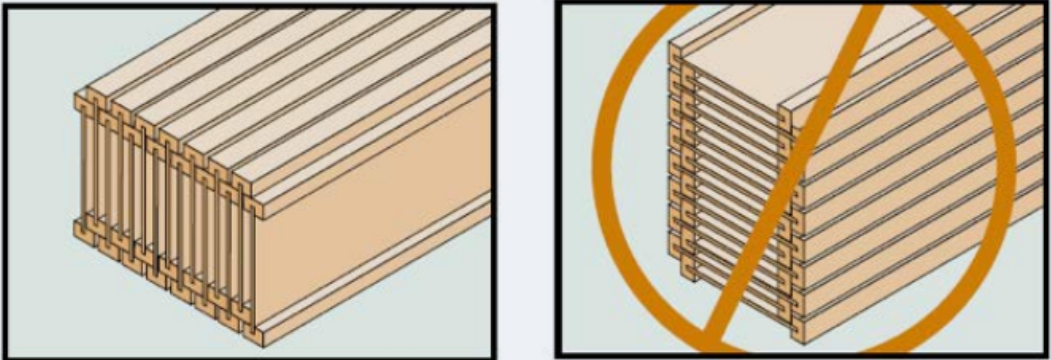
Figure 5: Storage of I-Joist Beams (WS TDG 36 p8)

See: [Moisture Management During Construction]
See: [Temporary Protection and Site Sequencing]

Cutting, Drilling and Site Modification

On-site modification of prefabricated timber should be minimised and carefully controlled. Unplanned cutting can expose untreated zones, damage coatings, or compromise engineered bonds.

Guidelines

  • Pre-plan penetrations for services (electrical, plumbing, HVAC)
  • Avoid cuts across bond lines in Glulam, LVL, or CLT without engineering sign-off
  • All cut ends on treated timber must be resealed with compatible preservative
  • Use sharp tools to prevent chipping in coated or visual-grade products
  • Pilot-drill dense hardwoods or treated pine to avoid splitting

Touch-Up & Resealing

  • Use sealants or preservatives compatible with the original treatment system
  • Site modifications may void warranties or product certification unless verified
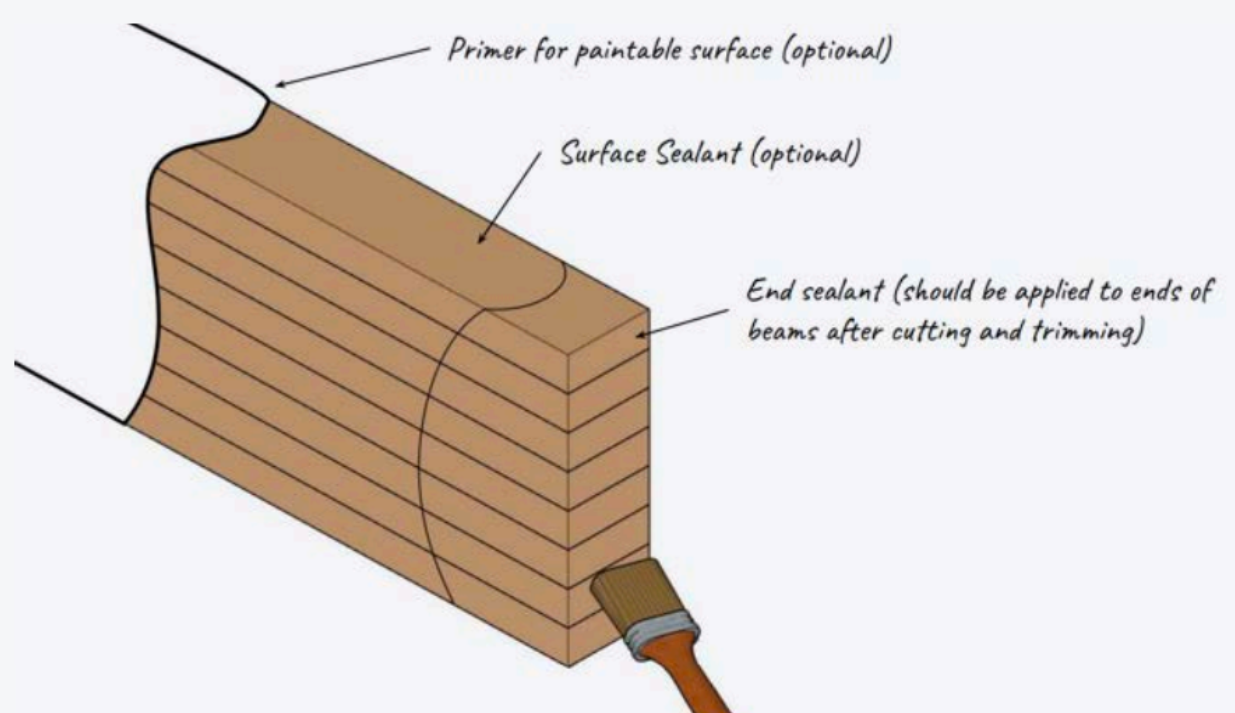
Figure 6: End grain sealer applied to glue-laminated beam (WS TDG 53 p25)

See: [Site Modifications - Preservative Resealing Protocols]
See: [CLT & Glulam Service Routing and Coordination]

Assembly and Installation Tolerances

Maintaining dimensional accuracy during installation is essential for both structural performance and appearance.

Key Principles

  • Tolerances should align with product supplier specifications or AS/NZS standards
  • Allowance must be made for movement (e.g. seasonal shrinkage, creep) in joint and fixing design
  • Architectural alignments (e.g. exposed Glulam or junctions between materials) require careful planning of datum points and reference lines
  • Pre-coordinated shop drawings must be referenced on site for fastening, penetration zones, and service clashes

Avoid excessive on-site reworking to "make fit"-it introduces misalignment and moisture entry points.

See: [Installation Tolerances and Fixing Systems]
See: [Prefabrication and Sequencing in Timber Construction]


Assembly and Installation Tolerances

Maintaining dimensional accuracy during installation is essential for both structural performance and appearance.

Key Principles

  • Tolerances should align with product supplier specifications or AS/NZS standards
  • Allowance must be made for movement (e.g. seasonal shrinkage, creep) in joint and fixing design
  • Architectural alignments (e.g. exposed Glulam or junctions between materials) require careful planning of datum points and reference lines
  • Pre-coordinated shop drawings must be referenced on site for fastening, penetration zones, and service clashes
  • Avoid excessive on-site reworking to "make fit"-it introduces misalignment and moisture entry points.
     

See: [Installation Tolerances and Fixing Systems]
See: [Prefabrication and Sequencing in Timber Construction]
 

The long-term performance of timber structures depends not only on the products selected, but on how they are detailed, jointed, and installed. Detailing must account for moisture, movement, inspection access, and serviceability.

The following principles apply across all building types and should be documented in design drawings, fabrication packages, and quality assurance protocols.

Accommodating Movement and Moisture

Timber moves in response to changes in moisture content. If this movement is restrained, it can cause cracking, joint failure, or coating breakdown.

Detailing Strategies

  • Use seasoned timber with an expected in-service moisture content (typically 10-16%)
  • Incorporate movement joints in large surfaces (e.g. cladding, ceilings)
  • Arris or round all exposed edges to reduce stress concentrations in finishes
  • Avoid tight mitres or continuous glued joints in areas prone to expansion
  • Allow differential movement between materials (e.g. timber and steel/concrete junctions)

See: [Moisture Movement in Timber - Design Guide]
See: [Fastener Patterns and Movement Control]

Shedding and Protecting from Moisture

Moisture is the leading cause of premature timber failure. Detailing should promote drying, minimise retention, and avoid trapping water at interfaces.

Moisture-Resistant Detailing

  • Provide eaves, flashings, and falls to shed water away from horizontal surfaces
  • Use cavity systems behind cladding to allow drainage and ventilation
  • Seal end grain and exposed interfaces using compatible sealants
  • Avoid flat tops on balustrades, beams, or posts without capping
  • Install damp-proof courses and vapour-permeable membranes where required

Note: End grain can absorb moisture up to 10x faster than face grain-detailing here is critical.

See: [Moisture Control in External Timber Elements]
See: [Detailing for End Grain Protection]

Joint Design and Fastening Considerations

Timber joints are points of both structural stress and environmental vulnerability. Good detailing ensures movement can occur without splitting or decay.

Best-Practice Joint Design

  • Use mechanical fasteners with flexible edge spacing where movement is expected
  • Avoid over-reliance on adhesives unless movement and moisture are tightly controlled
  • Design for visual consistency-e.g. concealed fasteners or expressed joints
  • Pre-drill hardwoods and end-grain zones to prevent splitting
  • Use joint tapes or gaskets in mass timber assemblies to preserve acoustic and vapour seals

See: [Joint and Fastener Design for Durability]
See: [CLT Panel Joint Detailing - Fire and Acoustic]

Designing for Service Life and Maintainability

Timber buildings should be detailed with their long-term maintenance in mind. Accessible, replaceable, and inspectable elements significantly reduce lifecycle risk and cost.

Maintenance-Friendly Detailing

  • Use removable fixings or modular components for elements subject to wear
  • Avoid concealed fixings in areas prone to movement or decay
  • Define coating maintenance cycles (e.g. 2-5 years) in project documentation
  • Ensure that interfaces between materials can be reinspected and resealed
  • Group components logically to enable efficient access (e.g. battens, slats, infills)

Good maintenance design is now expected by insurers and certifiers.

See: [Service Life Planning in Timber Design]
See: [Timber Maintenance and Inspection Checklist]