CLT Material Properties and Manufacture

CLT is a solid engineered timber panel designed for structural performance, prefabrication, and two-way spanning action. Its strength, stiffness, and dimensional stability are the result of controlled manufacturing and lamella configuration - not inherent to timber alone, but engineered into the product through the deliberate arrangement of layers, grain direction, adhesive selection, and pressing process.

This page describes how CLT is made, the material properties that influence its performance, and the supply and procurement considerations that affect specification. It provides the technical foundation for the design, detailing, and compliance guidance covered in the companion sub-pages.

Effective specification depends on understanding the product's composition, the role of the adhesive system, and the non-interchangeability between manufacturers. Early engagement with the CLT supplier - during design coordination, not after documentation - is the single most effective step in ensuring that fabrication, compliance, and construction proceed smoothly.

For an overview of CLT's role in building design, applications, and design approach, see the CLT Guide.

Key Takeaways

  • CLT panels are composed of 3 to 7 layers of timber lamellae arranged in alternating grain directions, bonded with structural adhesive, and consolidated under pressure. The cross-lamination constrains dimensional movement and distributes strength in both directions.
  • Typical panel dimensions are up to 3.5 m wide and 16-20 m long, with thickness ranging from approximately 60 mm (3-layer) to over 300 mm (7-layer). CNC fabrication allows openings, service penetrations, connection slots, and bearing rebates to be cut before dispatch.
  • CLT is predominantly manufactured from plantation softwoods (spruce, pine) sourced from sustainably managed forests. Some manufacturers also produce CLT from hardwood species, though this remains less common in the Australian market.
  • Adhesive selection affects structural performance, fire behaviour, moisture tolerance, VOC emissions, and panel appearance. The two most common systems are polyurethane (PUR) and melamine-urea-formaldehyde (MUF), each with distinct characteristics.
  • CLT products are not interchangeable between manufacturers. Structural, acoustic, and fire compliance data is valid only for the specific panel configuration, adhesive system, species, and layup tested. Substitution requires re-verification.
  • CLT is manufactured in Australia and also imported from New Zealand and Europe. Lead times for panel manufacture are typically 6–12 weeks. Early engagement with the manufacturer is essential to align fabrication with the project programme.
     

Publications

1. Composition and Layup

CLT panels are composed of multiple layers of timber boards - called lamellae - arranged so that each layer's grain direction is perpendicular to its neighbours. This cross-lamination is the defining characteristic of the product and the source of its key structural and dimensional properties.

Layer Configuration

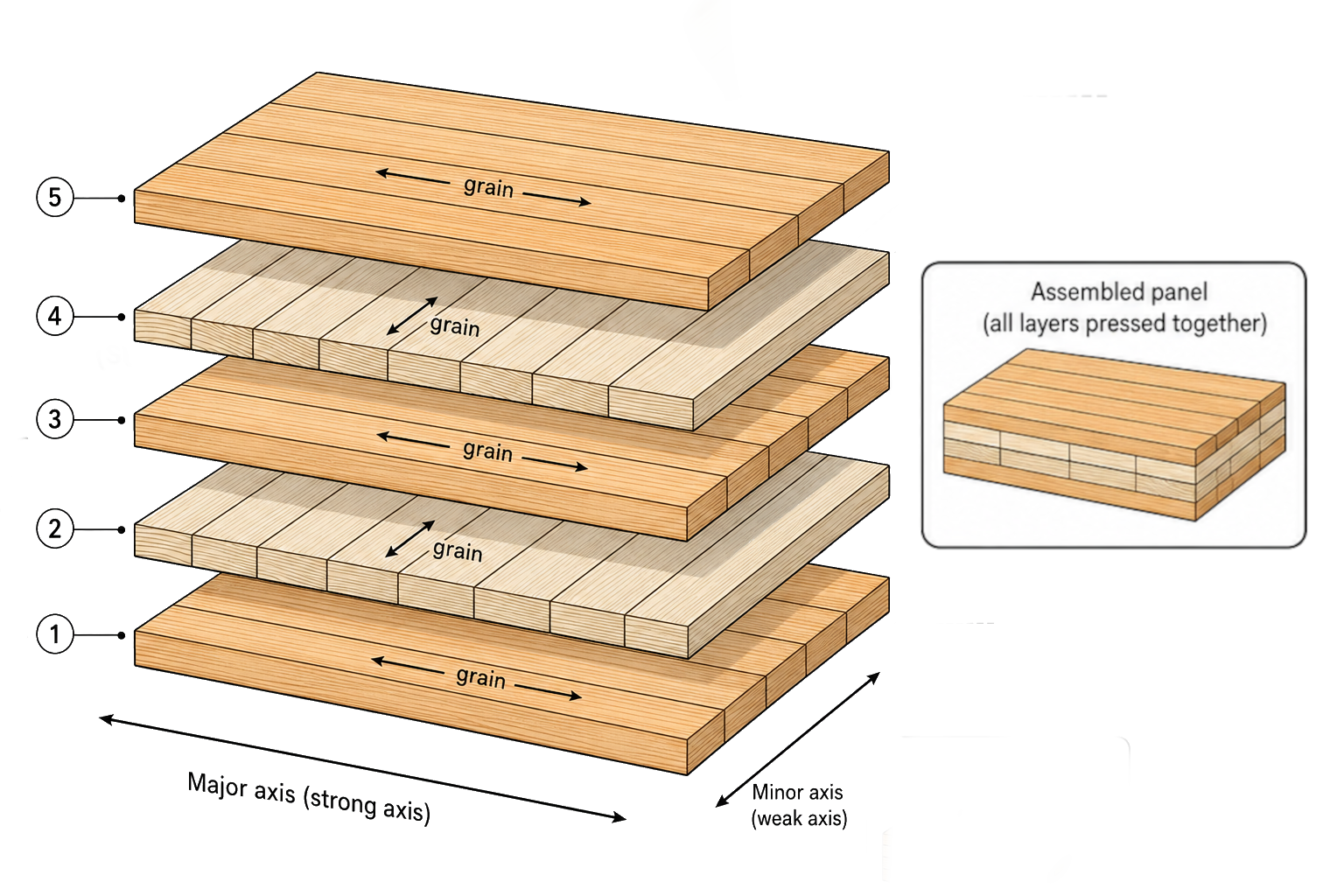
Panels are manufactured in an odd number of layers - typically 3, 5, or 7 - to maintain structural symmetry about the panel's central axis. Each layer is composed of boards laid edge-to-edge, forming a continuous timber plate. The boards within each layer run parallel to one another, and the grain alternates by 90 degrees from layer to layer.

This arrangement means that strength and stiffness are distributed in both principal directions, dimensional movement from moisture change is constrained in each direction by the adjacent cross-layers, and the panel behaves as a structural plate rather than a beam - carrying loads across its full surface rather than in one direction only.

CLT Lay-Ups
CLT Lay-Ups


Figure 1: Layup diagram

The outermost layers define the panel's "major axis" - the direction of primary spanning capacity. Panels are oriented on site so that the major axis aligns with the primary span direction, though two-way spanning behaviour can be utilised where the structural design takes advantage of it.

Lamella Dimensions

Individual lamellae are typically 20-45 mm thick and 60-250 mm wide, depending on manufacturer and species. The discrete nature of the lamella build-up means that panel thickness increases in steps - adding a layer adds the full lamella thickness - rather than being continuously variable. This influences structural optimisation and should be considered early in design.

European manufacturers commonly use a standard lamella thickness of approximately 40 mm (following European production conventions), while some Australian and New Zealand manufacturers may use different lamella dimensions reflecting local species and production equipment. The distinction is relevant to structural design, fire engineering (where charring calculations are sensitive to layer thickness and glue line depth), and acoustic performance.

CLT Panels
CLT Panels


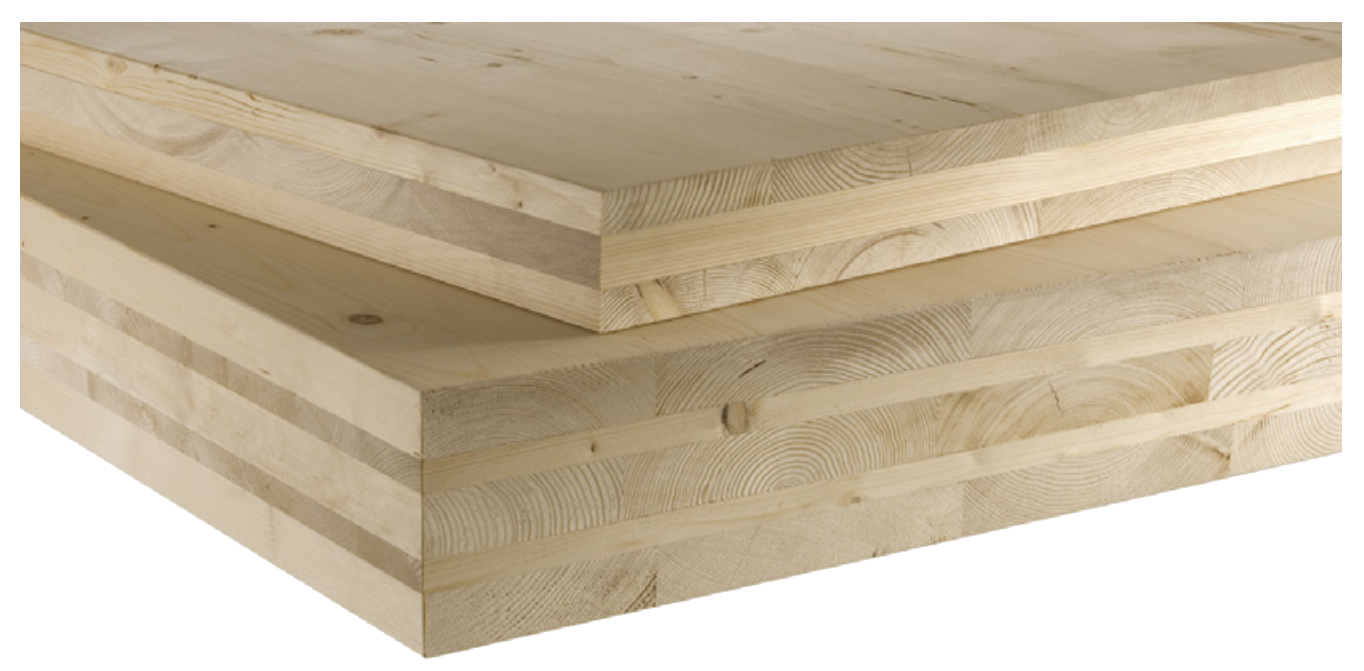
Figure 2: Panel cross-section showing 3-layer, 5-layer, and 7-layer CLT cross-sections

Panel Dimensions

Typical maximum panel dimensions are approximately 3.5 m wide and 16-20 m long, though these vary by manufacturer and are influenced by press size, transport constraints, and crane capacity on site. Panel thickness ranges from approximately 60 mm (3-layer) to over 300 mm (7-layer).
CNC machining allows panels to be fabricated with window and door openings, service routing channels and penetrations, connection slots and bearing rebates, lifting point locations, and edge profiles for panel-to-panel joints.

This level of prefabrication detail means that panels arrive on site ready for assembly - reducing on-site cutting, waste, and the coordination burden associated with in-situ construction.

ParameterTypical RangeNotes
Number of Layers3, 5, or 7Always odd, for structural symmetry
Lamella thickness20-45 mmVaries by manufacturer and species
Panel thickness60-300+ mmDetermined by layer count and lamella thickness
Panel widthUp to ~3.5 mLimited by press width and transport options
Panel lengthUp to ~16-20 mLimited by press length and transport options


CLT is predominantly manufactured from plantation softwood species. The most common globally are European spruce (Picea abies) and various pine species (Pinus spp.), sourced from sustainably managed plantation forests. "Sustainably managed" in this context typically means selective harvesting within certified forest management systems - not clear-felling - verified through FSC (Forest Stewardship Council) or PEFC (Programme for the Endorsement of Forest Certification) chain-of-custody certification.

Softwood CLT

Softwood CLT is the standard product globally and in the Australian market. Softwood species offer good strength-to-weight ratio, consistent material properties suitable for engineered production, reliable adhesive bonding, workability during CNC fabrication, and established supply chains and testing data.

Common species in CLT manufactured for the Australian market include European spruce (for imported panels), Radiata Pine, and other plantation softwoods (for locally manufactured panels).

Hardwood CLT

Some manufacturers are developing CLT from hardwood species, which can offer higher density and strength, enhanced natural durability (potentially reducing treatment requirements for certain exposures), and distinctive visual character for expressed applications.

Hardwood CLT remains less common, and the available structural, acoustic, and fire test data is more limited than for softwood CLT. Hardwood species also present different challenges in adhesive bonding and CNC machining. Where hardwood CLT is considered, early engagement with the manufacturer is essential to confirm available test data and compliance pathways.

Timber Grading

Lamellae are graded before assembly - typically by machine stress grading - to ensure consistent structural properties across the panel. Boards that do not meet the required grade are rejected or directed to non-structural applications. This grading process is fundamental to CLT's reliability as a structural product: unlike solid sawn timber, where individual pieces vary in strength, CLT's manufacturing process produces elements with predictable, uniform performance.
 

The adhesive system is a critical component of CLT - it determines bond durability, influences fire behaviour, affects moisture tolerance during construction, and has implications for indoor air quality and environmental certification.

Common Adhesive Types

The two most widely used adhesive systems in CLT manufacture are:

Polyurethane (PUR) 

PUR adhesives are one-component, moisture-curing systems that produce a thin, virtually invisible glue line. PUR is the most common adhesive in European and Australasian CLT production. Key characteristics include a thin, light-coloured or transparent glue line (important for expressed surfaces), good moisture resistance during short-term construction exposure, lower pressing pressures required during manufacture, and formaldehyde-free formulation (relevant to VOC emissions and indoor air quality certification).

Melamine-urea-formaldehyde (MUF)

MUF adhesives produce a darker, more visible glue line and require higher pressing pressures. MUF has a longer track record in engineered timber products (it is also used in glulam and plywood manufacture). Key characteristics include high bond strength and durability, higher heat resistance (relevant to fire performance - MUF glue lines may maintain bond integrity at higher temperatures than PUR), a visible dark glue line (may be a consideration for expressed surfaces), and formaldehyde content that requires management for indoor air quality compliance.

Adhesive Performance in Fire

Adhesive behaviour during fire exposure is a significant design consideration, particularly for charring calculations. When fire reaches a glue line, the behaviour depends on the adhesive type: some adhesive systems maintain bond integrity behind the char front, while others may delaminate, potentially exposing uncharred timber to direct flame and accelerating the charring rate.
This behaviour is product-specific and must be verified against the manufacturer's fire test data. It is one of the reasons CLT products are not interchangeable between manufacturers for fire-rated applications. For detailed guidance, see [CLT Fire Performance].

Adhesive and Indoor Air Quality

Where CLT surfaces are expressed (not covered by linings), the adhesive system's VOC emissions affect indoor air quality. PUR adhesives are formaldehyde-free and generally achieve favourable ratings under indoor air quality assessment frameworks. MUF adhesives contain formaldehyde and may require additional assessment or specification of low-emission formulations.

Adhesive VOC content should be verified against the project's indoor environment quality requirements, particularly for Green Star, WELL, or similar certification frameworks.
 

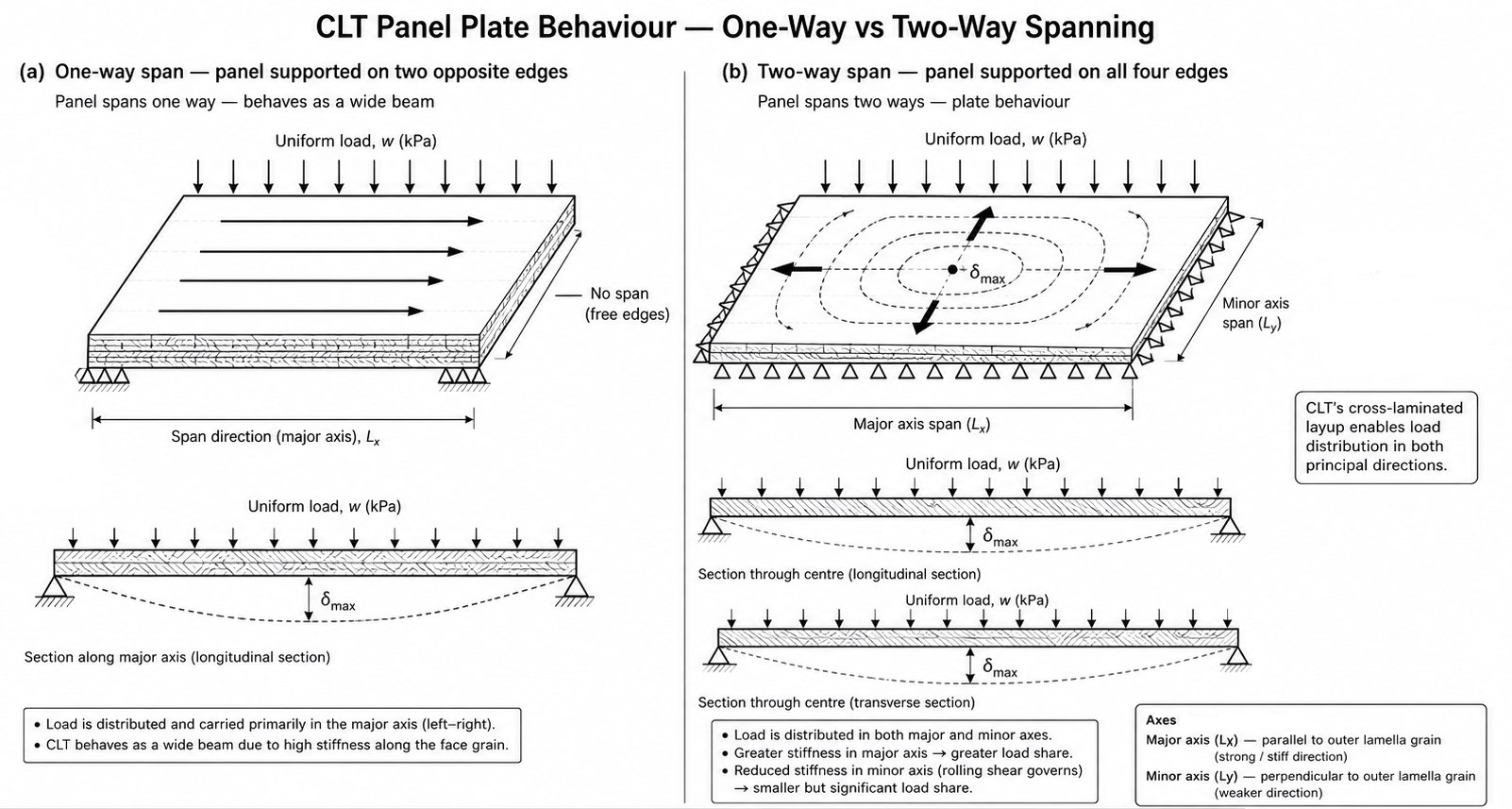
CLT acts as a plate rather than a beam - it distributes loads across both principal directions rather than spanning in one direction only. While structural design often simplifies panels to one-way spans (particularly for floor panels), two-way behaviour can be harnessed for efficiency in wall panels and in floor configurations with appropriate support conditions.

Strength and Stiffness

CLT's structural performance is determined by the combined contribution of its layers. The layers oriented parallel to the span direction (the "major axis" layers) carry the primary bending and tension loads. The layers oriented perpendicular (the "minor axis" or transverse layers) provide rolling shear resistance, in-plane stiffness, and dimensional restraint.

Key performance characteristics include high in-plane shear capacity (making CLT effective as diaphragms and shear walls), good out-of-plane bending stiffness (for spanning as floors and roofs), dimensional stability - cross-lamination constrains shrinkage and swelling in both directions, reducing the in-service movement that affects solid sawn timber, and predictable, uniform properties - the manufacturing process produces elements with consistent performance, unlike solid timber where natural variability influences individual piece strength.

Factors Influencing Performance

Structural capacity varies with:

  • Layer count and thickness (more layers and thicker lamellae increase bending capacity and stiffness)
  • Timber species and grade (higher-grade lamellae produce stronger panels)
  • Adhesive type (affects bond durability and behaviour under fire and moisture exposure)
  • Panel layup (the ratio of major-axis to minor-axis layers affects spanning efficiency)
  • Support conditions (continuous support influences deflection)
  • Connection detailing (connection design governs load transfer between panels)

Design Properties

CLT design properties are provided by the manufacturer, based on testing to the relevant product standard. In Australia, CLT structural design is typically carried out in accordance with AS 1720.1, using manufacturer-supplied characteristic values or design tables.

Designers should use the manufacturer's published design data, not generic CLT properties, because performance varies between products. Where panels from different suppliers are considered, structural equivalence must be verified, not assumed.

CLT Span Diagram
CLT Span Diagram


Figure 3: Structural behaviour diagram showing CLT panel plate behaviour - load distribution in both directions, major and minor axis identification, and the distinction between one-way and two-way spanning.

Rolling Shear

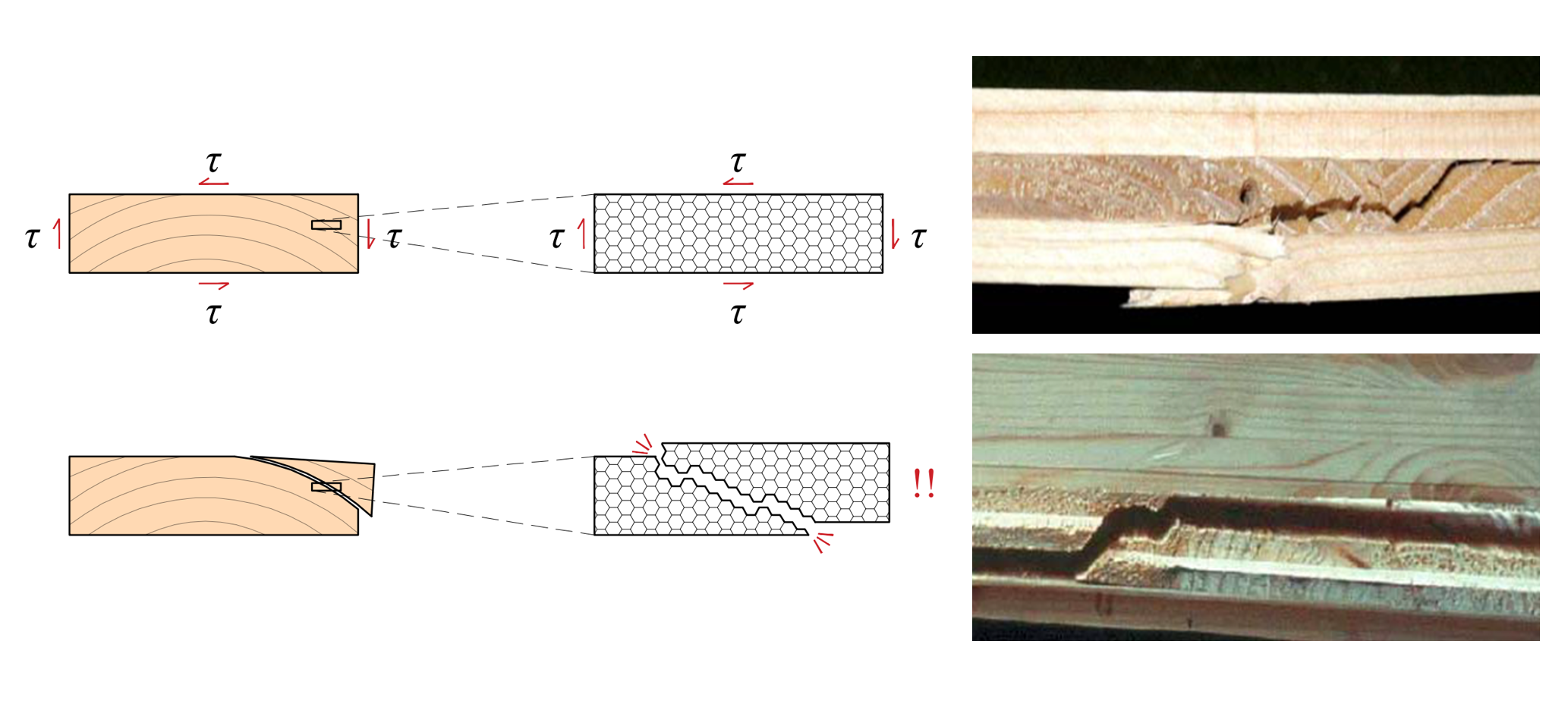
Rolling shear - shear failure within the transverse (cross) layers - is a distinctive failure mode in CLT that does not occur in conventional timber or glulam. It governs design in some configurations, particularly for short spans or heavy point loads. Designers should verify rolling shear capacity against the manufacturer's data, particularly for floor panels supporting concentrated loads.

Figure 4: Specific mechanics of Rolling Shear

Vibration

Floor vibration is a serviceability consideration in CLT construction. CLT floors can be relatively light compared to concrete, and their natural frequency and acceleration response under foot traffic must be checked. Where vibration performance is critical (open-plan offices, gymnasiums, residential floors), additional stiffness may be required through increased panel thickness, reduced span, hybrid topping layers (e.g. timber-concrete composite), or supplementary beams. It's useful to note that there are not strict thresholds on vibration control as it is a highly subjective phenomenon. Limits should be arrived at through consultation with the client and consideration of use case. 

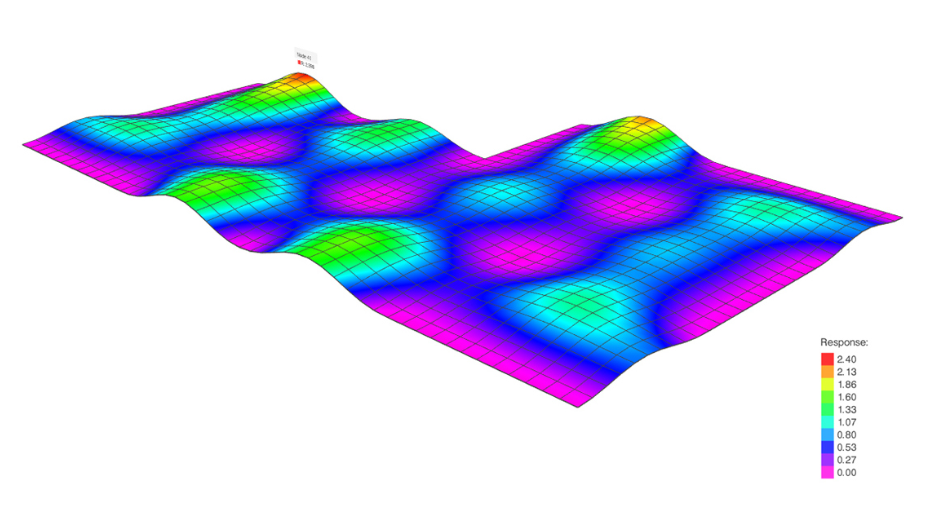
Vibration performance is highly influenced by the fixity conditions of the floor plate. Finite Element Analysis (FEA) computer modelling tools are particularly suited to assessing vibration risk and performance.

FEA Analysis of a floor plate

Figure 5: Vibration response due to footfall on a floor plate in Finite Element Analysis (FEA).
 

CLT's cross-laminated structure significantly reduces dimensional movement compared to solid sawn timber, but does not eliminate it. Understanding how CLT responds to moisture change is important for detailing, tolerance management, and long-term performance.

In-Plane Movement

Cross-lamination constrains shrinkage and swelling in both in-plane directions (along and across the panel face). Each layer's movement is restrained by the adjacent cross-layers, resulting in in-plane dimensional change that is typically small - generally less than 0.02% per 1% change in moisture content. For most design purposes, in-plane movement can be treated as negligible.

Through-Thickness Movement

Movement through the panel thickness (perpendicular to the face) is not restrained by cross-lamination and behaves similarly to solid timber. A 1% change in MC may produce approximately 0.24% change in thickness for softwood CLT. For a 200 mm panel, a 4% MC change could result in approximately 2 mm of thickness change - enough to affect interface tolerances, floor-to-floor heights in multi-storey buildings, and the fit of finishes and services.

Through-thickness movement should be accounted for in multi-storey buildings where cumulative movement across multiple floor levels can be significant, at interfaces between CLT and dimensionally stable materials (steel, concrete), and in the specification of movement joints and shimming allowances. This is particularly important to be aware of when designing hybrid systems, such as a mass timber stack interacting with a concrete lift core.

Moisture Content at Manufacture and In Service

CLT is manufactured at approximately 12% MC (±2%), which is close to the expected in-service EMC for most Australian interior conditions (typically 9-14%). The objective during construction is to maintain MC as close to this level as practical and to return to it before enclosure. For detailed construction-phase moisture management, see Moisture Management in Mass Timber Construction.
 

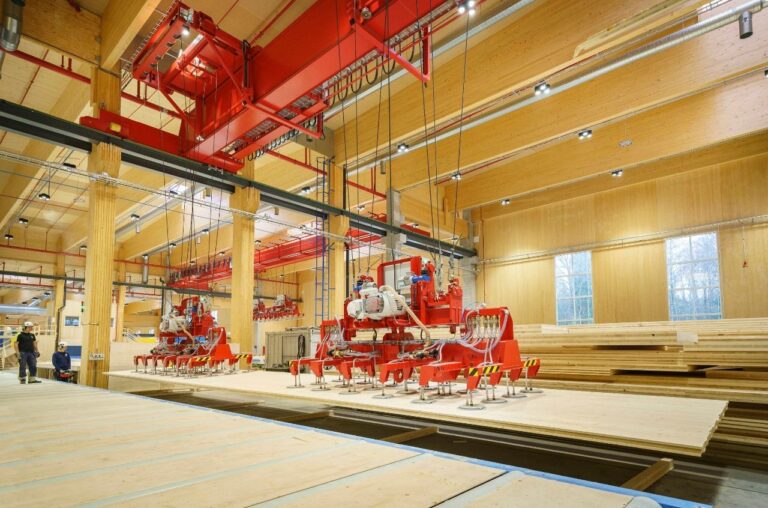
CLT manufacturing is a controlled, factory-based process that produces panels with consistent, verifiable properties.

Production Sequence

The typical manufacturing sequence is:

  • Timber reception and grading
    • Incoming boards are machine stress graded and sorted by strength class; boards that do not meet the required grade are rejected
  • Kiln drying
    • Boards are dried to a target MC of approximately 12% ±2%
  • Finger jointing
    • Shorter boards are end-jointed into full-length lamellae using structural finger joints - this allows the use of shorter log lengths and produces continuous lamellae of the required panel length
  • Layup of each layer
    • Where the CLT plate takes form
  • Adhesive application between each layer
  • Pressing
    • The assembly is consolidated under hydraulic or vacuum press
  • Curing
    • The bonded panel is held until the adhesive reaches full cure strength
  • Machining
    • The cured panel is cut to final dimensions and all openings, penetrations, rebates, and connection details are machined to specification.

Specific details can change due to the type of machinery employed and type of feedstock.

Quality Control

Manufacturing quality is controlled through incoming timber grading and moisture verification, adhesive application rate and coverage monitoring, press pressure and cure time verification, and finished panel testing (bond quality, dimensional accuracy, surface quality).

CLT manufacturers typically operate under third-party quality assurance certification, verifying that production processes and finished products comply with the relevant product standards.

CLT is produced to order. Unlike commodity timber products that can be procured from stock, every CLT panel is manufactured to the specific dimensions, layup, and fabrication detail required by the project. This has direct implications for programme, procurement, and coordination.

Australian and International Supply

CLT is manufactured in Australia (with fabrication facilities in New South Wales and Victoria), as well as in New Zealand and Europe. Supplier and distributor networks are expanding, but the market remains more concentrated than for conventional timber products. Projects may source panels from different regions depending on design requirements, species preference, available test data, lead times, and cost.

Lead Times

Panel manufacture typically requires 6-12 weeks from finalisation of shop drawings, depending on supplier workload, panel complexity, and production scheduling. Imported panels require additional time for shipping and logistics, on the order of 3 months shipping time if procurring from Europe. On-site delivery must be aligned with crane access, erection sequencing, and site storage capacity.

Early Engagement

Because CLT is fabricated to order, early engagement with the manufacturer is essential. The manufacturer should be involved in design coordination workshops to confirm feasible panel dimensions, layup options, and CNC capabilities, review shop drawings and cutting lists before fabrication sign-off, advise on transport constraints (panel length, width, weight, and road clearances), confirm available structural, acoustic, and fire test data for the specified product, and coordinate temporary protection and moisture management for transport and site delivery.

Procurement Considerations

When specifying and procuring CLT, designers and specifiers should confirm that the specified product has been tested for the relevant structural, fire, and acoustic compliance pathways, request detailed panel properties (species, density, lamella thickness, adhesive type, and grade), ensure the supplier provides installation guidance and compliance documentation, and include provisions for tolerances, site storage, lifting logistics, and moisture protection in the project specification.

Non-Interchangeability

CLT products are not interchangeable between manufacturers. A panel tested by one manufacturer for a specific fire resistance level, acoustic rating, or structural application cannot be assumed to perform identically when produced by a different manufacturer - even at the same nominal thickness and layer count. Species, adhesive, lamella dimensions, pressing process, and density all affect performance.

Where substitution is proposed during procurement or construction, re-verification against the relevant compliance data is required. This should be established clearly in the project specification.