15 Broadway
Ultimo NSW
Australia
Overview
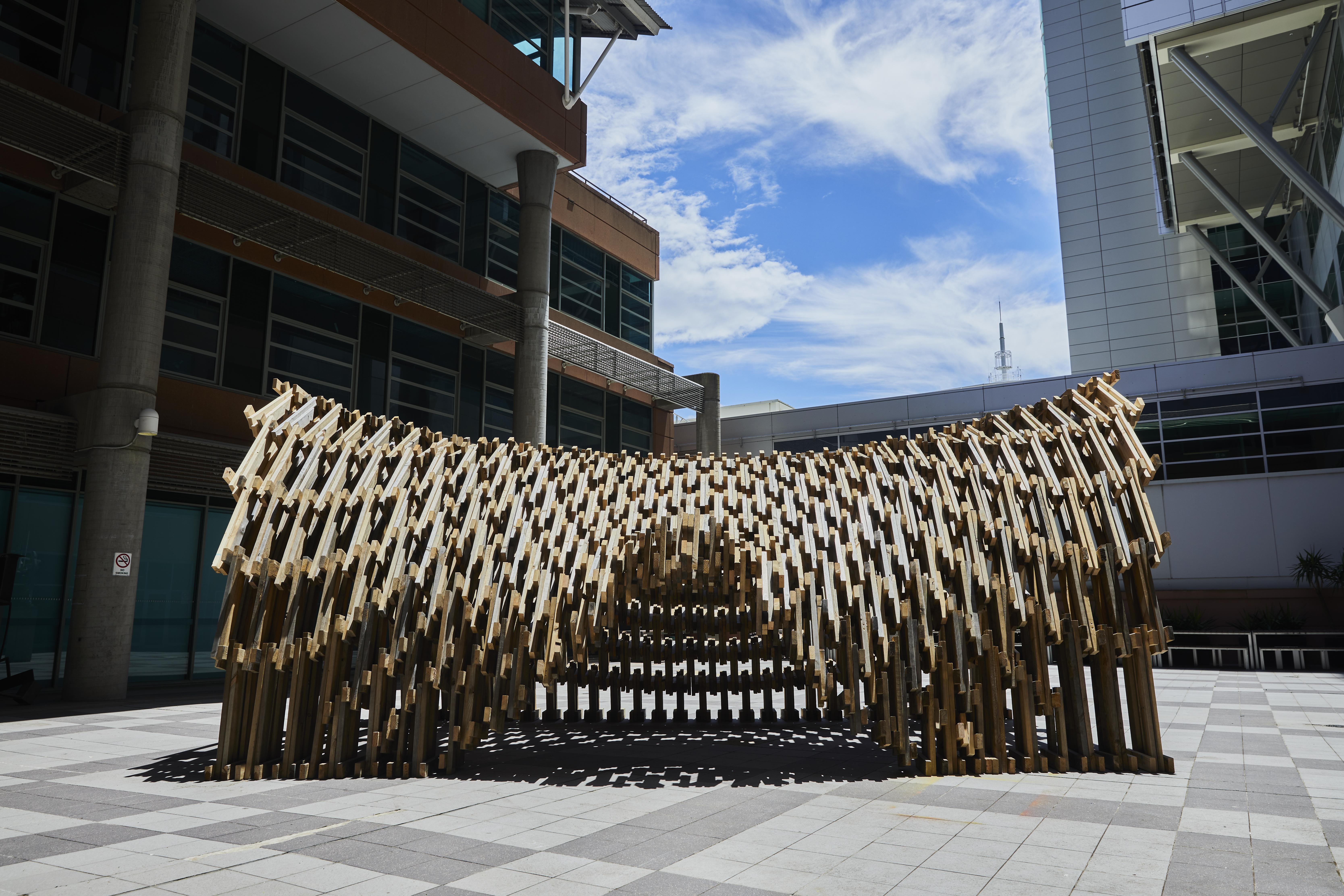
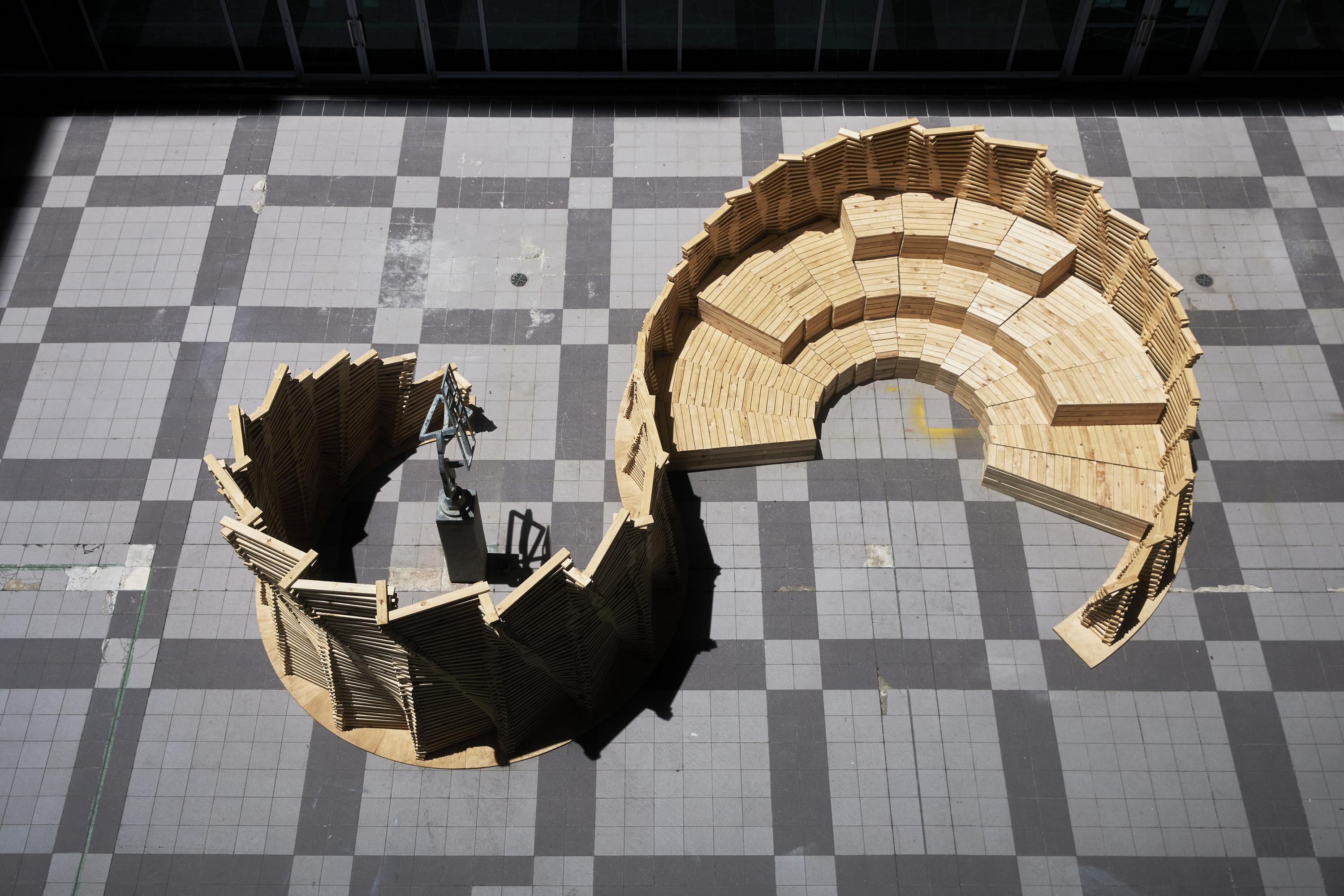
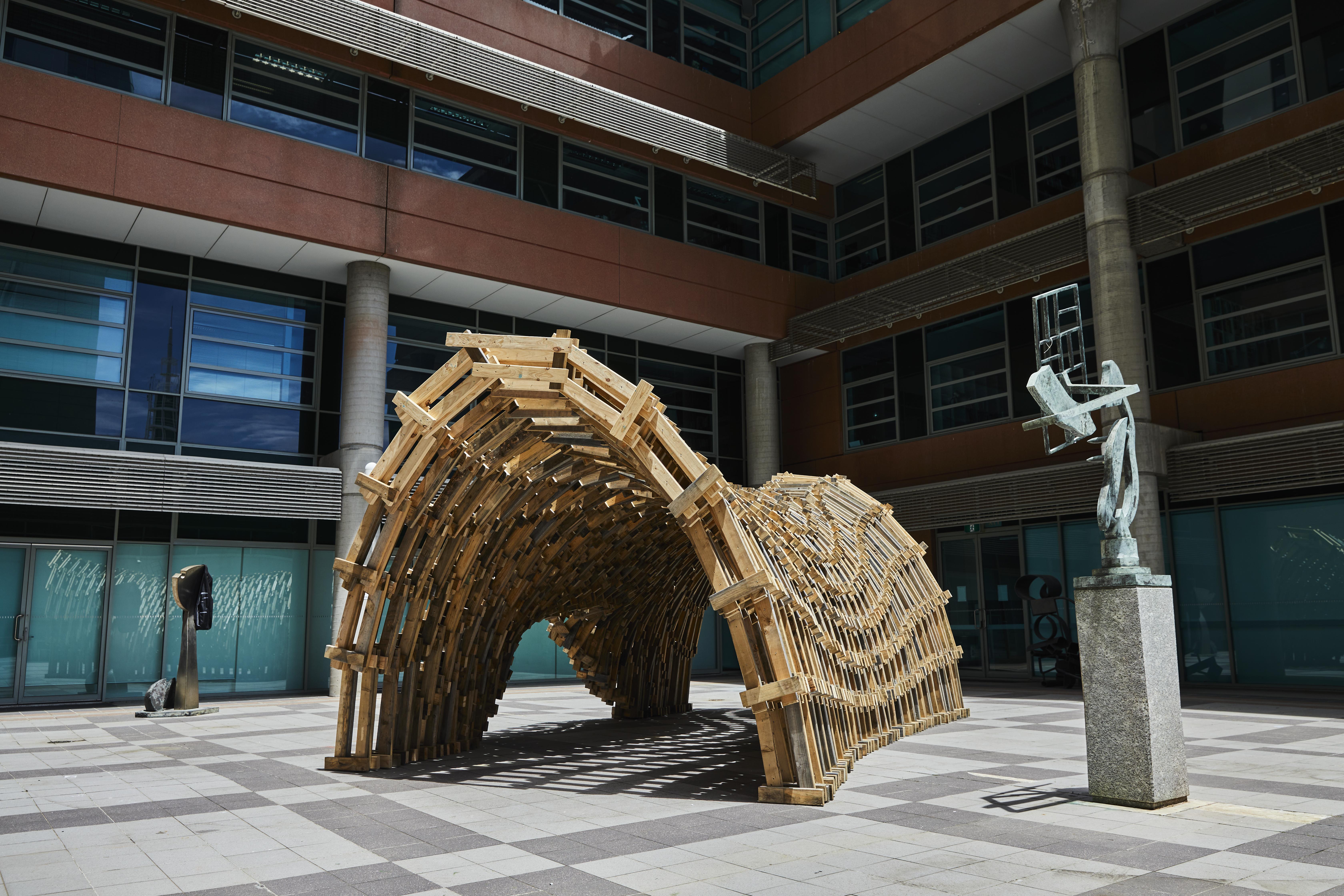
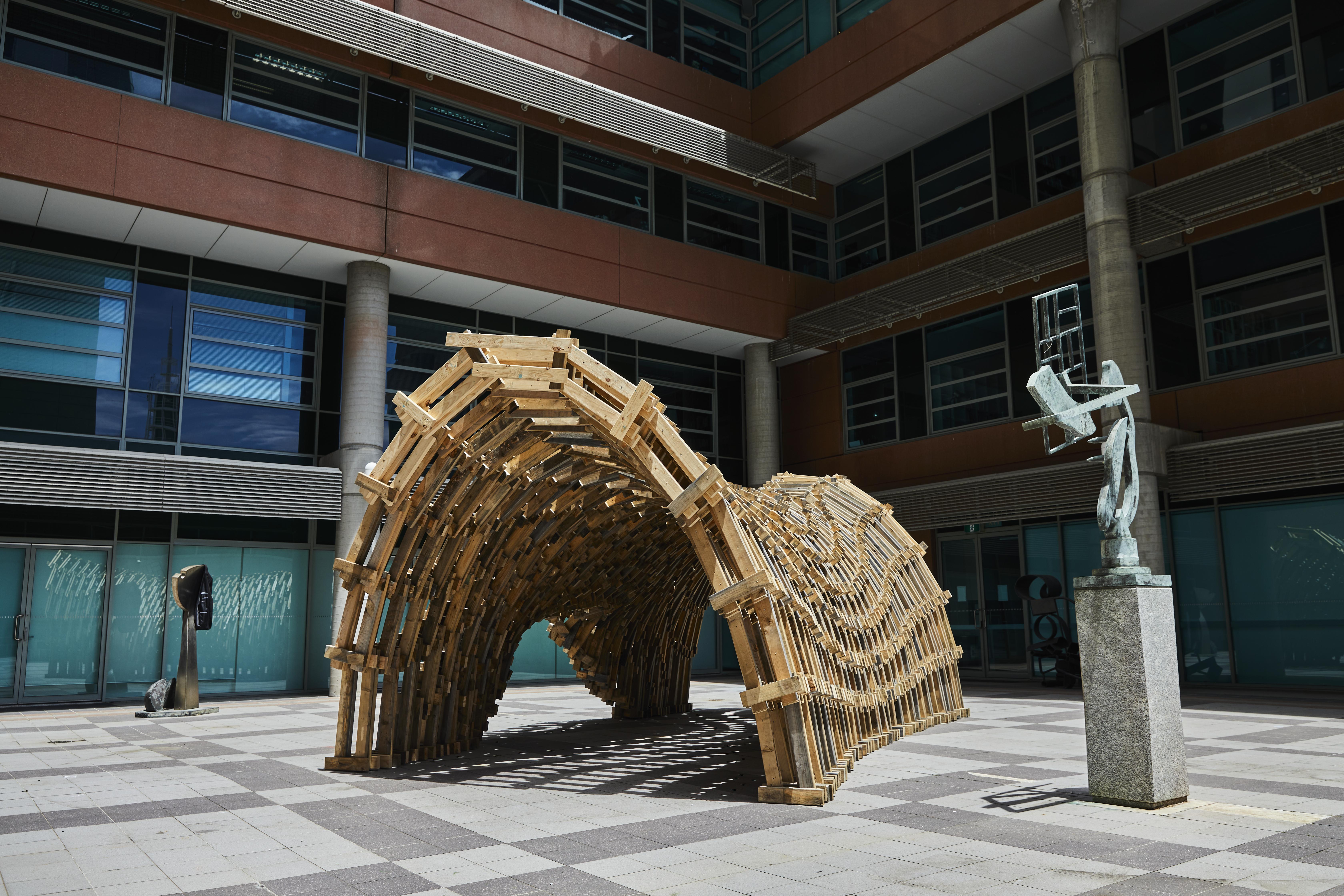
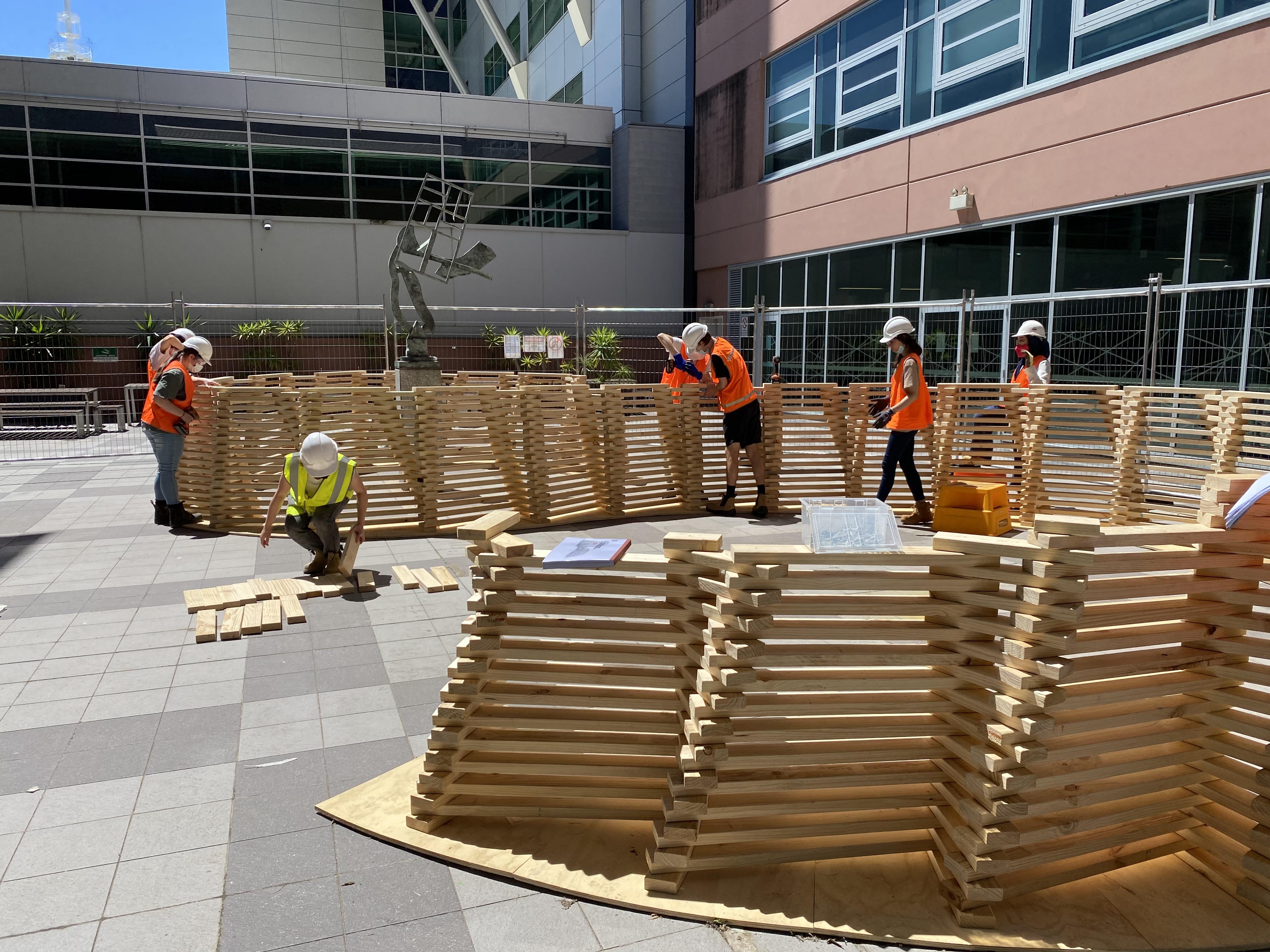
Creating a space within a space by students for students, each pavilion was collaboratively designed, fabricated and built by the entire first year architecture cohort as part of the design & build task of their ‘Introduction to Construction and Structural Synthesis’ subject.
The annual pavilion project provides students with a creative framework for the active and critical thinking of the spatial, material and structural consequences of working with timber. Students were involved in all aspects of the design, fabrication and construction of the project. The project enables the students to apply their knowledge and gain direct experience in the rigours involved with taking a design idea through to physical realisation. The final built design from each year is the result of a combination of schemes that were submitted to an in-house design competition run as part of the subject, in which all first year architecture students participate.
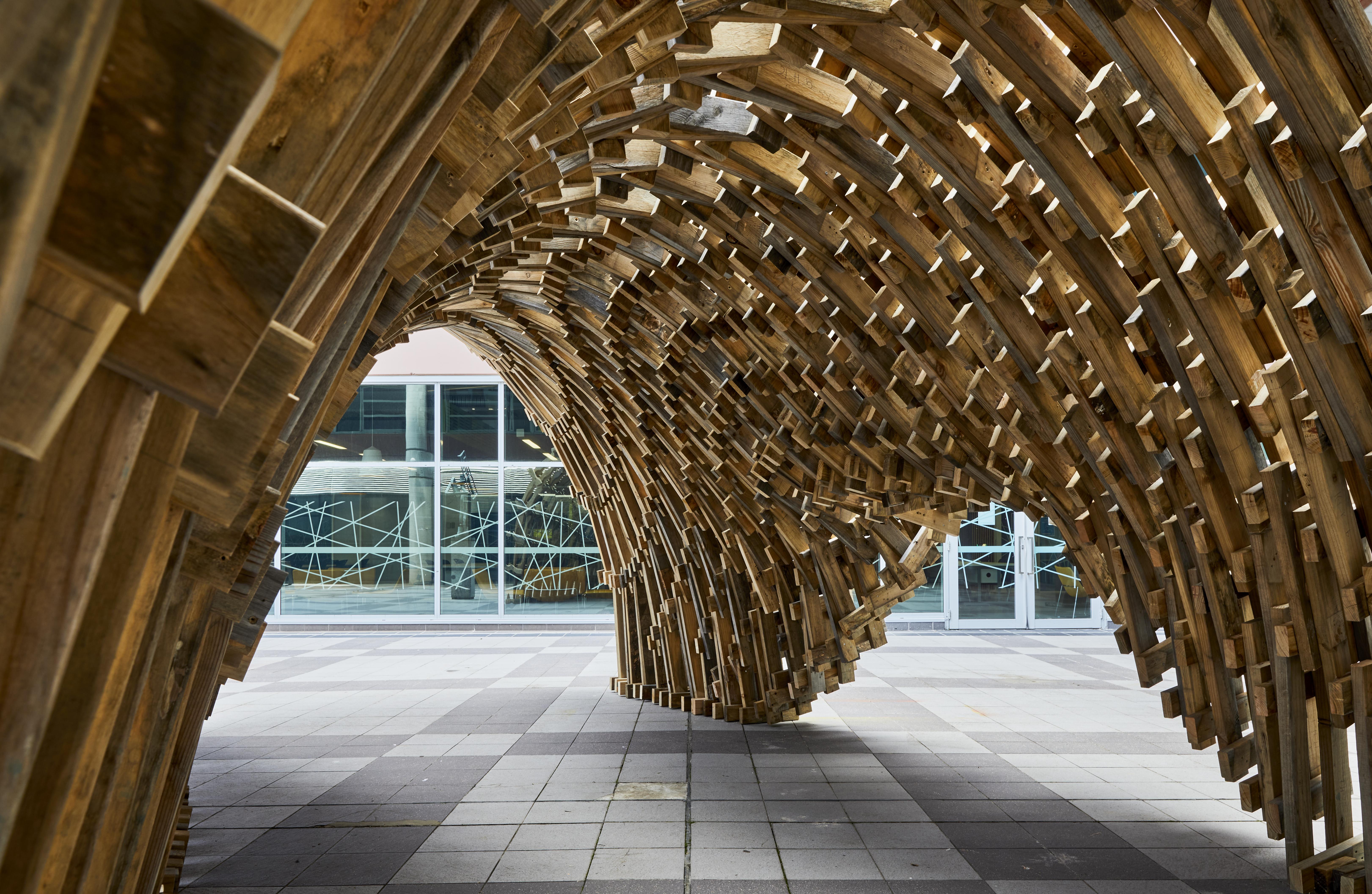
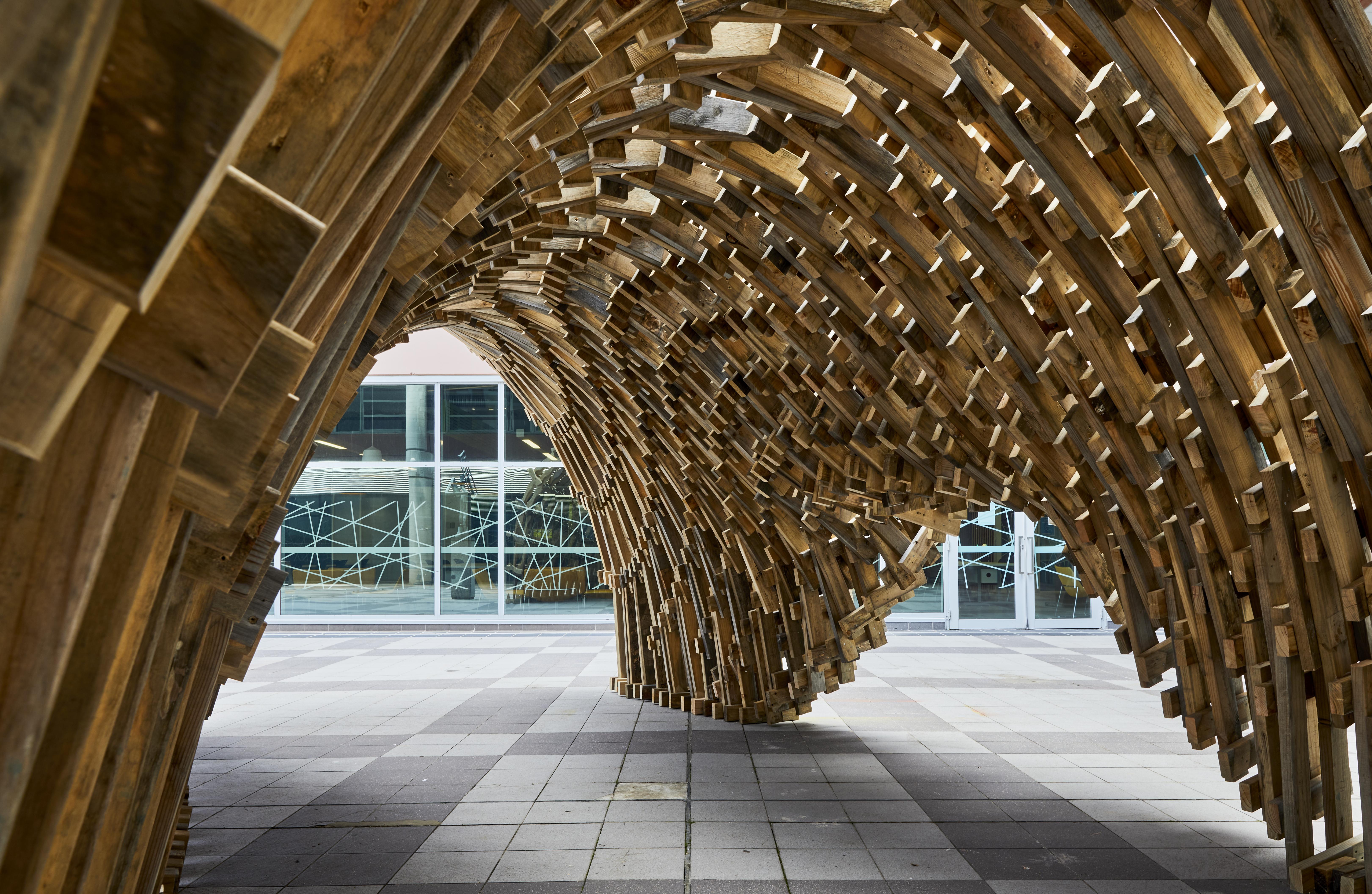
The project is a response to the devastating impact of current construction practices on the environment. Recognising the value of materials beyond their use in a single project, the project leaders aimed to design out waste, using a material that is excellent for deconstruction- timber framing. Working with and using recycled timber had environmental and economic benefits, as well as ongoing aesthetic qualities.
The 2021 pavilion is made up of 100% of the recycled timber elements from the 2019 and 2020 pavilions.
Project team
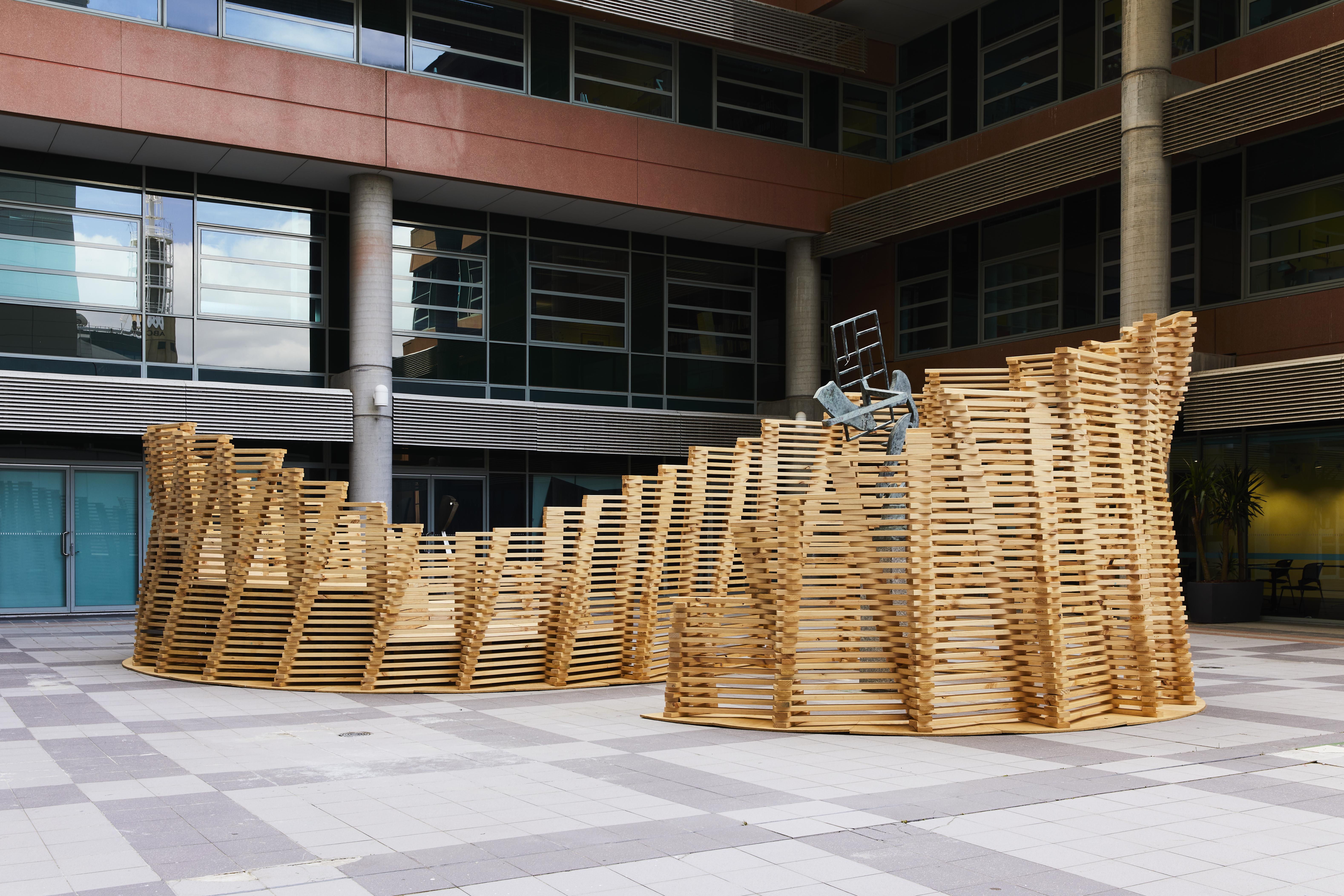
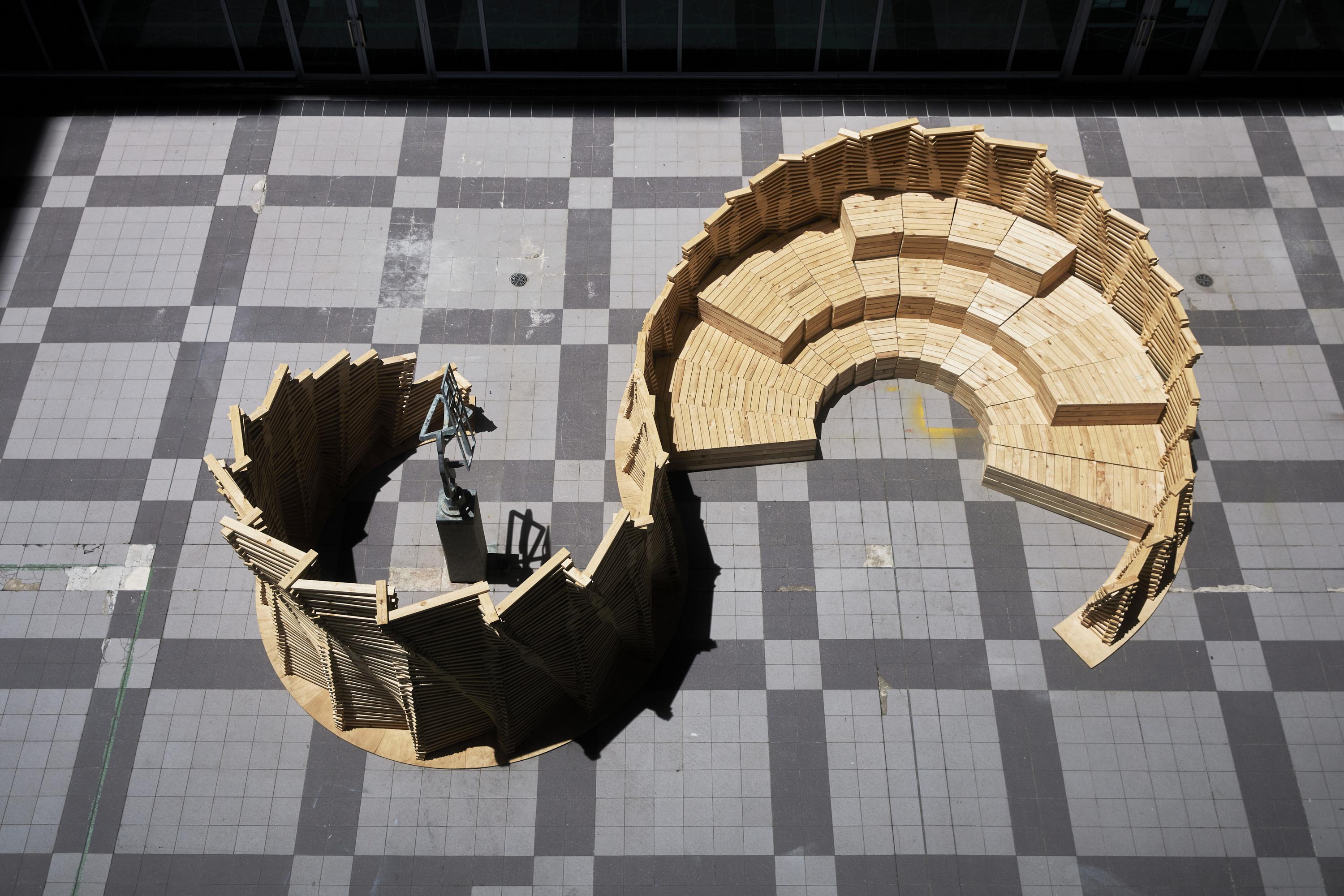
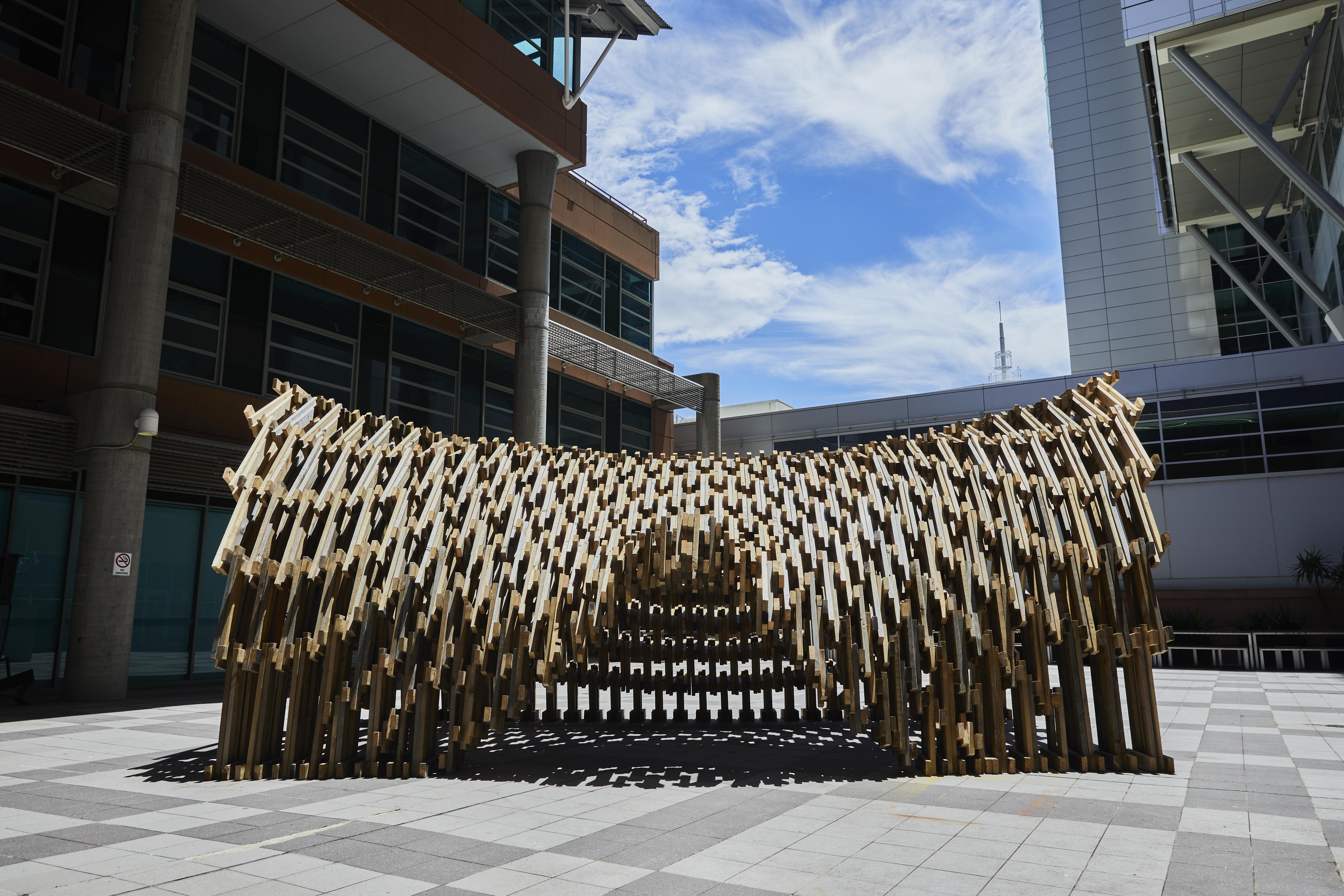
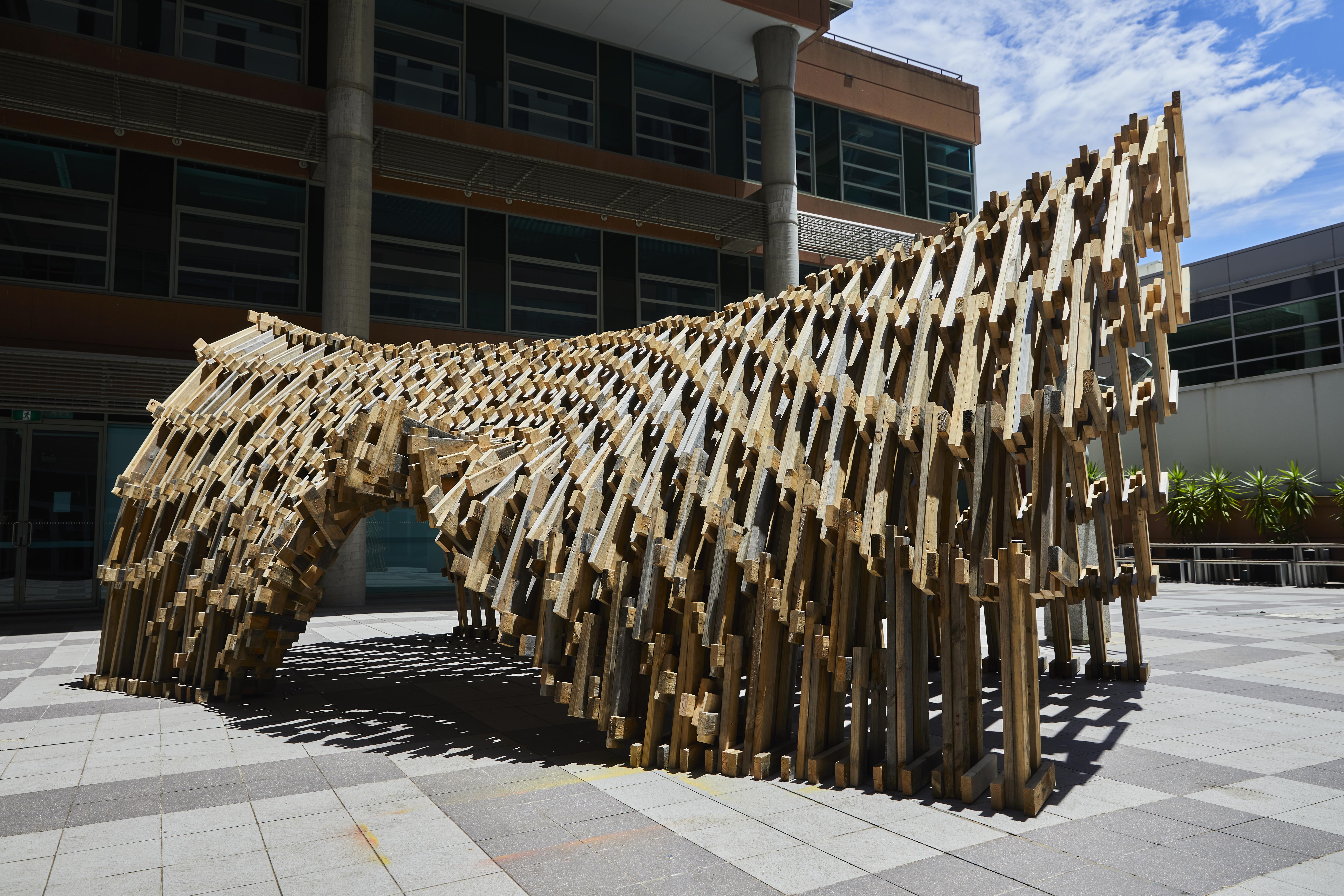
Structure
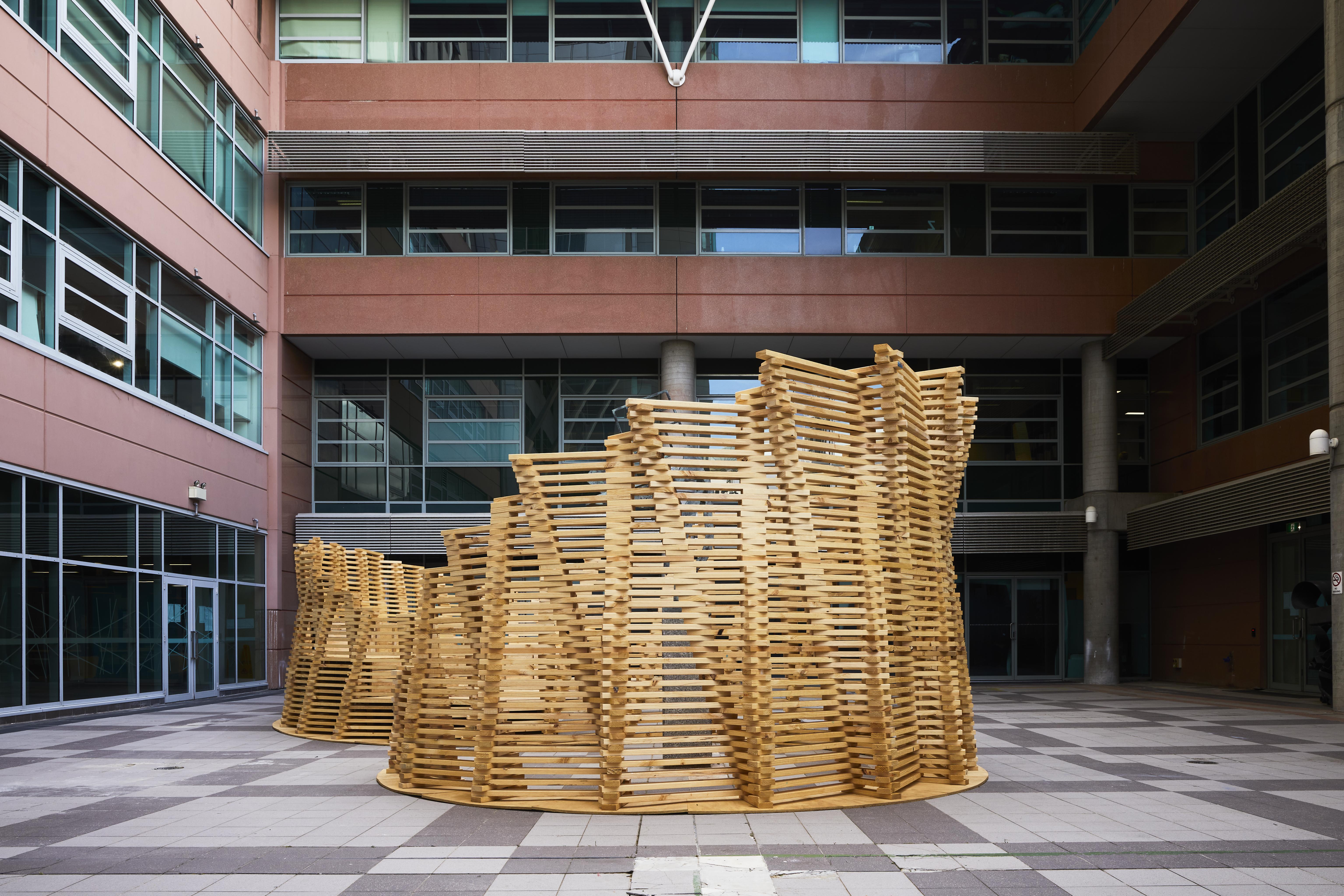
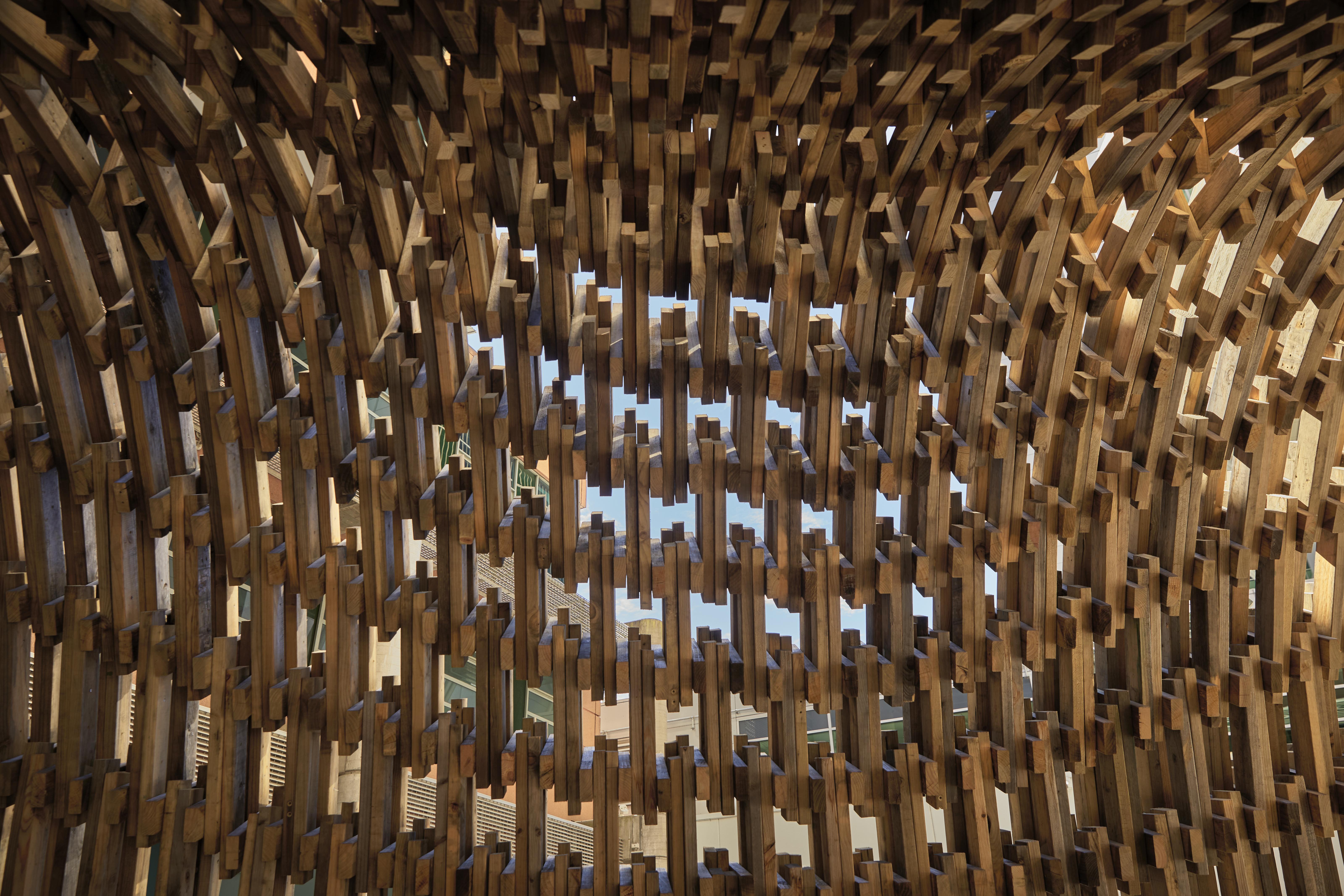
Using a constrained material repository of reclaimed timber from each previous year’s project, each structure was prefabricated and built in 9 days.
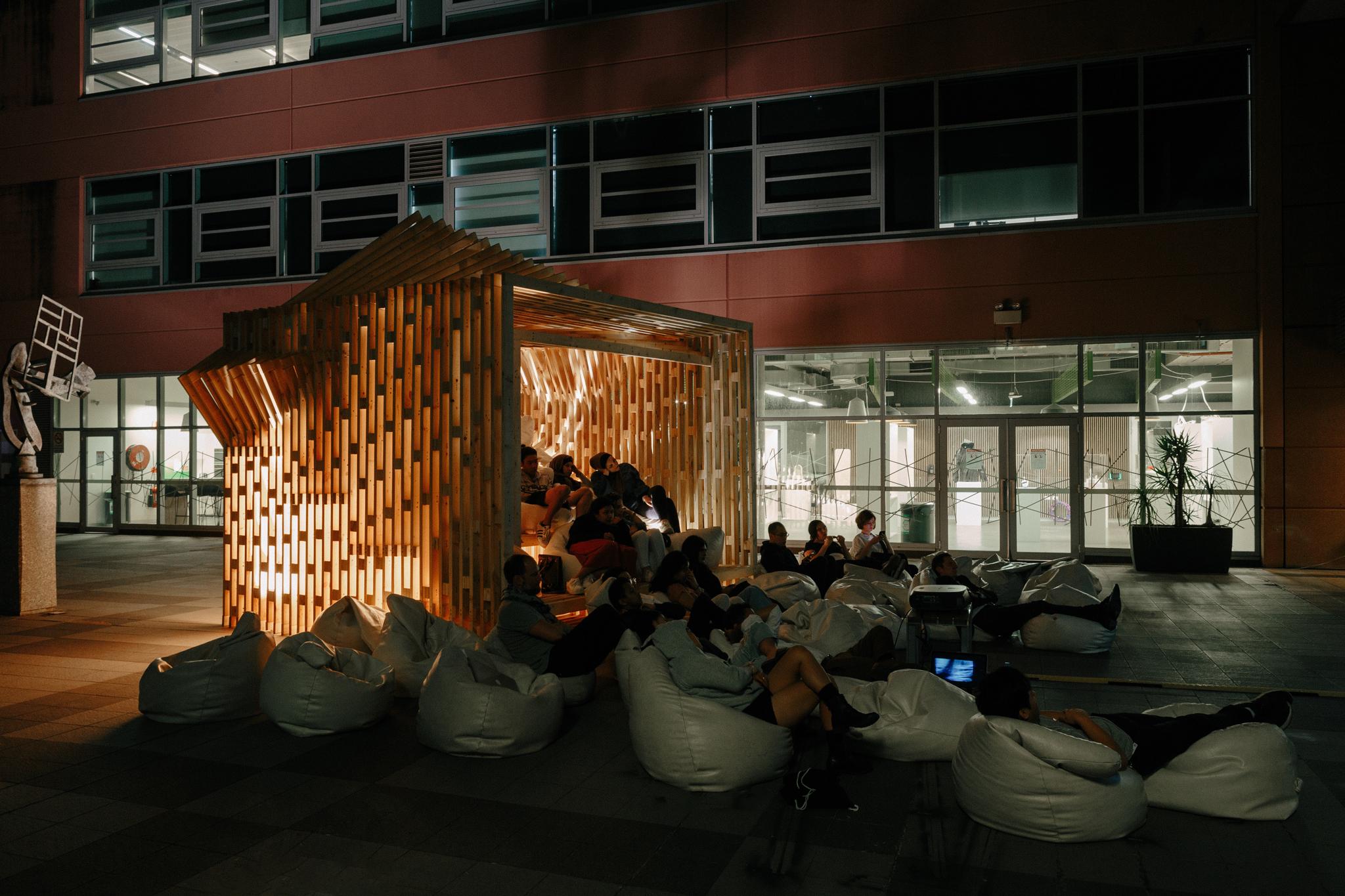
Exploring the use of linear timber elements and simple structural systems with a standardised reversible connection, each pavilion is designed to activate the sculpture courtyard at the UTS Faculty of Design, Architecture and Building. Creating a space within a space for students and the wider university community, each pavilion creates a unique spatial atmosphere. All components were hand-cut and assembled with power tools by the students. Using circular design principles, each pavilion is designed for disassembly reusing the timber of each previous year’s project, and becoming the material library for the following year.
The physical lifespan of building materials often exceeds the lifespan of the structures they are used for. Recognising the value of materials beyond their use in one project and using circular design principles is the key message for the students undertaking the project. By establishing a digital material inventory that enables them to identify and track the lengths of all linear timber elements, they were able to optimise the design of each consecutive year’s pavilion, allowing for maximum yield of the constrained material repository.